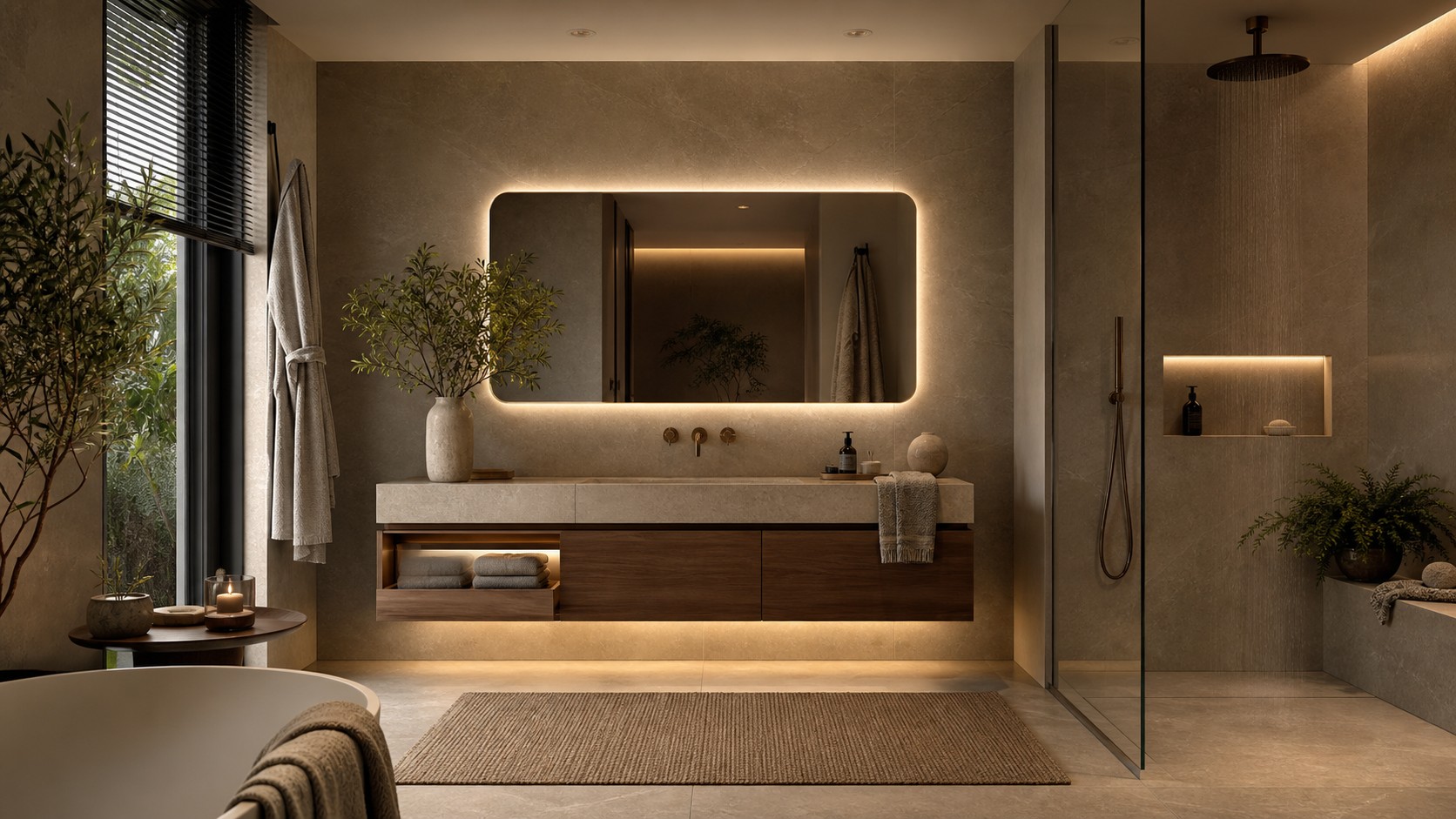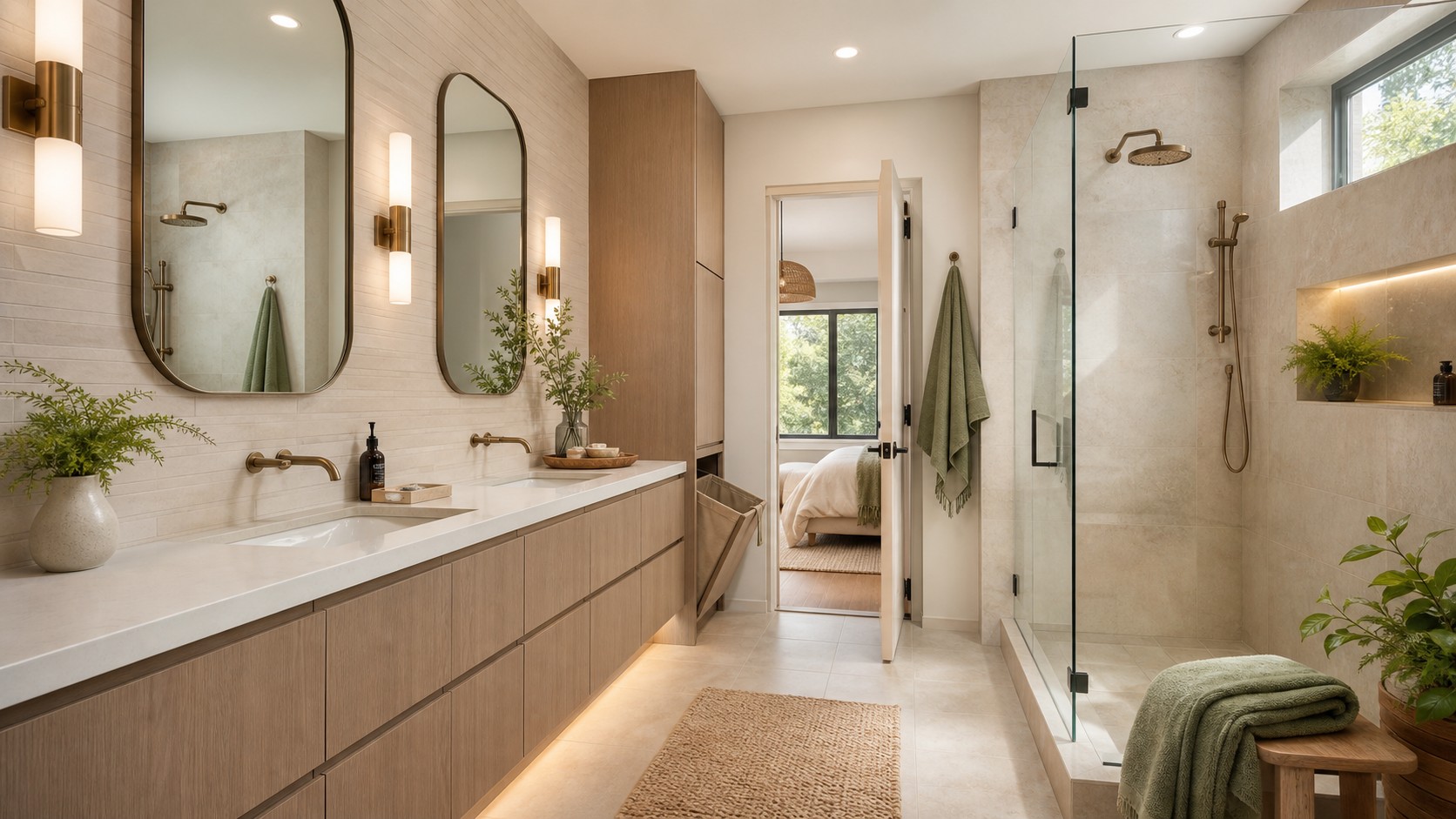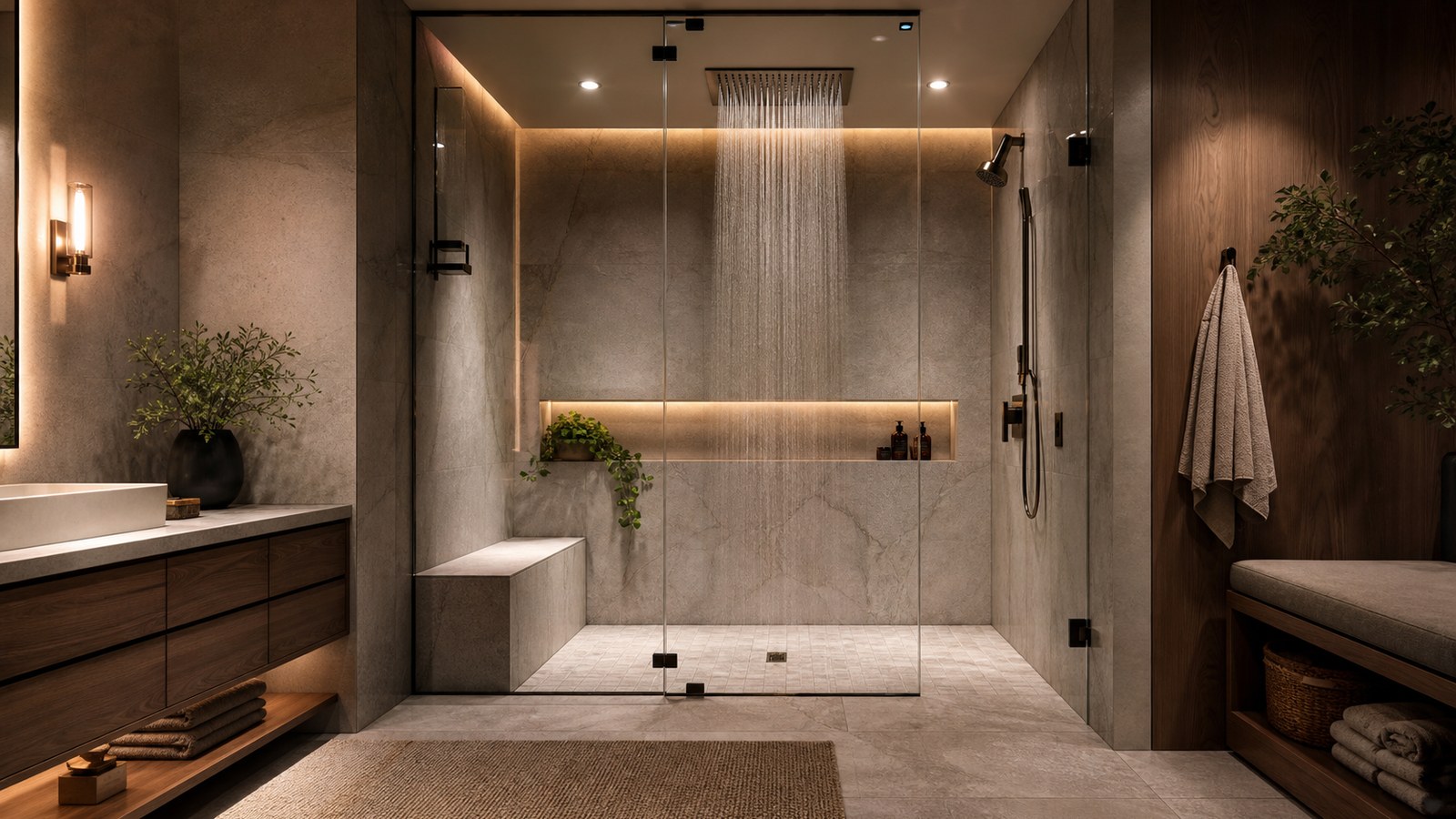
Let the Shower Become the Room’s Center of Gravity
A shower-centered modern oasis bathroom treats the shower as more than a place to rinse. It becomes the room’s daily ritual zone, the feature that determines layout, lighting, storage, flooring, and the emotional pace of the space. When the shower is planned first, the bathroom can feel more generous, more intuitive, and more restorative even without adding square footage. The difference is in the details: where the water falls, where the body pauses, where towels wait, and how the materials behave after steam fills the room. This kind of design is especially useful for households that use the shower more often than the tub, because it puts money, space, and attention where the routine actually happens. A shower-led room can still feel serene rather than utilitarian when the experience is shaped from start to finish. Warm floors, thoughtful controls, good drainage, soft light, and a calm exit all matter as much as the tile selection. The shower becomes a small piece of architecture dedicated to restoration. Planning around the shower also helps control renovation choices that otherwise multiply quickly. It clarifies where waterproofing quality matters most, which wall deserves the best material, how much glass is useful, and what storage needs to disappear into the architecture. Rather than spreading the budget thinly across a list of luxury gestures, a shower-centered oasis concentrates comfort where the body actually spends time.
A: It can be beautiful, but only when slope, waterproofing, and floor structure are handled correctly.
A: Not always, though the combination often improves comfort, rinsing, and cleaning.
A: Large-format porcelain is a practical favorite, while sealed stone works when maintenance expectations are clear.
A: Only if centered placement also works for bottle height, spray exposure, and tile layout.
A: Yes, if controls, lighting, storage, and materials are carefully simplified.
A: They need regular care, especially with hard water, but coatings and squeegee habits help.
A: Place it outside the strongest spray and where sitting, shaving, or resting feels natural.
A: Use wet-rated fixtures in the shower and keep switches outside wet zones.
A: Towels, wood accents outside the spray, and softer surrounding surfaces can help.
A: Warmth, easy reach, steady temperature, good drainage, and a calm exit matter most.
Design the Shower Footprint Around Movement
The best shower experiences begin with enough room to move naturally. A larger shower is not automatically better if the entry is awkward, the controls are hard to reach, or the dry-off area is squeezed. Think through the sequence from entering the bathroom to turning on the water, stepping in, reaching shampoo, rinsing, drying, and leaving. A modern oasis shower should make those actions feel fluid rather than choreographed.
Placement of controls is one of the most overlooked comfort decisions. If the valve can be reached from outside the spray path, the user can warm the water without getting wet. If a handheld shower is available near a bench, cleaning and seated rinsing become easier. These details do not shout visually, but they shape the room’s daily usefulness.
The entry style also changes the mood. A frameless glass door keeps heat in while preserving openness. A walk-in panel can look calmer, but it needs careful sizing to control splash and drafts. A fully open wet-room concept feels luxurious only when drainage, heating, and waterproofing are excellent.
A shower-first plan also clarifies what can be simplified elsewhere. If the shower is generous, the tub may be omitted or scaled back. If the shower includes a bench and handheld spray, the room may become more comfortable for aging in place. The result is not a bathroom with one oversized feature, but a room where every surrounding choice supports the experience of water.
Make Water Feel Luxurious Without Being Wasteful
A modern oasis shower should feel enveloping, not excessive. A rainfall head, wall-mounted shower, and handheld spray can work beautifully together when each has a clear purpose. The rainfall head creates the slow spa effect, the wall head supports everyday washing, and the handheld improves cleaning, accessibility, and flexibility.
Water pressure and flow matter more than the number of fixtures. Too many outlets can strain plumbing, increase cost, and make the shower harder to operate. Choose a balanced system that suits the household’s habits and local water realities. Luxury is not the feeling of using everything at once; it is the feeling that the right option is always easy to reach.
Thermostatic controls can add comfort because they keep temperature steadier. In a shower-centered design, that consistency supports the restorative mood. Sudden changes in temperature break the sense of calm faster than almost any visual flaw.
Use Benches and Niches as Architecture
Benches should feel built into the design rather than added at the end. A floating stone bench can make a shower feel lighter, while a full-width bench can turn the back wall into a calmer architectural plane. The right choice depends on the shower’s size, waterproofing approach, and how the bench will be used.
Niches deserve the same attention. A poorly placed niche interrupts beautiful tile and still may not hold the products people actually use. Align niches with grout lines where possible, place them away from the strongest spray, and size them for real bottles rather than idealized miniature products. Lighting inside a niche can be elegant, but it should not become a maintenance headache.
When benches and niches share material with surrounding walls, the shower feels seamless. When they contrast, they should do so with purpose. A warm wood-look bench surface, a darker stone shelf, or a softly lit recess can add depth without clutter.
Think about reach before finalizing these features. A niche that looks perfect in elevation may sit too far from the bench, and a bench that photographs beautifully may not suit shaving, resting, or assisted bathing. The most elegant shower details are the ones that feel obvious to use.
Choose Surfaces That Stay Beautiful After Steam
Large-format porcelain slabs are popular in modern oasis showers because they reduce grout lines and create a calmer visual field. They can mimic stone while offering easier maintenance, which is useful in a space exposed to daily water. Smaller tile still works, especially on floors where grip matters, but busy patterns can weaken the spa effect.
The shower floor must balance beauty with traction. Honed, textured, or mosaic surfaces can help wet feet feel secure. Linear drains allow larger floor tile and a cleaner slope, but they require careful installation. Center drains can work well too when the design accepts them instead of trying to hide them poorly.
Grout color should be chosen with maintenance in mind. A high-contrast grid may look graphic on day one but can feel busy in a sanctuary-style bathroom. A closer grout match usually lets the material read as one soft plane.
Layer Light for Steam, Reflection, and Safety
Shower lighting needs to handle more than visibility. It should make skin tones feel natural, reveal texture without glare, and stay safe in a wet location. A recessed wet-rated light can be useful, but the most atmospheric showers often combine indirect light, wall washing, and nearby mirror lighting.
Steam changes how light behaves. Glossy tile can become reflective, glass can flare, and dark corners can feel heavier after the room fills with moisture. Test the lighting plan against the actual materials rather than assuming any warm light will feel soft.
A shower-centered bathroom also needs a transition from energizing morning light to slower evening light. Dimmers, separate circuits, and warm accent lighting let the room support different routines without changing the architecture.
Glass changes the lighting equation because it reflects, doubles, and sometimes exposes fixtures from unexpected angles. Before installation, imagine the room with steam on the panels and water on the tile. That mental test helps prevent bright points of light from becoming visual noise in the most relaxing part of the bathroom.
Lighting should also help with cleaning and inspection. A shower that looks beautiful in dim light can hide soap film, grout issues, or standing water. Include at least one brighter scene that reveals the surfaces clearly, then allow the daily bathing scene to be softer and more atmospheric.
Plan the Dry-Off Zone With Equal Care
The shower experience does not end when the water turns off. A towel hook within easy reach, a warm floor underfoot, and enough space to dry without bumping into the vanity all affect how luxurious the room feels. Many bathrooms spend heavily on tile and fixtures, then leave the user standing in a cramped wet corner.
A small bench outside the shower, a recessed towel shelf, or a heated towel rail can make the daily routine feel calmer. These features should be close enough to use naturally but far enough from direct spray to stay dry. The dry-off zone is where comfort, safety, and maintenance meet.
If the bathroom has multiple users, think about timing. Can one person shower while another uses the vanity? Does the glass fog the mirror immediately? Is there enough ventilation to reset the room quickly? A well-designed oasis shower supports real life, not just a photo.
The dry-off zone is also a safety zone. Wet feet, slick floors, towel reaching, and glass edges all meet here. A slightly wider landing, a warmer surface, or a better hook location can make the entire shower feel more luxurious because the user exits without hurry or awkwardness.
Keep the Shower Visually Quiet but Sensory-Rich
A shower-centered bathroom does not need to be dramatic to be memorable. It can rely on the sound of water, the warmth of the floor, the smoothness of stone, the softness of light, and the ease of reaching everything. These sensory details create the feeling of retreat.
Keep decorative gestures limited. One beautiful wall material, one refined metal finish, one well-placed niche, and one strong lighting move are usually enough. When the shower is the center of gravity, restraint lets the experience lead.
That restraint should not mean blandness. A shower can be memorable through the hush of a large slab wall, the comfort of warm floors, the small pleasure of a perfectly placed handheld spray, or the way steam softens the light. These are quiet choices, but they are the ones people feel every day.
Prioritize the Features You Will Feel Every Day
A shower-centered oasis should be judged by repeated use, not by the most dramatic photo angle. The details that matter most are often the ones a guest might not notice immediately: the valve location, the slope of the floor, the way the bench feels, and how quickly the room clears after steam.
When budget decisions get difficult, protect waterproofing, drainage, ventilation, and comfort before decorative upgrades. A beautiful fixture cannot compensate for a shower that splashes constantly or feels cold underfoot. Performance is the foundation that allows the spa mood to last.
After those essentials are secure, choose one or two sensory upgrades that fit the household. That might be a warmer material on the main wall, a better handheld spray, a softly lit niche, or a larger dry-off area. The result feels luxurious because it is tuned to the person using it.
This is also where restraint helps. A shower does not need every possible feature to feel complete. It needs a clear point of view, dependable construction, and a sequence that makes the user feel cared for from the first reach for the control to the final step onto a dry, warm floor.
The planning process should include the person who uses the shower most. Their height, mobility, product habits, temperature preferences, and tolerance for glass maintenance all affect the final design. A shower-centered oasis becomes genuinely personal when those details shape the plan.
When the choices feel overwhelming, return to the desired feeling after the shower is over. If the user steps out warm, unhurried, safe, and surrounded by materials that feel good to touch, the design is doing the quiet work it was meant to do.