Why a Floating Vanity Changes the Whole Bathroom
A floating vanity can make a modern oasis bathroom feel calmer before anyone notices the details. By lifting storage off the floor, it creates visible space, longer sightlines, and a lighter architectural rhythm. The effect is practical as well as visual: floors are easier to clean, lighting can glow softly underneath, and the vanity can be tailored to the height, storage habits, and proportions of the room. In a bathroom built around restoration, that sense of ease matters. The vanity is often the first thing seen from the doorway, so its weight, shadow, texture, and organization influence the entire room’s mood. A well-designed floating vanity should not simply look suspended; it should make the whole routine feel less crowded. The best examples combine hidden strength, quiet storage, warm material, and precise lighting so the room appears effortless even though the technical planning is deliberate. This is why floating vanities work in both compact bathrooms and expansive primary suites. In a small room, they preserve visible floor and reduce the feeling of bulk. In a larger room, they keep long cabinet runs from becoming heavy. In both cases, the design succeeds when proportion, storage, lighting, and wall support are solved together rather than treated as separate decisions.
A: Yes, when the wall is properly reinforced and the cabinet is installed for the expected load.
A: They often help small bathrooms feel larger because more floor remains visible.
A: Base the finished height on the sink, counter thickness, and people who use the room most.
A: Yes, deep drawers and smart interiors can hold more than many traditional cabinets.
A: No, but a soft glow can enhance the floating effect and improve nighttime comfort.
A: They are optional; deck-mounted faucets can still look clean with the right counter and sink.
A: Warm wood with a honed stone or solid-surface counter is a reliable modern oasis pairing.
A: Usually, because the floor is accessible, but simple underside detailing matters.
A: Often, though wall structure and plumbing may need upgrades before installation.
A: Poor proportions, exposed pipes, harsh lighting, and flimsy finishes weaken the effect quickly.
Use the Floor Gap to Create Breathing Room
The open space beneath a floating vanity is not wasted space. It is a visual pause that makes the bathroom feel less crowded. In smaller rooms, seeing continuous flooring under the cabinet can make the footprint feel wider. In larger rooms, the same gap keeps a long vanity from feeling heavy.
Proportion determines whether the vanity feels elegant or awkward. A cabinet mounted too high can look disconnected from the room, while one mounted too low loses the floating effect. The ideal height depends on sink type, counter thickness, user comfort, and the visual relationship to nearby fixtures.
The floor below the vanity deserves attention because it remains visible. Continue the main flooring cleanly, avoid cluttering the open space with bins or exposed plumbing, and consider subtle underlighting only when it supports the mood. The gap should feel intentional, not like missing cabinetry.
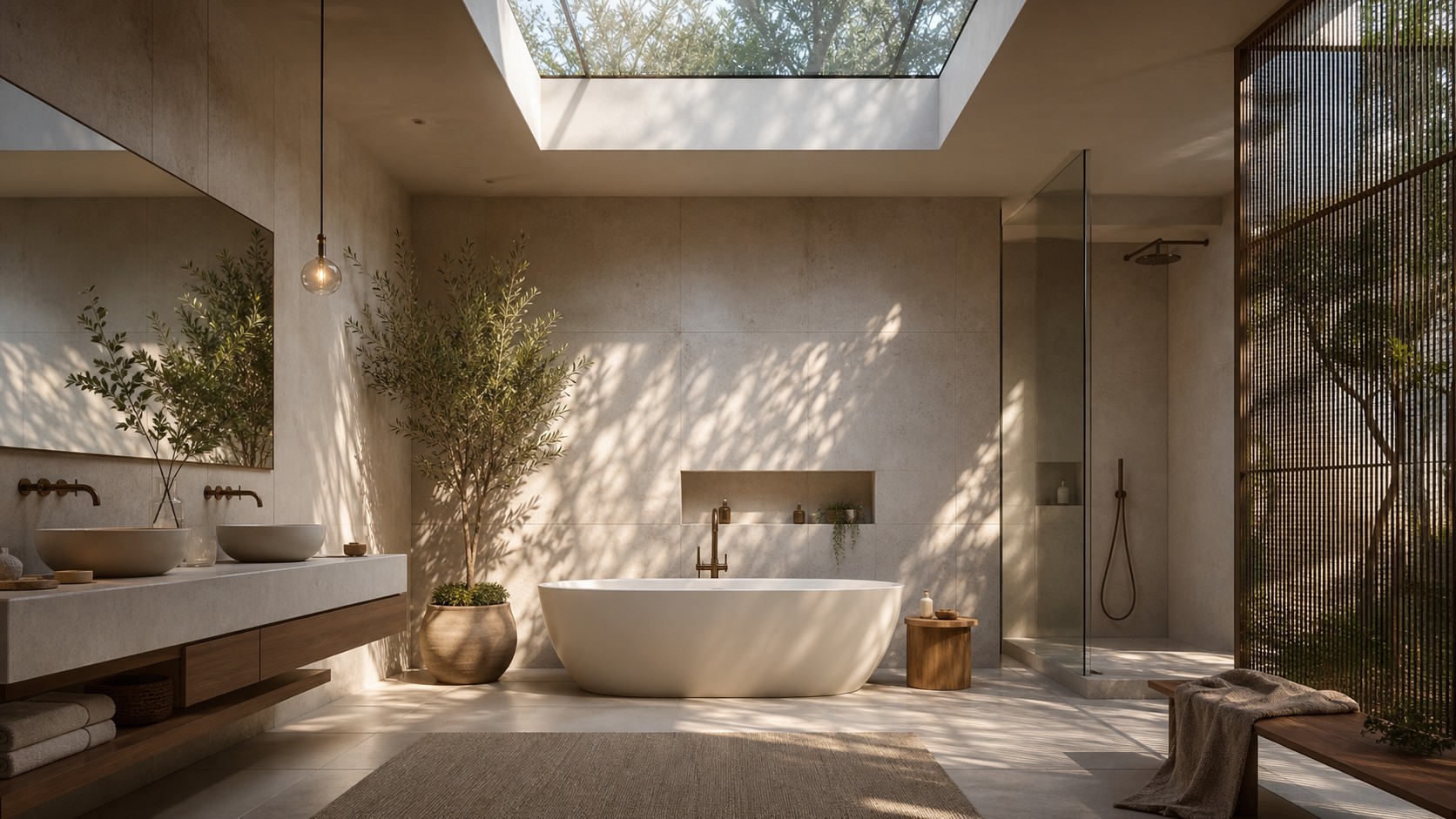
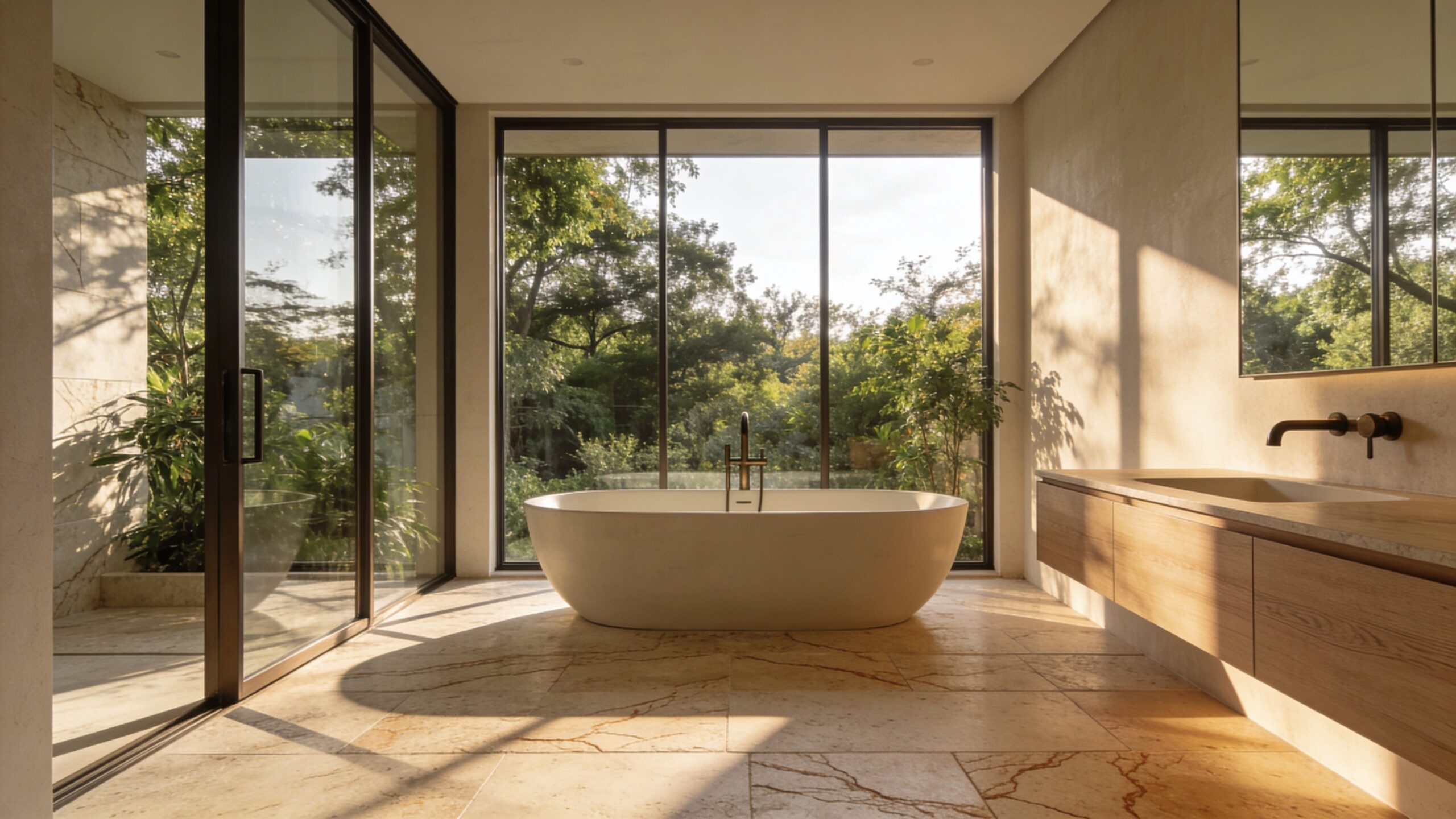
This open floor line also helps connect the vanity to other oasis features. When flooring runs uninterrupted toward a shower, tub, or window, the room feels more architectural and less chopped into parts. The vanity becomes a floating plane within a larger composition rather than a heavy piece of furniture pushed against the wall.
The same idea applies to shadow. A floating vanity casts and receives shadow in a way a floor-mounted cabinet cannot. That shadow can make the cabinet look elegant, but only if the underside, wall finish, and floor are cleanly detailed. A rough plumbing patch or uneven tile line will be easier to notice because the design invites the eye underneath.
Balance Storage With Lightness
A floating vanity still needs to work hard. Drawers, outlets, grooming tools, towels, and cleaning supplies all need a home. The design challenge is to provide enough storage without turning the vanity into a bulky wall box. Deep drawers, internal dividers, and well-planned plumbing cutouts make the difference.
Many bathrooms benefit from a mix of closed storage and open relief. A long drawer stack can be paired with a slim open shelf for towels, or two sink zones can be separated by a central bank of storage. The best arrangement reflects actual routines rather than showroom symmetry.
If countertop clutter is a problem, prioritize interior organization over adding more surface area. A modern oasis vanity should look composed because daily items have easy places to return to. Calm is much easier to maintain when the storage plan matches behavior.
Choose Materials That Warm the Oasis Mood
Wood is a natural partner for floating vanities because it softens stone, tile, and glass. Warm oak, walnut, ash, or wood-look finishes can make a bathroom feel restorative rather than clinical. The finish should be moisture-resistant and appropriate for the room’s ventilation habits.
Stone and solid-surface counters create a quieter plane above the cabinet. A thick counter can look luxurious, but it also adds visual weight. A thinner slab may suit a smaller bathroom, especially when the cabinet face already has strong texture.
Hardware can either interrupt or refine the design. Integrated pulls and push-latch drawers preserve the cleanest look, while slim metal pulls can add definition. Avoid oversized handles if the goal is a serene modern oasis.
Color undertone deserves equal care. A gray wood that looks sophisticated online can feel cold beside pale tile, while a honey tone can become too yellow under warm LEDs. Samples should be checked beside flooring, wall tile, counter material, and mirror lighting before the cabinet finish is approved.
The counter edge can shift the personality of the vanity. A thick mitered edge feels substantial and hotel-like, while a thin eased edge feels lighter and more residential. Neither is automatically better. The right edge supports the room’s proportions without making the wall-mounted cabinet feel overloaded.
Plan Wall Support Before Falling in Love With the Look
Floating vanities require proper wall structure. The cabinet, counter, sinks, stored items, and users leaning on the surface all create load. Blocking, anchors, and installation details should be planned before walls are closed. This is especially important with stone counters and wide double vanities.
Plumbing also affects the design. Wall-mounted faucets can look beautiful, but they require precise rough-in and future access planning. Standard deck-mounted faucets may be simpler, though they can still feel refined when paired with the right sink and counter.
Exposed plumbing is rarely part of the modern oasis look. Use drawers designed around pipes, concealed traps where code allows, and careful cabinet interiors so the vanity works neatly inside as well as outside.
Let Lighting Turn the Vanity Into a Soft Feature
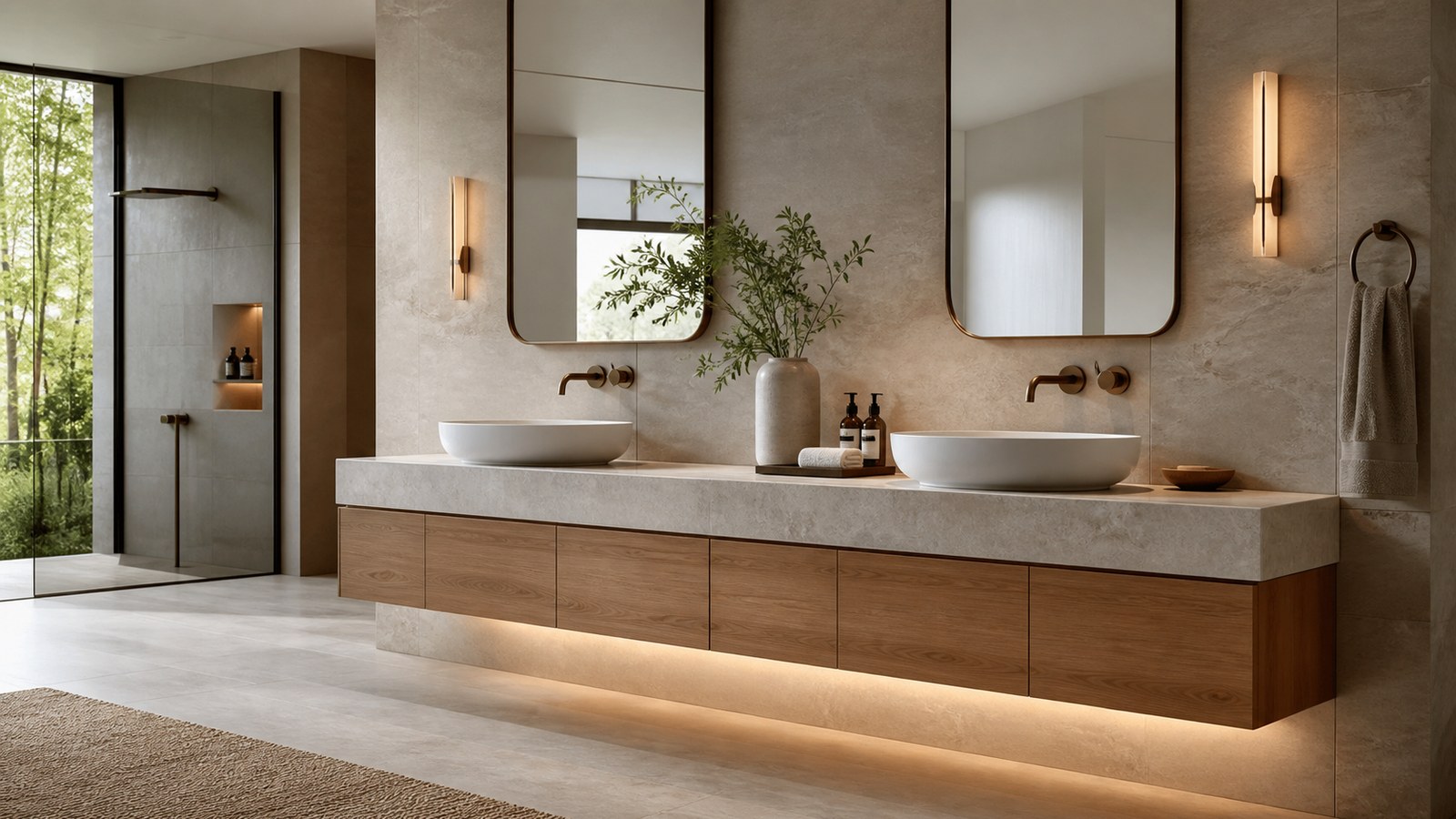
Under-vanity lighting can make the cabinet appear to hover, but it should be gentle. A harsh strip of light under the drawers will draw attention to dust and break the spa mood. A warm, diffused glow set back from the front edge usually feels more refined.
Mirror lighting matters just as much. Backlit mirrors, vertical sconces, or soft side lighting can make the vanity zone comfortable for grooming without becoming clinical. The vanity should support both practical tasks and the room’s quieter evening atmosphere.
Separate circuits are useful. Bright task lighting in the morning and low ambient light at night ask for different settings. A floating vanity becomes more versatile when lighting can shift with the routine.
Underlighting is most successful when the vanity construction hides the technology. The user should perceive a soft lift, not a visible strip, cord, or harsh line. If the detail cannot be executed cleanly, a beautiful wall sconce or mirror glow may be a better way to create atmosphere.
Mirror shape can reinforce the floating effect. A wide horizontal mirror extends the vanity line, while a pair of vertical mirrors can make a double vanity feel more tailored. Backlighting works best when there is enough wall around the mirror for the glow to spread instead of dying at a corner.
Coordinate the Vanity With the Rest of the Room
A floating vanity should feel connected to the shower, tub, flooring, and wall finishes. That connection can come from repeated wood tones, shared stone veining, matching metal finishes, or aligned horizontal lines. The goal is not to match everything, but to make the vanity feel like part of the architecture.
Scale is especially important in long bathrooms. A vanity that stretches wall to wall may provide storage but can also feel monolithic. Breaking it into two drawers, adding a central open bay, or leaving side breathing room can make the composition lighter.
For powder rooms or compact baths, a floating vanity can become the main design gesture. In that case, choose one beautiful material and let the shape stay simple. The less space you have, the more every line matters.
Make Maintenance Part of the Design Decision
Floating vanities are often easier to clean around because the floor remains open. That advantage disappears if the underside has complicated edges, low clearances, or exposed brackets that collect dust. Simpler construction usually ages better.
Choose finishes with real bathroom life in mind. Toothpaste, water spots, cosmetics, hair tools, and cleaning products are part of the vanity’s world. A modern oasis look should be durable enough that the user does not feel anxious using it.
The best floating vanity feels effortless because the hard decisions were handled early. Structure, storage, lighting, and finish all work together, leaving the room lighter and the daily routine smoother.
Longevity should be part of the definition of beauty. A cabinet that swells, chips, or stains will disrupt the calm no matter how elegant it looked at installation. Choose materials, edge details, and finishes that can handle wet hands, daily wiping, and the occasional product spill without turning the vanity into something fragile.
If the bathroom is used by children, guests, or multiple adults, test the plan against less-than-perfect behavior. Drawers may be left open, towels may hang from the counter, and water may drip down the face. A floating vanity can still be the right choice, but it should be detailed for the household that will actually use it.
Know When a Floating Vanity Is the Right Move
A floating vanity is strongest when the bathroom benefits from visible floor, lighter proportions, or a cleaner architectural line. It is not automatically the answer for every room. If the wall cannot be reinforced reasonably, if storage needs are extreme, or if plumbing changes would consume the budget, a furniture-style vanity may be more practical.
That said, many bathrooms become noticeably calmer once the vanity is lifted. The open floor reduces visual bulk, the cabinet can be sized more precisely, and lighting can add a quiet evening layer. The design feels especially effective when paired with simple walls, soft stone, and an uncluttered mirror composition.
The decision should come down to how the room will be used. If the vanity can hold the daily essentials, withstand moisture, and align with the larger design, the floating approach can make the whole bathroom feel more intentional. It elevates the room by removing weight, not by demanding attention.
For the most polished result, treat the vanity wall as a complete composition. Cabinet height, mirror shape, faucet placement, lighting, outlets, and towel access should be drawn together. When those pieces align, the floating vanity stops looking like a product choice and starts feeling like architecture.
The best time to solve that composition is before plumbing and electrical rough-in. Moving a sconce, faucet, outlet, or drain later can be expensive, and small misalignments are more visible on a clean modern wall. Early coordination keeps the finished vanity calm.
A floating vanity should ultimately make the bathroom easier to inhabit. If it gives the floor more openness, the storage more order, and the wall more grace, it has earned its place in the modern oasis vocabulary beautifully.