The Rise of the Spa-Inspired Bathroom
The bathroom has evolved far beyond its practical roots. What was once a purely functional room has become one of the most emotionally important spaces in the modern home. Today’s homeowners are not just looking for a place to get ready in the morning or unwind at night. They are searching for a sanctuary, a place where stress softens, noise fades, and daily rituals feel elevated. That shift has helped contemporary spa bathrooms become one of the most desirable design directions in modern interiors. A contemporary spa bathroom is not simply a luxury bathroom with expensive finishes. It is a carefully balanced environment that blends comfort, calm, beauty, and function into a seamless experience. The goal is not excess for the sake of attention. Instead, it is refinement with purpose. Every surface, every light source, every material, and every fixture is chosen to create a sense of peace. That is what truly redefines the modern oasis. It is not about copying a hotel suite or a wellness retreat exactly. It is about bringing those feelings home and shaping them around real life.
A: Warm whites, taupes, soft grays, muted greens, and sandy neutrals usually create the calmest effect.
A: No. Smart storage, a clear palette, and seamless materials can make even small bathrooms feel luxurious.
A: Declutter surfaces, soften the lighting, add plush textiles, and use calming natural-inspired finishes.
A: Not at all. A spacious walk-in shower can deliver the same spa-inspired impact in many homes.
A: Floating vanities with clean lines and concealed storage are a strong match for contemporary spa bathrooms.
A: Matte finishes are often preferred because they feel softer, calmer, and more natural.
A: Bring in wood tones, textured tile, warm lighting, and soft fabrics to balance sleek surfaces.
A: Layered lighting with vanity lights, ambient glow, and dimmable fixtures creates the best balance of function and mood.
A: Large-format tiles are popular because they create a cleaner, more seamless appearance.
A: Use hidden storage, shower niches, trays for essentials, and keep decorative items minimal and intentional.
Why Contemporary Design Works So Well in Spa Bathrooms
Contemporary design and spa-inspired living naturally complement one another. Contemporary interiors tend to favor clean lines, uncluttered forms, restrained palettes, and an intentional use of space. Spa environments rely on many of the same principles. Calm is easier to create when the room is not visually noisy. Relaxation feels more natural when design decisions support simplicity rather than distraction. This is why contemporary spa bathrooms often feel more timeless than trend-heavy alternatives. They are rooted in atmosphere rather than decoration. Floating vanities, oversized tiles, frameless glass, sculptural tubs, and soft layered lighting all contribute to a look that feels fresh without being flashy. Instead of overwhelming the eye, these rooms invite the mind to slow down. The result is a bathroom that functions like a private retreat while still looking polished, current, and deeply livable.
Space Planning as the Foundation of Calm
One of the most important ingredients in a successful spa bathroom is thoughtful space planning. Even the most beautiful finishes can fall flat if the room feels crowded, awkward, or disjointed. Contemporary spa bathrooms redefine the modern oasis by making movement feel easy and natural. There is a sense of openness, even in smaller footprints, because layouts are designed to breathe.
A freestanding tub might become the sculptural focal point in a larger room, placed near a window or under a statement light. In smaller spaces, a generous walk-in shower may take center stage instead. Double vanities are often arranged to maximize symmetry and reduce morning congestion. Niches, ledges, and recessed storage help keep essentials nearby without cluttering counters. The best layouts do not merely organize fixtures. They choreograph experience. They guide the user from entry to sink to bath or shower in a way that feels quiet, intuitive, and restorative.
The Power of a Soft, Grounded Palette
Color plays an enormous role in shaping how a bathroom feels. In contemporary spa bathrooms, the most successful palettes are usually grounded, subtle, and layered rather than bold or high contrast. Warm whites, misty taupes, stone grays, sandy beiges, muted greens, and soft charcoal tones create a visual language of calm. These colors echo nature, which is why they often feel inherently restorative.
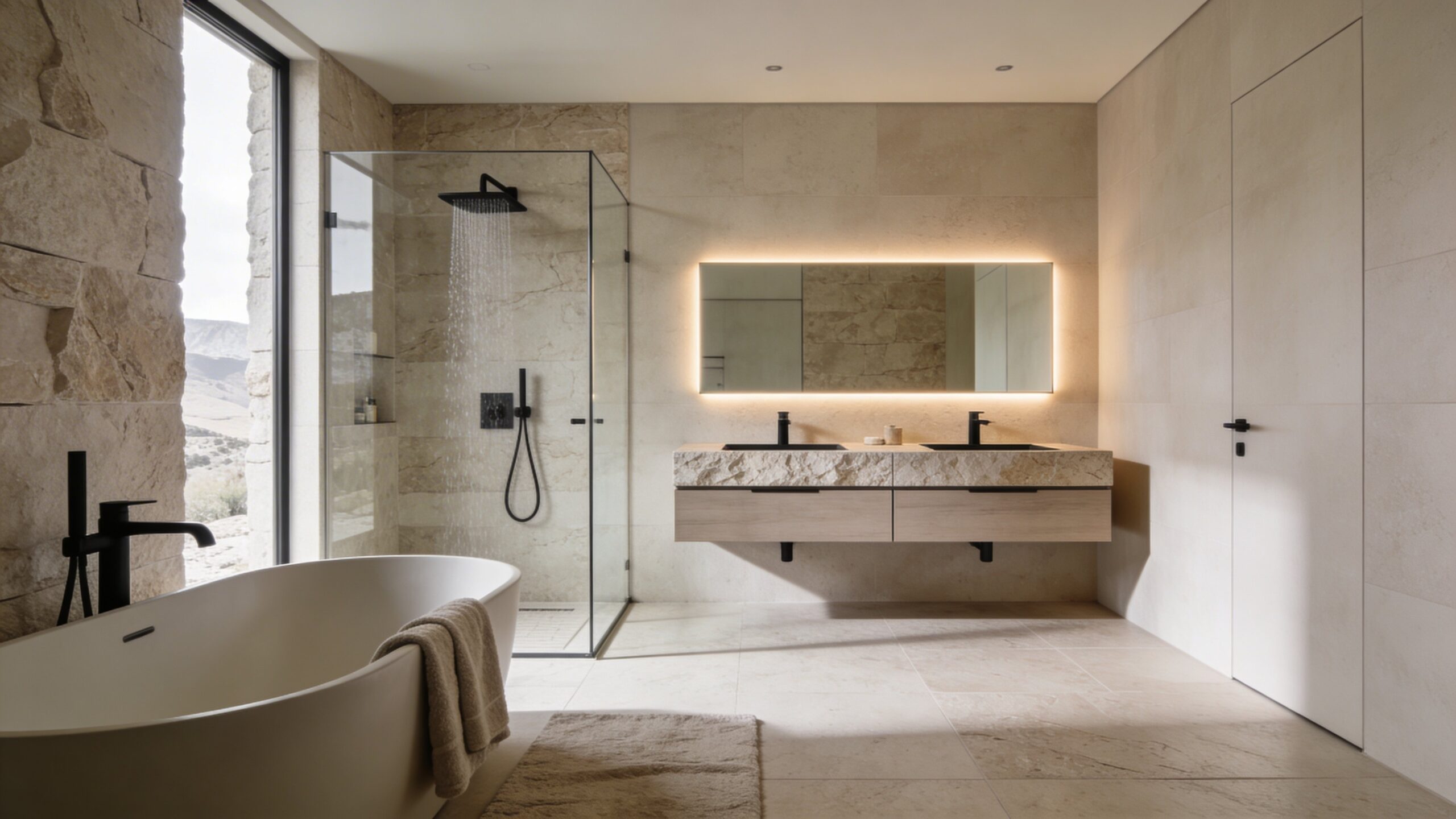
That does not mean spa bathrooms must be boring or flat. Depth is created through variation in tone and material rather than loud color shifts. A pale limestone-look tile may sit next to a richly grained oak vanity. Matte black accents may sharpen the room without overpowering it. Soft plaster walls, brushed metals, and creamy countertops can add richness while keeping the overall mood serene. The most memorable spa bathrooms use color as emotional architecture. Instead of demanding attention, the palette gently holds the room together and supports the larger sense of escape.
Natural Materials and Texture Bring Warmth to Modern Minimalism
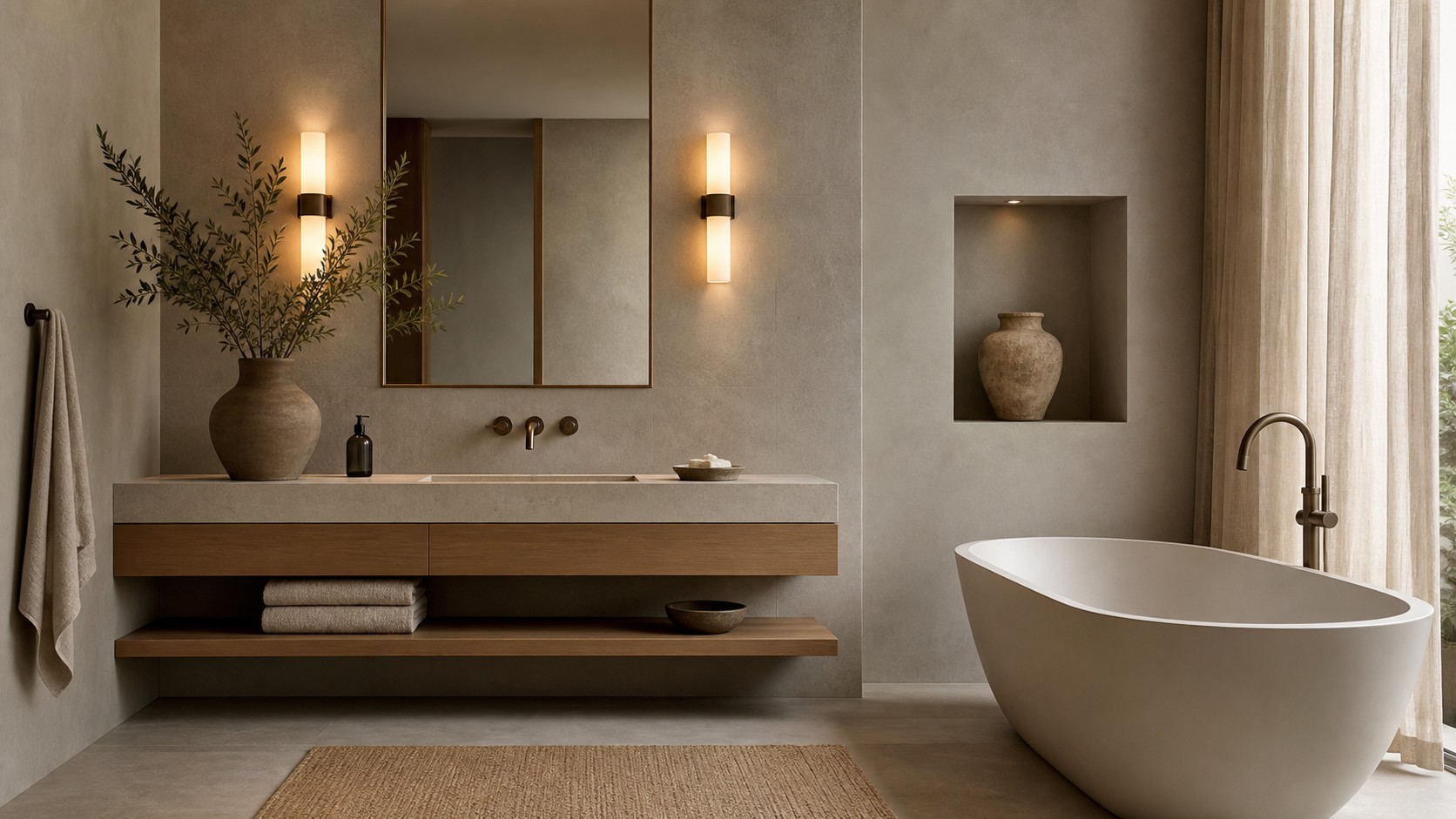
A common mistake in modern bathroom design is leaning so heavily into sleek surfaces that the room feels cold. Contemporary spa bathrooms avoid that trap by introducing texture and natural-inspired materials that soften the space. Stone, wood, porcelain, glass, and tactile textiles all help create a layered atmosphere that feels luxurious without becoming ornate. Wood vanities are especially effective because they add warmth and human character. Whether the finish is light oak, rich walnut, or a muted ash tone, wood grounds the room and keeps it from feeling clinical. Stone-look slabs and large-format porcelain surfaces can provide the visual calm of minimal grout lines while still offering movement and depth. Ribbed glass, fluted cabinetry details, and handmade-style tiles introduce subtle texture that catches light beautifully. These elements make the room more than sleek. They make it soulful.
Showers That Feel Like Wellness Retreats
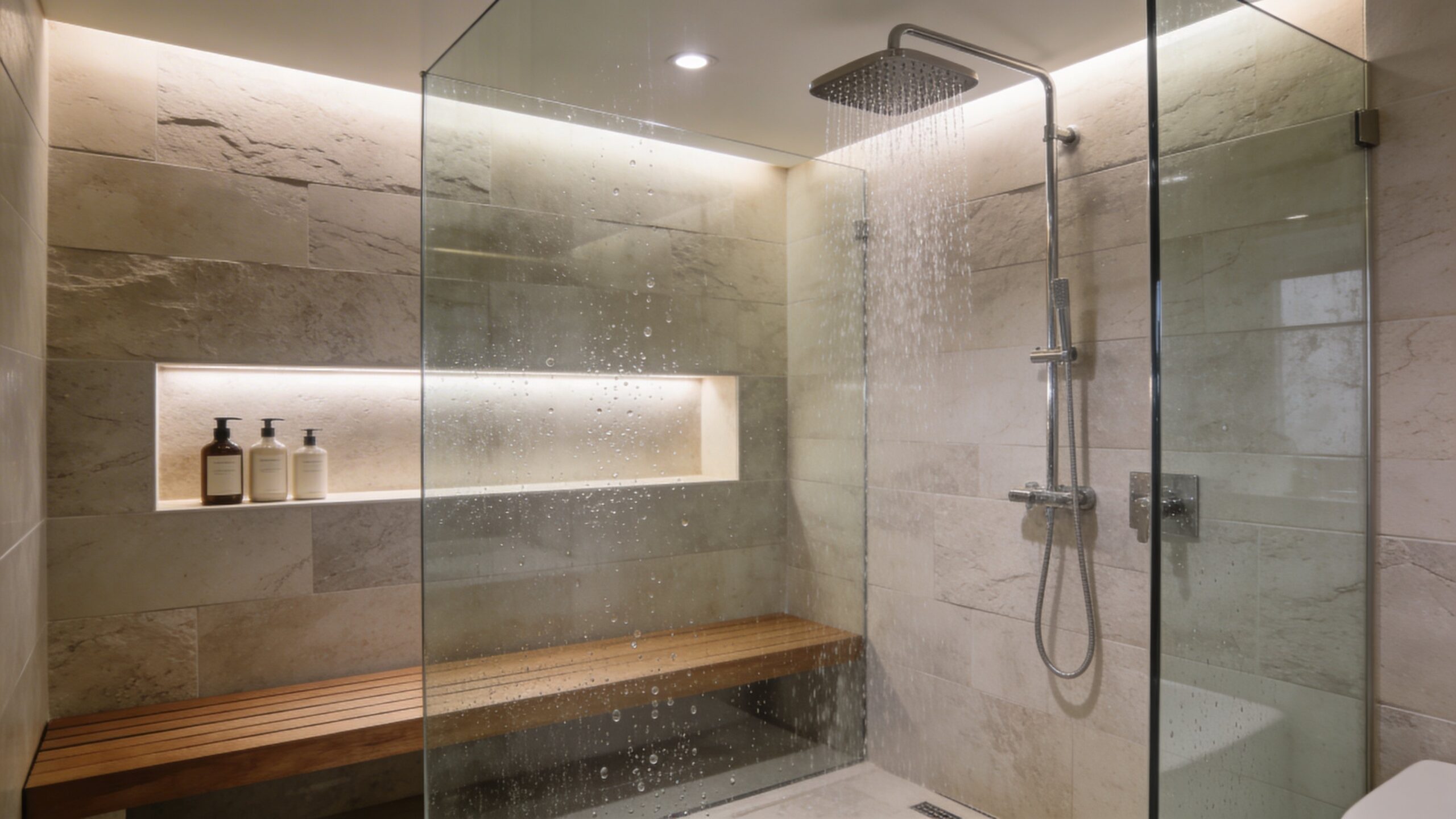
Few features define the contemporary spa bathroom more powerfully than the shower. The modern shower is no longer a basic stall tucked into a corner. It has become an immersive destination. Oversized walk-in designs, seamless glass enclosures, linear drains, integrated benches, and recessed shelving create a clean, architectural foundation. From there, luxury emerges through experience.
Rain showerheads remain popular for good reason. They create a gentle, enveloping flow that feels closer to weather than plumbing. Hand showers add flexibility, while body sprays can enhance the sense of indulgence when used thoughtfully. Steam functions are increasingly appealing for homeowners who want to build wellness into daily routines. Even without steam, the spa effect can be amplified through warm materials, layered lighting, and a design that removes visual clutter. A shower becomes transformative when it feels private, spacious, and intentionally composed.
Freestanding Tubs as Sculptural Centerpieces
The freestanding tub continues to hold a special place in the spa bathroom because it symbolizes pause. Unlike a quick shower, a bath suggests time, ritual, and self-care. In contemporary design, tubs are often chosen as sculptural objects as much as practical fixtures. Their silhouettes help anchor the room and give the bathroom a sense of quiet luxury.
Oval tubs remain especially popular because their soft curves counterbalance the room’s straighter architectural lines. Matte finishes can add a velvety visual quality, while white remains classic for its clean and calming effect. Placement is just as important as the tub itself. Set against a textured wall, positioned beneath a window, or paired with a floor-mounted filler, the tub becomes a moment within the room. It tells the user that this space is not only for utility. It is for retreat, reflection, and restoration.
Lighting That Shapes Mood and Experience
Lighting is one of the most underrated tools in bathroom design, yet it is essential to creating a true spa atmosphere. Contemporary spa bathrooms rely on layered lighting rather than a single bright overhead source. This creates flexibility and allows the room to shift with the time of day and the user’s needs.
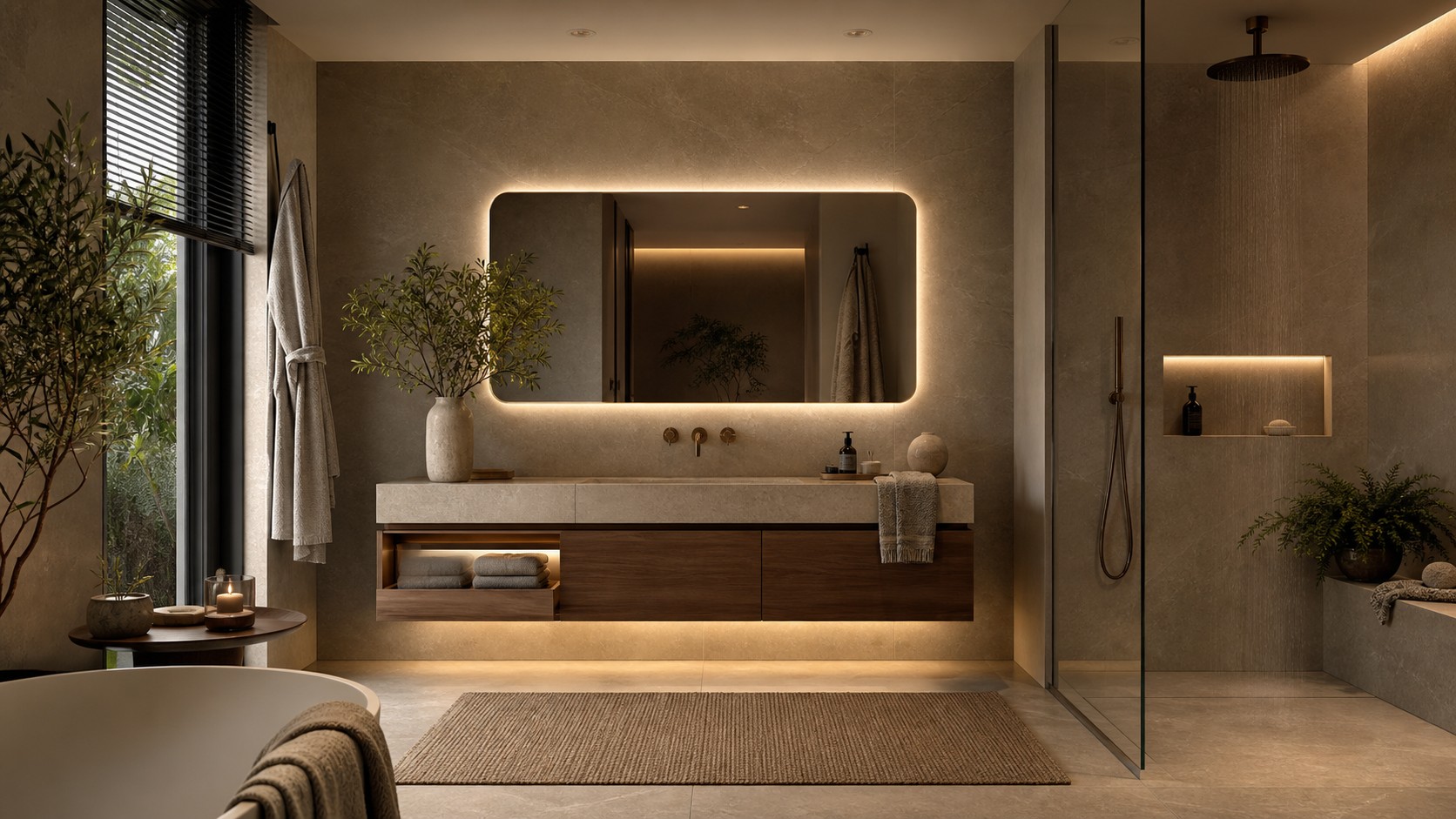
Task lighting at the vanity is crucial for grooming, but it should be flattering and balanced. Ambient lighting softens the room and reduces harsh shadows. Accent lighting beneath vanities, inside niches, or behind mirrors can introduce a floating, tranquil effect. Dimmers are especially powerful because they let the bathroom transition from energizing morning brightness to a softer evening glow. Warm lighting temperatures typically help the space feel more inviting and less clinical. In a spa-inspired bathroom, light does more than illuminate. It sets the emotional tone.
Vanities That Balance Beauty and Function
A contemporary spa bathroom must look serene, but it also has to work beautifully in daily life. That makes the vanity one of the most important design decisions in the room. Floating vanities are especially well suited to this style because they make the space feel lighter and more open. Their suspended form creates a clean visual line and often allows subtle underlighting to enhance the floating effect.
Storage is essential, but it should be quiet in appearance. Drawers with integrated organizers, concealed outlets, and thoughtful compartments help reduce clutter without sacrificing convenience. Countertop materials should feel durable and elegant, whether quartz, porcelain, or natural stone. Vessel sinks can create a sculptural statement, but undermount sinks often support a cleaner, more streamlined look. The best vanities marry calm aesthetics with everyday practicality, proving that beauty and ease do not have to compete.
Tile, Stone, and Surface Choices That Elevate the Room
Surfaces are the visual language of the bathroom. They determine whether the room feels busy or restful, cold or warm, forgettable or immersive. In contemporary spa bathrooms, large-format tiles are especially useful because they reduce grout lines and create a more seamless effect. This visual continuity helps the room feel larger and more refined.
Stone-inspired surfaces remain central to the spa aesthetic because they connect the interior to the natural world. Marble-look slabs bring elegance, while limestone and travertine looks offer softness and warmth. Matte finishes tend to feel more calming than high gloss, though a strategic polished accent can add contrast. Continuity also matters. Carrying the same tile from floor to shower wall, or using coordinated tones across multiple surfaces, creates the kind of quiet cohesion that defines truly elevated design.
Wellness Features That Add Meaningful Luxury
What truly sets contemporary spa bathrooms apart is not just their appearance, but the way they support well-being. Luxury in this context is less about showing off and more about feeling better. Heated floors, towel warmers, steam showers, integrated sound systems, aromatherapy elements, and advanced ventilation all contribute to a better daily experience. These features are especially powerful because they transform ordinary routines into restorative moments. Stepping onto a warm floor on a winter morning changes the feel of the entire space. Wrapping up in a heated towel after a shower makes the room feel indulgent in a deeply personal way. Good ventilation protects materials and comfort alike, keeping the environment fresh and healthy. When chosen thoughtfully, wellness-focused upgrades make the modern oasis feel real, not just styled.
Bringing Nature Into the Bathroom Experience
Spa design often draws from nature because natural elements calm the senses and reduce visual stress. Contemporary spa bathrooms use this principle in subtle and sophisticated ways. This may mean choosing earthy tones, adding wood textures, or incorporating stone-inspired surfaces. It can also mean maximizing natural light, framing outdoor views, or using plants to soften hard lines.
Even a few carefully chosen details can shift the atmosphere dramatically. A live-edge stool, a simple branch arrangement, or a woven basket can make the room feel warmer and more grounded. Skylights and frosted windows help bring daylight into the space while preserving privacy. Nature does not need to be literal or abundant to be effective. In the best spa bathrooms, it is felt through materiality, light, and mood.
The Importance of Decluttering and Visual Quiet
No matter how luxurious the finishes are, a bathroom cannot feel like a spa if it is overwhelmed by visual clutter. Contemporary spa bathrooms succeed because they prioritize visual quiet. Products are stored out of sight. Towels are folded with intention. Accessories are minimal and purposeful. Open shelves, if used at all, are carefully edited.
This focus on restraint is what gives the room its exhale. The eye can move calmly from one surface to another without interruption. The mind does not have to process endless bottles, cords, and small objects. Instead, the space feels composed and restorative. In many ways, decluttering is one of the most transformative design moves of all. It costs less than major renovations, yet it dramatically changes the emotional feel of the room.
Personalization Makes the Oasis Feel Real
A spa bathroom should not feel generic. It should feel tailored to the people who use it. That is why the most successful contemporary designs include moments of personalization within the overall restraint. A favorite scent, a special tile detail, a beloved wood tone, or a carefully chosen piece of art can all make the space feel unique without breaking its serenity.
The key is intentionality. Personal touches should support the room’s calming identity rather than compete with it. The result is a bathroom that feels both elevated and deeply lived in. It reflects the homeowner’s version of comfort rather than a one-size-fits-all idea of luxury. That is what redefines the modern oasis most effectively. It is not simply beautiful. It is meaningful.
Why Contemporary Spa Bathrooms Continue to Inspire
Contemporary spa bathrooms have become so compelling because they answer a deeper need in modern life. People are busier, more connected, and more overstimulated than ever. Home is increasingly expected to do more than provide shelter. It must support restoration too. The bathroom, once overlooked, now has the potential to become one of the most transformative spaces in the house. When designed with care, a contemporary spa bathroom becomes more than a trend. It becomes a daily ritual environment. It reminds us that beauty can be calming, that function can feel luxurious, and that even ordinary routines can hold moments of peace. Through thoughtful layouts, grounded materials, soft lighting, and wellness-minded details, these bathrooms truly redefine the modern oasis. They offer not just style, but a new way of living with more calm, more intention, and more comfort every day.