Make Lighting Memorable Without Making It Loud
Statement lighting in a modern oasis bathroom has a delicate job. It needs to create beauty, atmosphere, and a point of view without making the room feel busy or theatrical. The best lighting is memorable because it shapes the space softly: a pendant glows near a tub, a mirror floats in warm backlight, stone catches a quiet wall wash, and the shower remains clear and safe. In this kind of bathroom, the statement is not brightness. The statement is control. A successful plan lets the room wake up, wind down, and support detailed grooming without ever feeling like a showroom display. Lighting is also one of the most powerful ways to make simple materials feel elevated. A modest plaster wall, quiet tile, or clean vanity can become beautiful when light grazes it gently, which means the fixture budget should be considered alongside placement, dimming, and color quality. The challenge is that bathrooms are technically demanding rooms. Moisture, mirrors, glass, skin tones, nighttime use, and electrical safety all shape what lighting can do. A soft statement plan respects those constraints instead of fighting them. It makes the room more useful first, then more atmospheric, and finally more expressive.
A: Yes, one well-scaled sconce, pendant, or backlit mirror can create impact without crowding the room.
A: Warm white around 2700K to 3000K is often comfortable for evening calm and natural materials.
A: Sometimes not; many rooms still need side or frontal light for accurate, flattering visibility.
A: Only if the fixture location, rating, and clearance meet safety requirements.
A: Use matte surfaces, diffused fixtures, indirect placement, and careful aiming around mirrors and glass.
A: It can be soft, but it must still make wet surfaces, benches, and edges easy to see.
A: Yes, dimmers are one of the simplest ways to make bathroom lighting feel flexible and calm.
A: Layering, warm color quality, hidden sources, and good placement usually matter more than fixture price.
A: Not necessarily; simple separated circuits often feel calmer than an overcomplicated smart setup.
A: Using one harsh overhead fixture and expecting it to handle every routine.
Build the Room in Layers of Light
A single ceiling fixture rarely creates an oasis mood. Bathrooms need layered light because the room serves different routines at different times. Grooming needs clear, flattering task light. Showering needs safe wet-zone visibility. Bathing needs a lower, slower glow. Night use benefits from wayfinding light that does not fully wake the body.
Start with the practical layers, then add the statement. Ambient light gives the room a baseline, task light supports the face and hands, accent light reveals texture, and decorative light provides personality. When these layers are separated, the bathroom can shift from efficient morning use to quiet evening retreat.
Dimmers are essential. Without them, even beautiful fixtures can feel harsh. A soft statement lighting plan depends on being able to lower intensity, isolate zones, and let materials respond gently.
Layering also protects the budget. Instead of buying one dramatic fixture and hoping it solves every need, the design can use modest sources in precise locations. A quiet cove, a well-placed sconce, and a restrained pendant often feel richer than a single expensive light fighting to do too much.
The order of decisions matters. Decide what the light needs to do before deciding what the fixture should look like. A sculptural pendant may be the emotional centerpiece, but it still has to coexist with exhaust fans, ceiling heights, mirror needs, and safe clearances.
Choose a Statement Fixture With Restraint
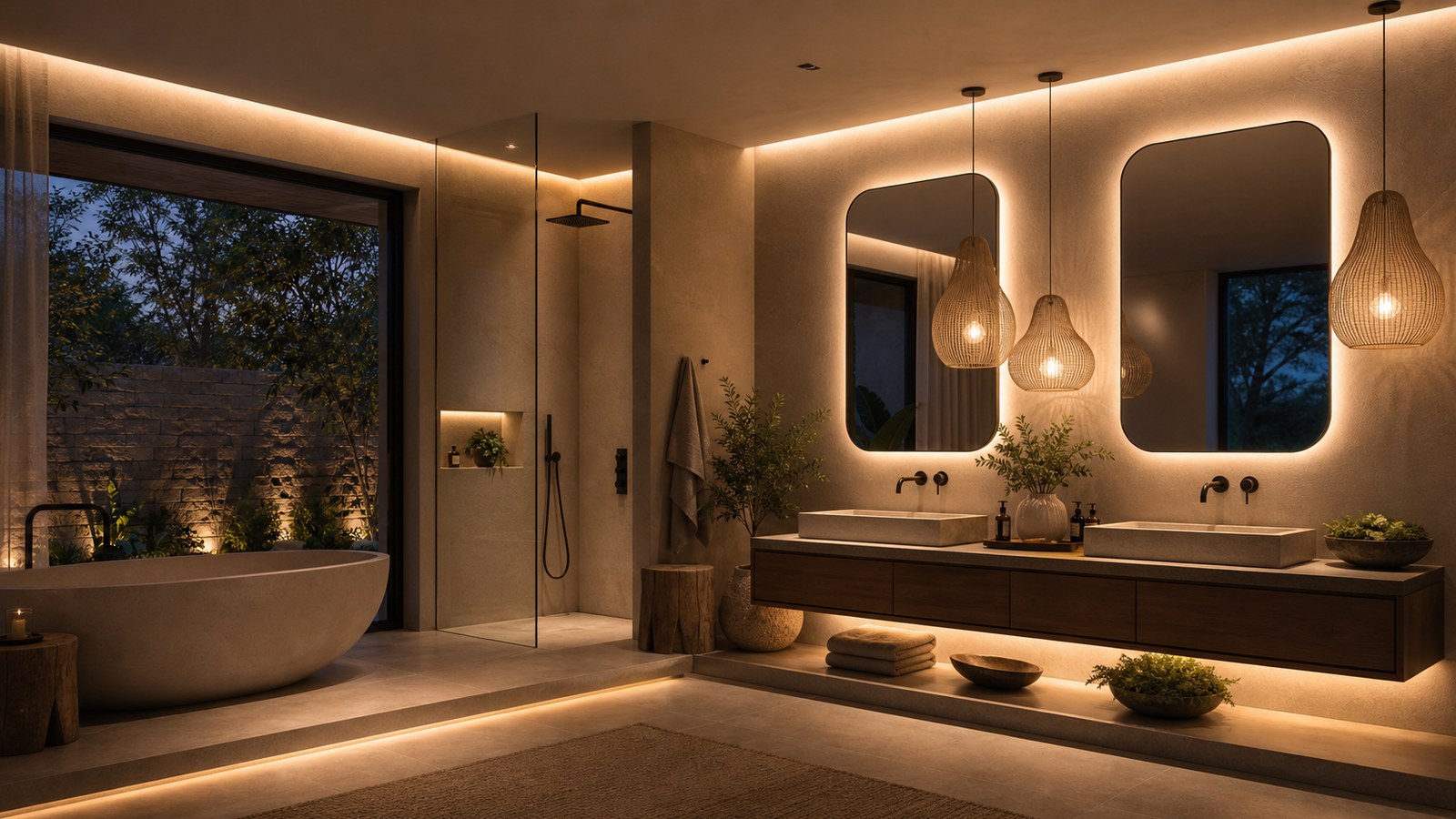
A statement fixture should relate to the bathroom’s architecture. Over a freestanding tub, a sculptural pendant can feel elegant if it is properly rated, correctly located, and scaled to the tub and ceiling height. Near a vanity, a pair of distinctive sconces may create more impact than one oversized object.
The fixture does not need to be ornate. A simple globe, slim vertical bar, stone-like shade, warm glass pendant, or softly curved form can become memorable through placement and glow. In modern oasis design, quiet shape often ages better than trend-heavy drama.
Safety and code requirements come first around tubs and showers. Decorative fixtures must be suitable for their location, and hanging pieces need proper clearance. The most beautiful lighting plan is still a bathroom plan, which means moisture, reach, and maintenance cannot be ignored.
Use Mirror Light to Flatter, Not Flatten
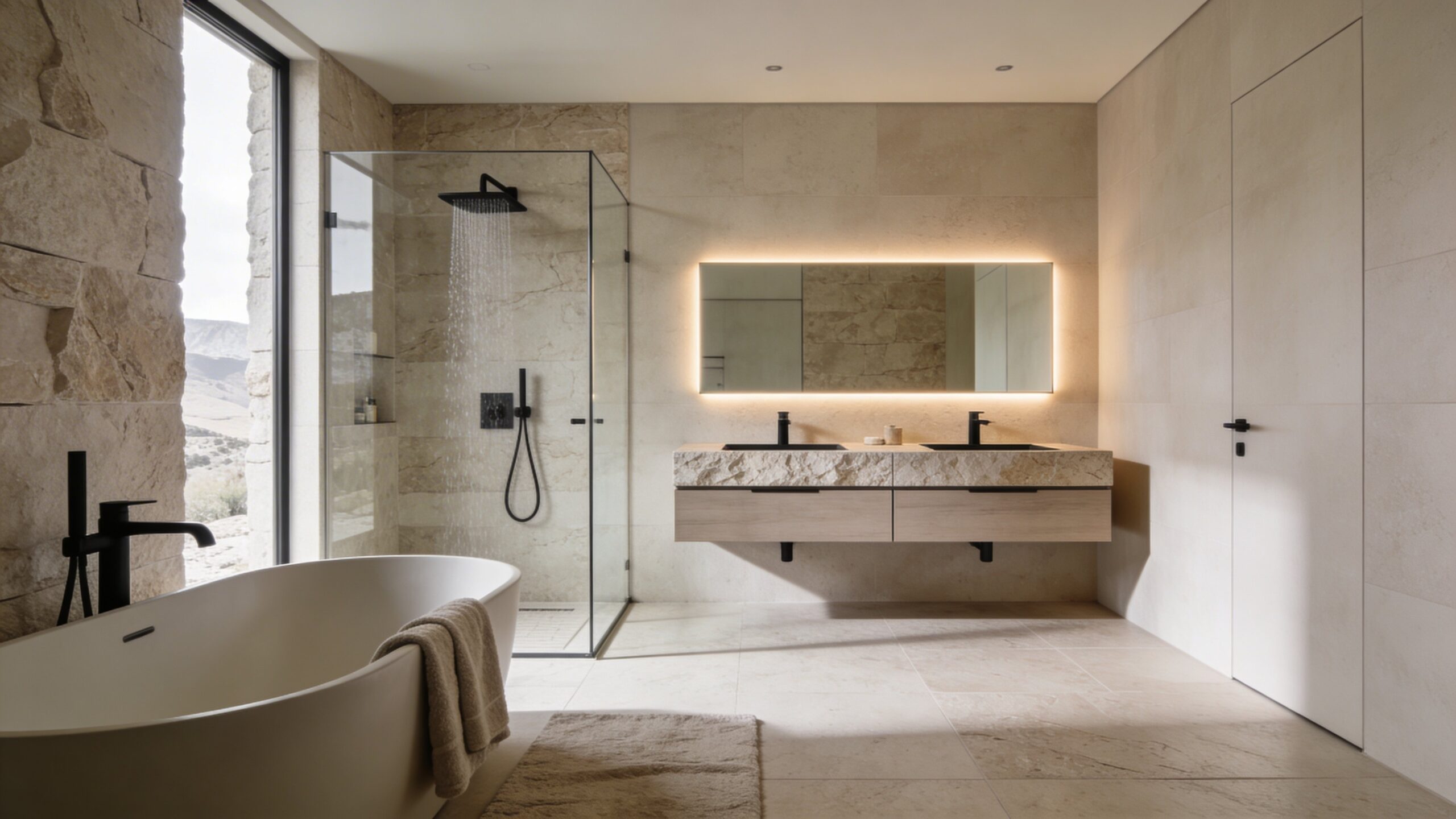
Vanity lighting has the most direct effect on how the room feels to use. Light from only above can cast shadows under the eyes and chin. Side lighting, vertical sconces, or a well-designed backlit mirror can make grooming more comfortable and the room more refined.
Backlit mirrors are popular because they appear to float, but they should not be the only face light unless the design provides enough frontal illumination. A glowing halo looks serene, yet the user still needs to shave, apply skincare, or check details accurately.
Color quality matters. Choose lamps or integrated LEDs with good color rendering so skin, wood, stone, and metal look natural. A bathroom that photographs warmly but makes people look tired will not feel luxurious in daily use.
Mirror size affects this decision. A large mirror can bounce light across the room and amplify glare, while a pair of smaller mirrors may allow sconces to sit at better face height. The lighting plan should be drawn with the actual mirror dimensions, not guessed after cabinetry is installed.
The vanity zone is also where lighting mistakes are noticed most often. If light is uneven, the user sees it every morning. If the color is wrong, skin and finishes look off. A soft oasis mood should never come at the cost of making daily grooming harder.
Let Texture Catch the Glow
Soft statement lighting often depends on surfaces as much as fixtures. A wall wash across honed stone, plaster, fluted tile, or ribbed glass can create depth without adding visual clutter. The light reveals material rather than competing with it.
Cove lighting and concealed strips work best when the source is hidden and the glow is even. Exposed LED dots, harsh lines, and cool color temperature can make the room feel commercial. The detail should disappear so the atmosphere remains.
Think about reflection. Glossy tile, polished stone, glass shower panels, and mirrors can multiply light in ways that become uncomfortable. Softer finishes give the lighting more room to breathe.
Tune Color Temperature for the Time of Day
Warm light is usually the friendliest choice for an oasis bathroom, especially in the evening. Around 2700K to 3000K often feels calm while still usable. Cooler light can help with certain grooming tasks, but too much cool brightness can make the room feel clinical.
Some bathrooms benefit from tunable white lighting, but only if the controls are simple enough that people will use them. A complicated control panel can undermine the feeling of ease. Separate scenes for morning, bath, shower, and night may be more useful than endless adjustment.
Natural light should be considered part of the lighting plan. Daylight may be bright and blue in the morning, golden in the evening, or filtered through privacy glass. Electric lighting should complement those shifts rather than fight them.
Consistency across lamps matters too. Mixing several color temperatures can make a bathroom feel patchy, especially when stone, plaster, and wood are subtle. If one layer is intentionally cooler for grooming, keep that choice controlled and separate so the relaxed scenes remain warm.
Color temperature should be tested against privacy glass and window direction. North-facing daylight, warm evening sun, and frosted glass can all change how electric light is perceived. A lamp that feels perfect in one bathroom may feel dull or yellow in another.
Keep the Shower Bright Enough and Still Calm
The shower cannot be sacrificed for atmosphere. Wet zones need safe, appropriate lighting that makes edges, niches, benches, and floor transitions visible. A dim shower may look moody in a photo but feel unsafe in real life.
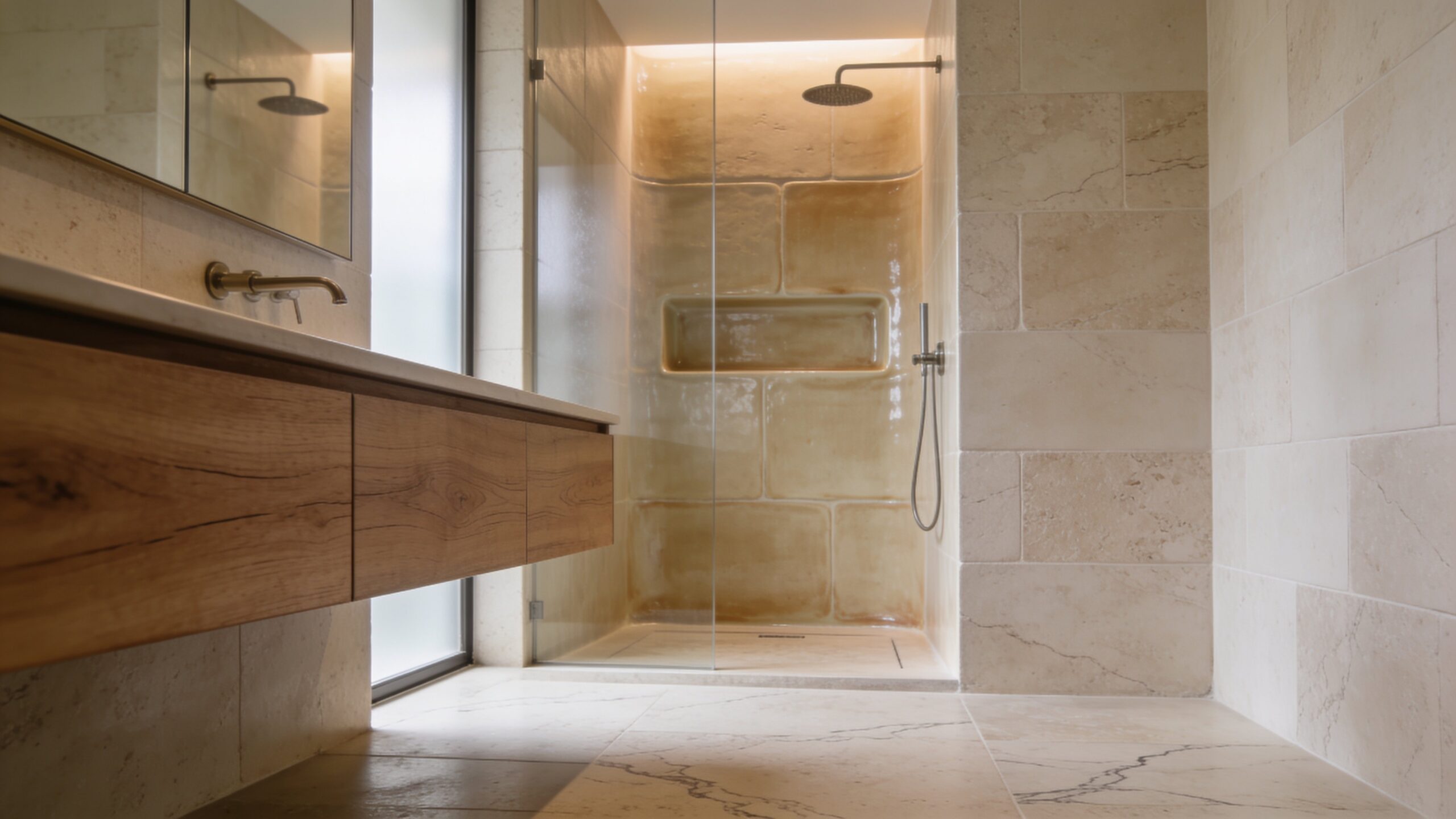
Wet-rated recessed lights, linear lighting outside the direct spray, or a soft wall wash near the shower can provide clarity without harshness. The key is to avoid glare bouncing off glass and tile. Placement is often more important than fixture style.
If the shower has dramatic stone or tile, lighting can bring it alive. Use restraint so the material feels natural, not staged. A modern oasis shower should feel clean, secure, and quietly atmospheric.
Make Controls Part of the Calm
Lighting control should be intuitive. Too many switches in a row can make a beautiful bathroom frustrating. Group circuits by routine: vanity, shower, ambient, accent, and night. Labeling may be helpful during installation, but the final user experience should feel obvious.
Motion sensors can be useful for night lighting or under-vanity glow, but they should not trigger bright overhead lights during quiet hours. A soft path of light is often enough. Timers and humidity-sensing fans can support comfort without adding visual complexity.
The final test is emotional as much as technical. Stand in the bathroom with only the evening scene on. If the room feels flattering, safe, calm, and intentional, the statement lighting is doing its work.
Maintenance should be considered before the final fixture order. Integrated LEDs, specialty shades, and hard-to-reach pendants may look wonderful, but the bathroom must remain easy to live with. A fixture that can be cleaned, serviced, and dimmed gracefully will feel luxurious for longer.
Finally, photograph the room in your mind without the fixtures turned on. If the layout depends entirely on decorative lights to feel interesting, the plan may need stronger materials or better proportions. Statement lighting should enhance a calm bathroom, not rescue an underdeveloped one.
Edit the Drama Until the Room Feels Restful
Soft statement lighting requires editing. It is tempting to add a pendant, backlit mirror, cove light, niche light, shower light, and decorative sconces all at once, but too many glowing moments can make the bathroom restless. Choose the moments that support the room’s routine and let the remaining surfaces stay quiet.
The strongest plan usually has a hierarchy. One fixture or glow effect can be the visual lead, while the other layers support safety, grooming, and texture. When everything tries to be special, the room loses the calm that makes an oasis bathroom appealing.
Before final installation, review the lighting from the doorway, the vanity, the shower, and the tub or main pause point. Each view should feel composed. If a fixture dominates from every angle, dim it, simplify it, or let another layer do the work.
A soft statement bathroom should still feel beautiful when only one scene is on. That is the proof that the design is layered rather than overloaded. The lighting has done its job when the room feels useful in the morning, gentle at night, and quietly memorable in between.
The best lighting plans also leave room for the materials to speak. Stone should show its depth, plaster should hold a soft glow, mirrors should feel flattering, and glass should stay clear rather than glaring. When the fixtures support those qualities instead of competing with them, the bathroom gains presence without losing peace.
It helps to choose lighting with the slowest routine in mind. A rushed morning can tolerate brightness, but an evening bath or quiet shower quickly reveals whether the room is too sharp. If the gentle scene works, the rest of the plan can be adjusted upward for task needs.
That is why soft statement lighting is less about one dramatic purchase and more about orchestration. Fixture shape, beam spread, dimming, safety rating, surface finish, and switch logic all contribute. When they work together, the bathroom feels designed rather than merely decorated. The reward is a room that can shift moods without changing identity, giving the household clarity when needed and quiet when the day is ready to slow down. That flexibility is the luxury, especially in a room used at so many different daily hours.