
The New Oasis: Minimalism That Doesn’t Feel Cold
Minimalism used to mean bright-white everything, hard edges, and surfaces so pristine they felt untouchable. Warm minimalist bathrooms flip that script. They keep the calm, uncluttered look—but soften it with natural textures, gentle color, and lighting that makes skin look good at 6 a.m. The result is a space that feels more like a boutique spa than a sterile showroom: quiet, grounded, and somehow more spacious than the square footage suggests. A modern oasis isn’t built by adding more; it’s built by choosing better. Warm minimalism is about editing the room down to what you actually love to use, then letting a few well-chosen materials do the emotional heavy lifting. Think creamy stone instead of pure white tile, brushed metal instead of mirror chrome, warm wood tones instead of icy gray, and shadows that fall softly rather than glare off glossy surfaces. This style doesn’t chase trends—it chases a feeling: exhale, reset, start over.
A: Add warmth with wood tones, matte finishes, soft lighting, and tactile textiles.
A: Layered, warm lighting (mirror + dimmer) and better towels make an instant difference.
A: Stone-look porcelain in soft beige/cream with a honed or matte finish.
A: Yes—use one main finish, then a subtle secondary finish for small accents.
A: Add a tray for daily items and move everything else into drawers or a cabinet.
A: Treat them like a gallery: a few folded towels, one vessel, one functional item—nothing more.
A: Yes—keep materials continuous, use a large mirror, and avoid high-contrast patterns.
A: Brushed or satin finishes tend to show fewer spots than polished chrome.
A: Squeegee after use and use a gentle weekly cleaner to prevent buildup.
A: Radiant heat (or even a heated towel bar) makes the space feel instantly more luxurious.
Start With a Calm Palette: Cream, Sand, Clay, and Steam
Color is the fastest way to shift a bathroom from “minimal” to “oasis.” Warm minimalist palettes live in the in-between: not beige as an apology, but beige as intention. Creamy whites, soft sand, pale mushroom, muted clay, and whisper-gray with warm undertones create a background that feels like natural light. These colors don’t compete with your fixtures or art; they amplify them. The key is consistency. Pick one dominant wall-and-tile tone, then support it with two or three related shades. A warm-white plaster wall, a limestone-look porcelain floor, and a pale oak vanity can all sit in the same family without feeling monotone—because the textures do the talking. If you want a little contrast, go tonal instead of high-contrast: espresso accents rather than black, bronze rather than chrome, and deep olive or smoky taupe instead of bright color. Your bathroom should feel like a quiet conversation, not a debate.
Texture Is the New Decor
In warm minimalist bathrooms, texture replaces clutter. If the palette is intentionally quiet, you need surfaces that hold attention up close: a honed stone countertop you can’t stop touching, fluted cabinet fronts that catch the light, microcement walls that look like they were sculpted, or handmade tile with slight variation. Texture makes the room feel finished without needing “stuff.”
You can build layers without crowding the space. Pair matte and satin finishes so your eye has places to rest. Use a woven bath mat instead of a loud pattern. Choose towels with a thick, spa-like pile. Add a wooden stool or a teak bench that looks like it belongs in a sauna. Even the smallest details—ribbed glass, linen-like shower curtains, softly rounded hardware—create that oasis effect. The room stays minimal, but it never feels empty.
Lighting That Feels Like Golden Hour
If you copy only one thing from high-end spa bathrooms, copy the lighting plan. Warm minimalism needs light that’s flattering, layered, and dimmable. Overhead lighting alone tends to flatten the room and highlight every reflective surface. The oasis move is to create a glow that wraps around you.
Start at the mirror. A backlit mirror or vertical sconces positioned at face height reduce harsh shadows and feel quietly luxurious. Add a second layer—ceiling downlights or a small flush mount—on a dimmer for general brightness. Then add a third layer: a shower niche light, toe-kick lighting under the vanity, or a softly lit shelf. Use warm color temperatures so the space feels inviting, not clinical. And if you can, bring in daylight with sheer window treatments or frosted glass that keeps privacy while letting the sun do its magic.
The “One Statement” Rule: Choose a Hero Moment
Warm minimalism still wants a focal point—it just wants a calm one. Instead of filling the room with multiple bold choices, pick one hero moment and let it carry the design. That hero can be a sculptural freestanding tub, a dramatic slab backsplash, a curved arch detail, a large-format shower wall, or a beautifully framed mirror with presence.
The trick is to make the statement feel inevitable, not loud. A tub in a soft oval shape reads as a spa feature without screaming for attention. A stone vanity top with gentle veining can feel like art. Even a shower niche finished in the same tile but with a different layout can create a quiet highlight. When you keep the rest of the bathroom edited—clean lines, simple palette—the hero moment feels elevated, like the room was designed rather than assembled.
Tile Choices That Whisper, Not Shout
Tile is where warm minimalist bathrooms either become timeless—or accidentally become trendy. The oasis look usually avoids busy patterns and high-contrast mosaics in favor of large-format surfaces, soft variation, and tactile finishes. If you love tile that looks like stone, choose versions with subtle movement rather than dramatic veining. If you prefer solid color, look for handmade-look ceramics that have slight tone shifts. Those tiny irregularities create depth without clutter.
Finish matters as much as color. Matte and honed surfaces feel calmer than glossy tile, especially under bright bathroom lights. They also photograph beautifully and hide water spots better. For grout, aim for a close match to the tile so the room reads as one continuous surface. If you want a little structure, use a tonal grout that’s just a shade darker to gently outline shapes. The goal is not to erase the tile—just to keep it from becoming visual noise.
Warm Metals and Soft Hardware
Chrome can feel sharp in a warm minimalist bathroom. That doesn’t mean it’s off-limits, but the oasis vibe often leans toward warmer metals: brushed nickel, champagne bronze, aged brass, or soft black with a satin finish. These finishes feel more like jewelry than tools, especially when paired with warm stone and wood.
Hardware and fixtures should be consistent, not identical. You can mix finishes, but do it thoughtfully: one dominant finish for faucets and shower fixtures, and a supporting finish for small accents like towel hooks or mirror frames. Keep shapes simple—rounded corners, gentle curves, slim profiles. The moment fixtures get overly angular or aggressively modern, the room can swing cold again. Warm minimalism is modern, but it’s human.
The Shower as a Retreat
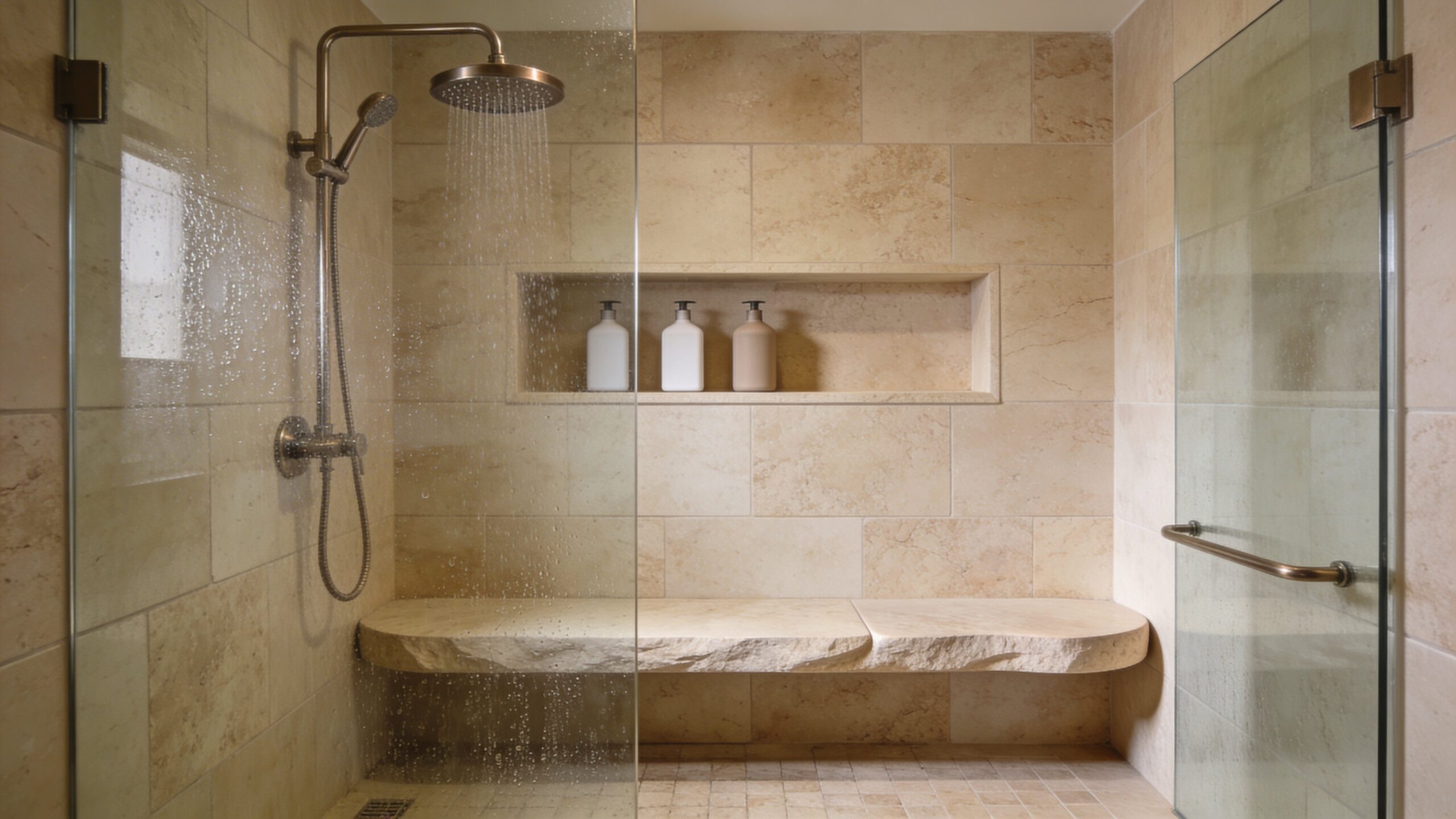
A modern oasis shower feels like stepping into a quiet canyon of stone and steam. The design move is to make the shower feel integrated rather than boxed in. Frameless glass keeps sightlines open. A continuous wall tile—especially in large format—turns the shower into part of the architecture. A built-in bench or ledge adds spa functionality without cluttering the floor with accessories.
Details make the experience. A recessed niche keeps bottles from becoming countertop chaos. A rain shower head adds drama, while a handheld sprayer adds practicality. If you want the most “oasis” upgrade without redesigning everything, focus on the sensory pieces: better water pressure, a calmer shower layout, and lighting that makes the space feel softer. When a shower is visually quiet and functionally smooth, it becomes the centerpiece of your daily reset.
The Bath Zone: Soft Curves, Warm Water, Quiet Rituals
Not every bathroom has room for a tub, but when it does, the tub can define the oasis. Warm minimalist tubs often have smooth silhouettes—oval, gently rectangular, or sculptural without sharp lines. Surround the tub with negative space so it feels like a destination. Instead of filling the area with decor, give it one supportive element: a small stool, a built-in ledge, or a minimal tray. The bath zone is also where you can introduce quiet luxury. A textured plaster wall behind the tub creates depth. A single pendant light (rated for damp areas) can feel unexpectedly serene. Even a niche for a candle or bath salts can make the space feel curated. In warm minimalism, rituals matter. The room should gently invite you to slow down.
Storage That Disappears
Clutter is the fastest way to break the oasis spell. The best warm minimalist bathrooms prioritize hidden storage: deep vanity drawers, recessed medicine cabinets, tall linen cabinetry, or built-in shelves that feel architectural. When everything has a place, the surfaces can stay calm—and calm is the whole point. Open shelving can work, but keep it disciplined. If you’re using open shelves, treat them like a gallery: a few folded towels, one beautiful soap dish, one object with texture. Limit labels, bright packaging, and mismatched bottles. Decanting into matching containers sounds fussy, but it can instantly elevate a bathroom—especially if your goal is spa-level serenity. A modern oasis isn’t about owning less; it’s about seeing less.
Materials That Feel Good in Real Life
A bathroom isn’t just visual—it’s tactile. Warm minimalism shines when materials feel good under hand and foot. Choose flooring that doesn’t feel icy first thing in the morning. Pick a vanity finish that feels smooth, not sharp. Opt for towel bars and hooks that feel sturdy, not flimsy. These are the micro-moments that make a bathroom feel high-end.
If you want to level up the oasis feeling, add one comfort upgrade that changes the experience daily: radiant heat, a quiet exhaust fan, a soft-close toilet seat, or a handheld sprayer that makes cleaning effortless. Warm minimalism isn’t only aesthetic minimalism; it’s functional minimalism—removing friction from your routine.
Styling the Space Without Styling It
The secret to warm minimalism is that it doesn’t look decorated. It looks inevitable. Instead of adding a bunch of accessories, choose a few pieces with real presence: a sculptural vase with a single branch, a stone tray, a ceramic soap dispenser, a linen curtain, or a framed print with a calm palette. Let the room breathe.
Plants can be perfect here, but keep them architectural. A simple olive branch arrangement, a low-maintenance plant on a ledge, or a small vase of eucalyptus can make the bathroom feel alive without turning it into a jungle. And if you’re adding art, go for scale over quantity. One larger piece can feel calmer than three small ones. Minimal doesn’t mean empty—it means intentional.
How to Get the Look in Any Size Bathroom
Warm minimalism works beautifully in small bathrooms because it’s built on restraint. In tight spaces, the biggest win is continuity: use the same floor tile across the room, keep colors tonal, and choose fixtures that don’t visually interrupt the space. A floating vanity can make the floor feel bigger. A large mirror expands light. A frameless shower door keeps the room open.
In larger bathrooms, the focus shifts to zoning and balance. Create distinct areas—vanity, shower, bath—without dividing the room with heavy partitions. Use lighting and material shifts instead of walls. Add softness where big rooms can feel echo-y: a textured rug, curtains, wood accents, and sound-dampening elements like thick towels. Your oasis should feel intimate, no matter how grand the footprint.
The Takeaway: Minimal, Warm, and Deeply Livable
A warm minimalist bathroom that feels like a modern oasis is less about copying a look and more about building a feeling. Start with a calm palette, layer in texture, soften the lighting, and keep the room edited. Choose one hero moment, then support it with quiet materials and practical comfort. The best oasis bathrooms don’t demand attention. They offer relief. When you get it right, the bathroom becomes more than a functional room—it becomes the most peaceful square footage in your home. It’s where you start your day with clarity and end it with quiet. Not a showpiece, not a trend—just a modern space designed to make you feel better every time you walk in.


