The Rise of the Bathroom as a Living Space
Open-concept bathrooms have transformed the way people think about comfort, privacy, and design. Once viewed as purely functional spaces, bathrooms are now being reimagined as calming retreats that bring the atmosphere of a luxury spa into everyday life. The modern open-concept bathroom is not simply about removing walls or blending zones together. It is about creating a seamless, intentional environment where architecture, light, texture, and flow work together to make daily routines feel more restorative. This design approach reflects a larger shift in how homes are experienced. People increasingly want rooms that feel expansive, emotionally soothing, and visually connected. In that context, the bathroom has become one of the most expressive spaces in the home. An open layout can make it feel lighter, larger, and more serene. When done well, it becomes a private oasis where the boundaries between bathing, dressing, resting, and unwinding dissolve into one elegant experience.
A: Minimal visual barriers, cohesive materials, open sightlines, and a layout that flows naturally between zones.
A: Yes, careful use of glass, floating fixtures, and continuous finishes can make compact spaces feel larger.
A: Use frosted glass, partial walls, smart zoning, or enclosed toilet areas to preserve comfort.
A: Soft neutrals, earthy shades, warm whites, gentle grays, and muted natural tones usually work best.
A: No, but it can create a strong focal point and enhance the spa-like atmosphere.
A: Use built-in storage, keep surfaces clear, and choose a restrained palette of materials and accessories.
A: A layered mix of ambient, task, and accent lighting with dimmers creates the most flexible and relaxing result.
A: Yes, when properly selected and sealed, materials like stone, tile, and moisture-friendly wood finishes can perform beautifully.
A: They emphasize space, light, calm, and seamless design, which gives the room a refined and restorative quality.
A: Overcrowding the room with too many finishes, bulky fixtures, or visible clutter that breaks the sense of calm.
What Defines an Open-Concept Bathroom
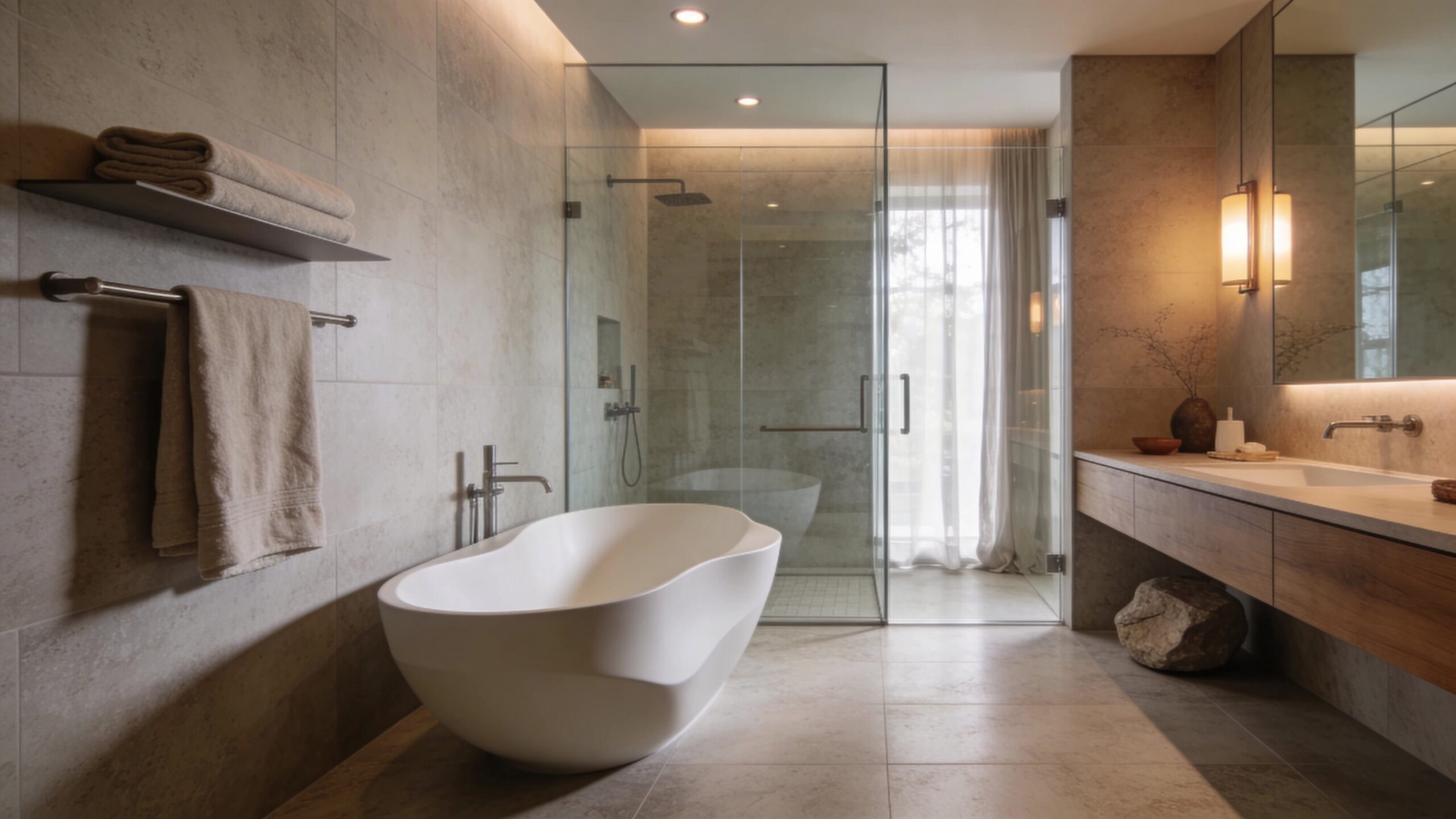
An open-concept bathroom does not mean a lack of structure. Instead, it means the layout is designed to feel fluid rather than boxed in. Traditional bathrooms often separate the shower, tub, vanity, and storage into distinct compartments or rigid footprints. An open-concept design softens those divisions and uses placement, materials, and visual cues to guide movement through the space. In many modern homes, this concept includes freestanding tubs positioned as sculptural centerpieces, walk-in showers with minimal framing, floating vanities, and glass partitions that preserve openness while offering subtle separation. Rather than closing off each function, designers create harmony between them. The result is a bathroom that feels airy, luxurious, and deeply intentional. It is a room designed to be experienced, not just used.
Why Open Layouts Feel More Luxurious
One of the biggest reasons open-concept bathrooms feel so special is that they create a sense of freedom. Walls, heavy doors, and tight divisions can make even beautiful bathrooms feel constrained. Open layouts remove visual clutter and allow the eye to travel across the room. That uninterrupted sightline gives the impression of greater scale and calm, which immediately elevates the mood of the space.
Luxury often comes from simplicity rather than excess. In open-concept bathrooms, fewer barriers mean materials and design details have more room to shine. A slab of veined stone, a warm wood vanity, or a softly lit alcove becomes more noticeable when surrounded by clean lines and breathing room. The overall effect is refined and tranquil rather than crowded or overly decorative. That sense of effortless elegance is exactly what makes the modern bathroom feel like an oasis.
Natural Light as the Heart of the Design
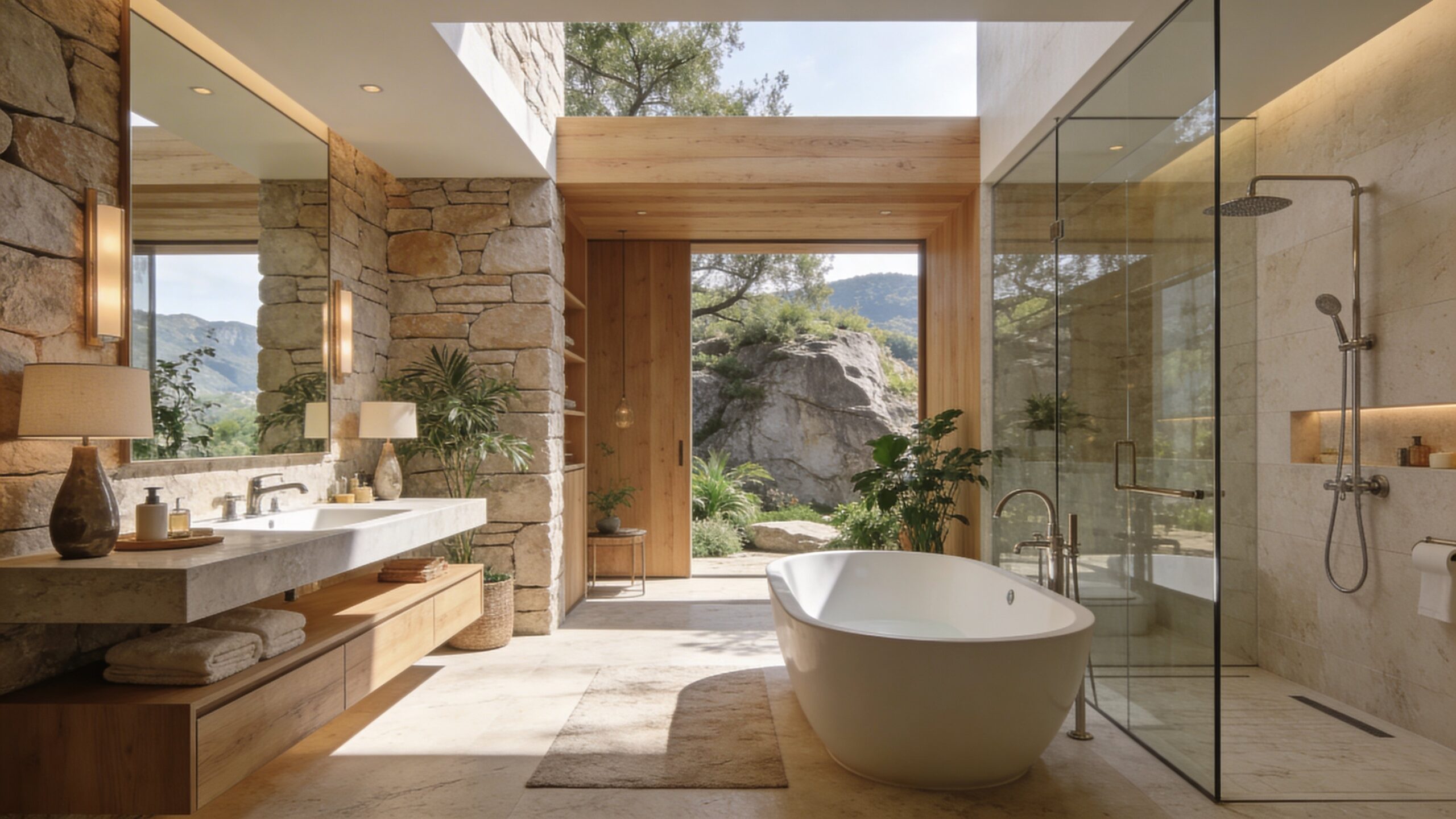
Natural light plays a defining role in open-concept bathrooms. Sunlight enhances the feeling of openness, reveals textures more beautifully, and creates a healthier connection to the outdoors. Large windows, skylights, clerestory openings, and strategically placed glass walls can turn the bathroom into one of the brightest spaces in the home.
Light is especially powerful in these environments because it interacts with the room continuously throughout the day. Morning light can make a space feel fresh and energizing, while softer afternoon light adds warmth and calm. In a bathroom designed as a retreat, that changing atmosphere becomes part of the experience. Light bouncing off stone, tile, plaster, and glass gives the room depth and softness. Even when privacy is a concern, frosted glazing, landscaping, and careful orientation can preserve both openness and discretion.
Freestanding Tubs as Statement Pieces
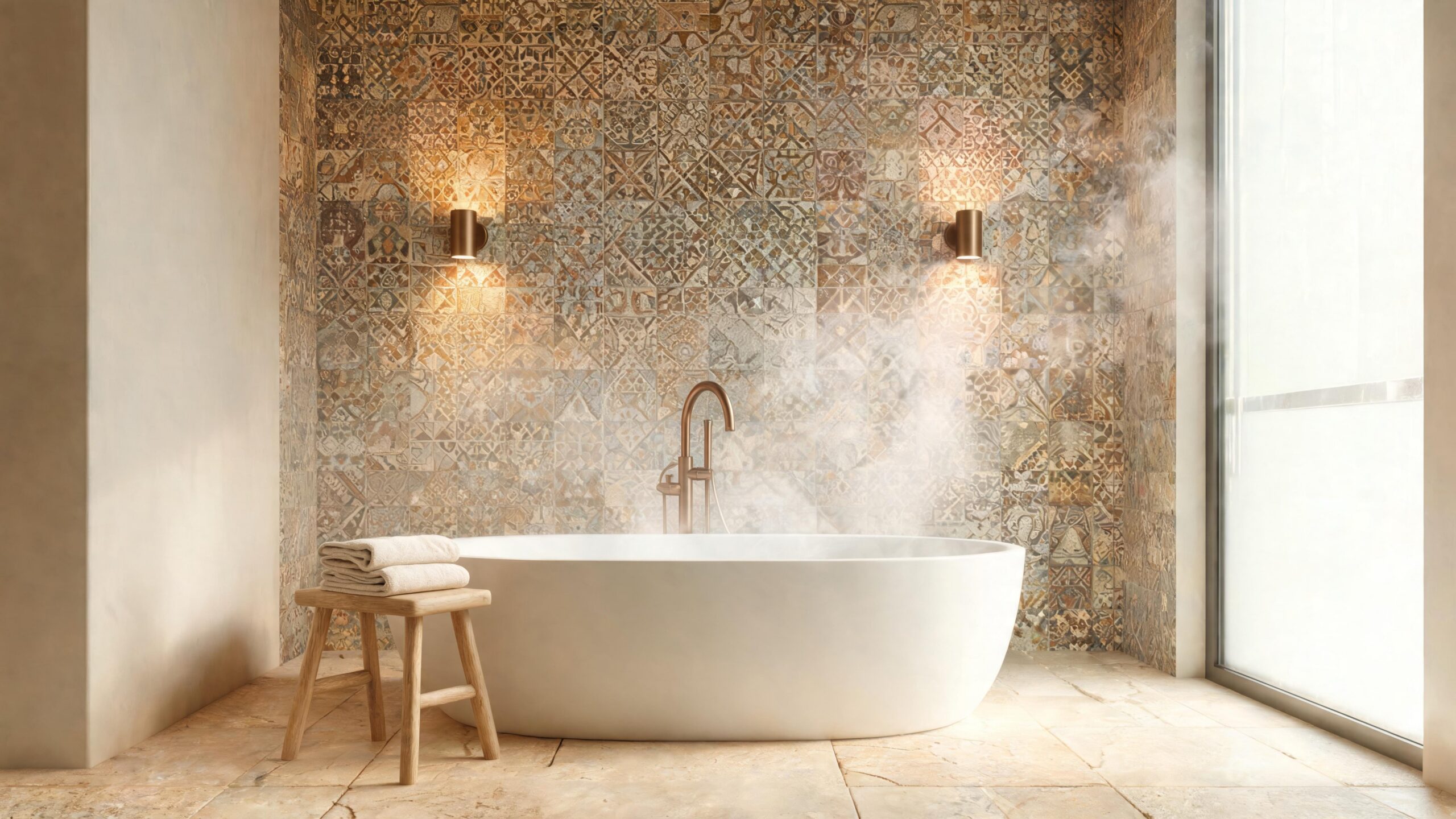
Few elements communicate relaxation more clearly than a freestanding tub. In open-concept bathrooms, tubs are often positioned as focal points rather than tucked into corners. Their placement helps define the room without closing it off. A beautifully shaped tub centered beneath a window or placed against a textured wall creates a quiet sense of ceremony. This is one reason modern oases feel so compelling. The tub is no longer just a utility fixture. It becomes a visual anchor, a place of pause, and a symbol of self-care. Its sculptural presence contributes to the room’s design language, whether the style is minimalist, organic, contemporary, or softly traditional. When paired with floor-mounted fixtures, layered lighting, and generous surrounding space, the tub becomes an invitation to slow down and enjoy the room as more than a routine stop.
Walk-In Showers and the Power of Transparency
Walk-in showers are another hallmark of the open-concept bathroom. Frameless glass, flush floor transitions, and oversized formats help the shower feel integrated into the larger environment rather than isolated from it. This creates visual continuity and makes the room appear larger and more cohesive.
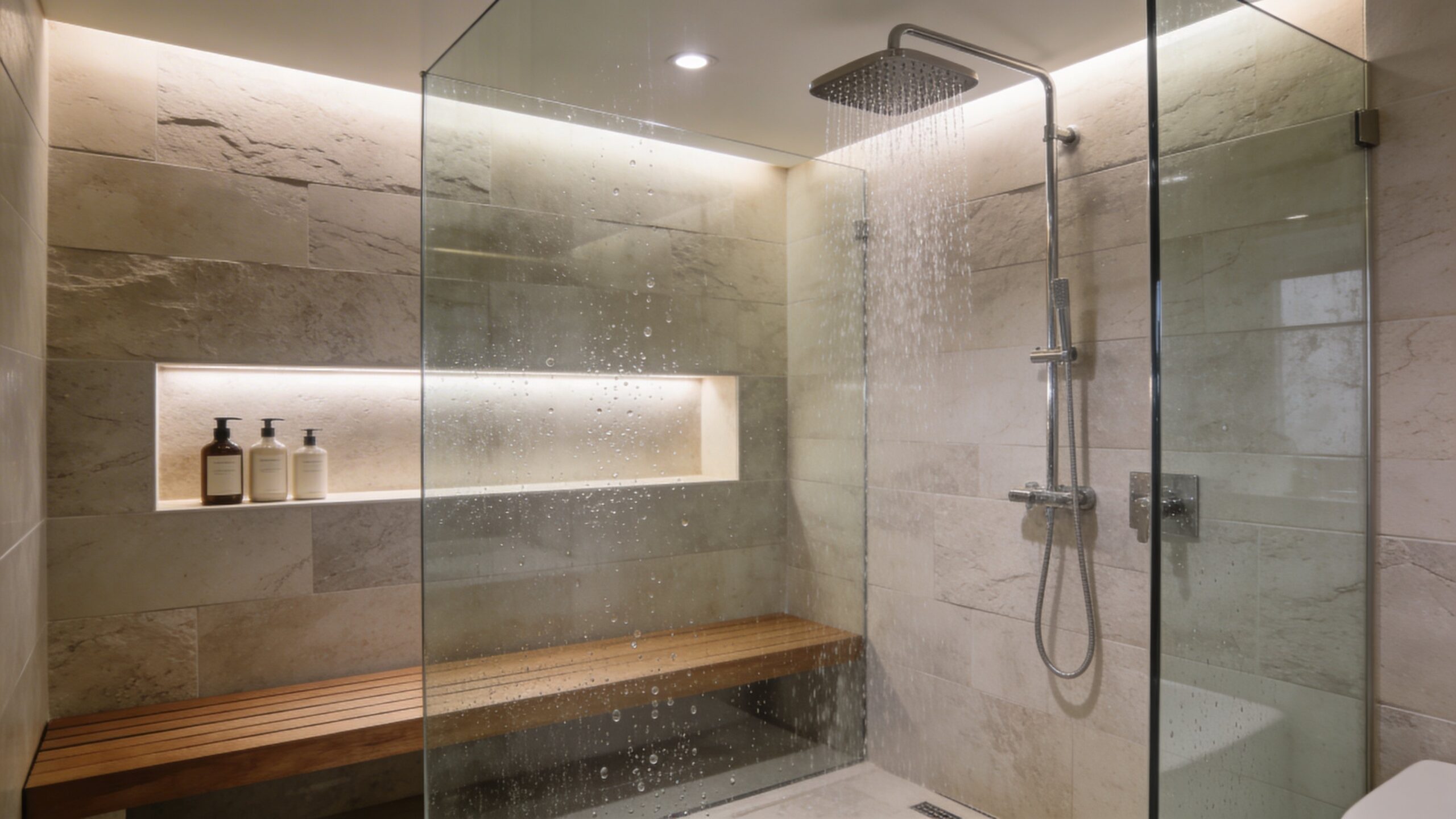
The absence of bulky enclosures contributes to the spa-like quality people love. Instead of a shower being a separate box within the room, it becomes part of the architecture. Tile can continue uninterrupted across walls and floors, while linear drains and subtle slopes maintain function without disrupting the design. Rainfall showerheads, built-in benches, and recessed niches add comfort and polish. Transparency, when handled thoughtfully, becomes a design tool that preserves openness while celebrating the beauty of the space.
Material Choices That Create Calm
Materials are central to the success of any open-concept bathroom. Because the layout is visually exposed, every surface contributes to the mood. The most effective modern oases rely on a restrained palette of materials that feel natural, tactile, and cohesive. Stone, porcelain, wood-look finishes, brushed metals, concrete, limewash, and soft matte tile all help establish a layered sense of calm. What matters most is not just the beauty of each material, but how they work together. A cohesive palette prevents the room from feeling busy. Large-format tile can reduce visual interruption. Warm wood tones can soften sleek surfaces. Natural stone can add depth and quiet drama. Even small details, such as the finish on a faucet or the grain pattern on cabinetry, matter more in an open layout because there are fewer visual distractions. In a truly successful bathroom oasis, every material feels deliberate and quietly luxurious.
Color Palettes That Support Relaxation
Color has a major influence on whether an open-concept bathroom feels energizing or restful. Since these spaces are meant to evoke comfort and serenity, the most successful palettes tend to lean toward soft neutrals, earthy shades, muted greens, warm whites, sandy taupes, and charcoal accents. These tones reflect natural environments and help the room feel grounded rather than sterile.
That does not mean the design has to be plain. Subtle contrast can add sophistication. A darker vanity against pale walls, richly textured stone in the shower, or black metal accents in an otherwise warm room can create definition without breaking the tranquil mood. The best color choices in these bathrooms do not compete for attention. They support the feeling of ease, allowing light, texture, and form to do more of the visual work.
Seamless Storage for a Cleaner Experience
An open bathroom only feels peaceful when clutter is under control. Because more of the room is visible at once, storage needs to be integrated in a way that supports the design rather than interrupting it. Floating vanities, recessed medicine cabinets, full-height linen storage, concealed drawers, and built-in niches all help preserve the streamlined appearance. The goal is not merely to hide products but to make the room function effortlessly. When towels, daily essentials, and personal items have dedicated places, the bathroom stays visually calm and easier to maintain. This contributes directly to the oasis effect. A modern retreat should not feel crowded with bottles, cords, and mismatched containers. Clean surfaces and smart storage allow the architecture and mood of the room to remain the focus.
Connecting the Bathroom to the Bedroom
Many open-concept bathrooms are designed as extensions of the primary suite. Instead of functioning as isolated rooms, they flow naturally from the bedroom or dressing area. This creates a more spacious and luxurious experience, especially in homes where the goal is to make the suite feel like a private sanctuary.
When the bathroom connects visually or spatially to the bedroom, the design language becomes especially important. Materials, tones, and lighting need to feel consistent across both spaces. A thoughtful transition can make the suite feel unified and sophisticated. At the same time, privacy still matters. Partial partitions, frosted glass, slatted screens, or carefully positioned walls can preserve intimacy without sacrificing the open feel. The most successful designs balance connection with comfort, making the suite feel both expansive and personal.
Bringing Nature Into the Space
A true oasis often feels connected to nature, and open-concept bathrooms are ideal places to introduce that influence. Plants, stone textures, natural light, wood tones, and views of the outdoors can all help the room feel more restorative. Even in urban settings, designers can use courtyard views, privacy planting, skylights, or natural materials to evoke a stronger relationship with the environment.
This biophilic quality is one of the reasons these bathrooms feel emotionally powerful. Water, light, greenery, and earth-toned materials work together to create an atmosphere that feels calming on a sensory level. The room becomes more than a stylish composition. It becomes a place that genuinely supports rest and renewal. That connection to nature is often what separates a beautiful bathroom from one that truly feels like a modern oasis.
Lighting Beyond the Daylight Hours
Artificial lighting is just as important as daylight in an open-concept bathroom. Because these spaces are meant to shift from active mornings to restorative evenings, layered lighting is essential. Ambient lighting establishes overall brightness, task lighting supports grooming, and accent lighting adds softness and drama. Wall sconces, backlit mirrors, toe-kick lighting, ceiling coves, and pendant fixtures can all be used to shape the mood. The key is to avoid harsh, flat illumination that makes the room feel clinical. Instead, lighting should be warm, balanced, and adaptable. Dimmers are especially useful because they allow the atmosphere to change with the time of day. A bathroom oasis should feel clear and functional when needed, but soft and enveloping when relaxation is the goal.
Privacy Without Losing Openness
One of the most common concerns with open-concept bathrooms is privacy, and it is a valid one. The best designs address this not by abandoning openness, but by using subtle forms of separation. Half walls, screens, textured glass, strategic zoning, and smart fixture placement can all create privacy without making the room feel closed off.
This balance is what makes the concept successful. An open bathroom should feel intentional, not exposed. Toilets are often tucked behind partitions or placed in enclosed water closets to preserve comfort. Showers may use frosted sections or be oriented away from direct sightlines. Open design works best when it respects the realities of everyday use. The goal is not to eliminate boundaries entirely, but to make them softer, smarter, and more integrated into the architecture.
Small-Space Open Bathrooms Can Still Feel Grand
Open-concept bathroom design is not limited to large homes. Smaller bathrooms can benefit tremendously from the same principles. In fact, removing unnecessary visual barriers can make compact spaces feel far more generous. Frameless glass, floating fixtures, continuous flooring, and restrained palettes can create a sense of openness that dramatically improves how the room feels.
Designing a small bathroom as a modern oasis requires discipline. Every element must earn its place. Oversized patterns, bulky cabinets, and too many contrasting finishes can make the room feel crowded. But when scale, proportion, and light are handled carefully, even a modest footprint can feel luxurious. The secret is not square footage alone. It is the clarity of the design and the emotional response it creates.
The Emotional Appeal of a Bathroom Oasis
At the heart of the open-concept bathroom trend is an emotional desire. People want homes that do more than shelter them. They want spaces that support well-being, encourage slowing down, and bring beauty into daily routines. The bathroom, perhaps more than any other room, is tied to rituals of care. When it is thoughtfully designed, it can become a place that improves the rhythm of everyday life.
That is why modern oases resonate so strongly. They are not only visually appealing, but deeply experiential. They invite quiet. They reduce visual stress. They turn ordinary habits into moments of pause. Whether someone is getting ready for the day or unwinding at night, the room shapes how that experience feels. Good design can make those moments more peaceful, and that is a powerful form of luxury.
Why This Design Approach Continues to Grow
Open-concept bathrooms are likely to remain popular because they align with how people increasingly want to live. They combine beauty with wellness, elegance with function, and openness with serenity. Rather than treating the bathroom as a secondary utility space, this approach gives it the same design importance as a living room or bedroom. As homes continue to evolve, bathrooms designed as modern oases will remain appealing for their ability to make daily life feel more intentional. They offer a quieter kind of luxury, one based on atmosphere, materials, light, and flow. In the best examples, every detail serves both comfort and beauty. That is what makes the open-concept bathroom more than a trend. It is a redefinition of what personal space can be.