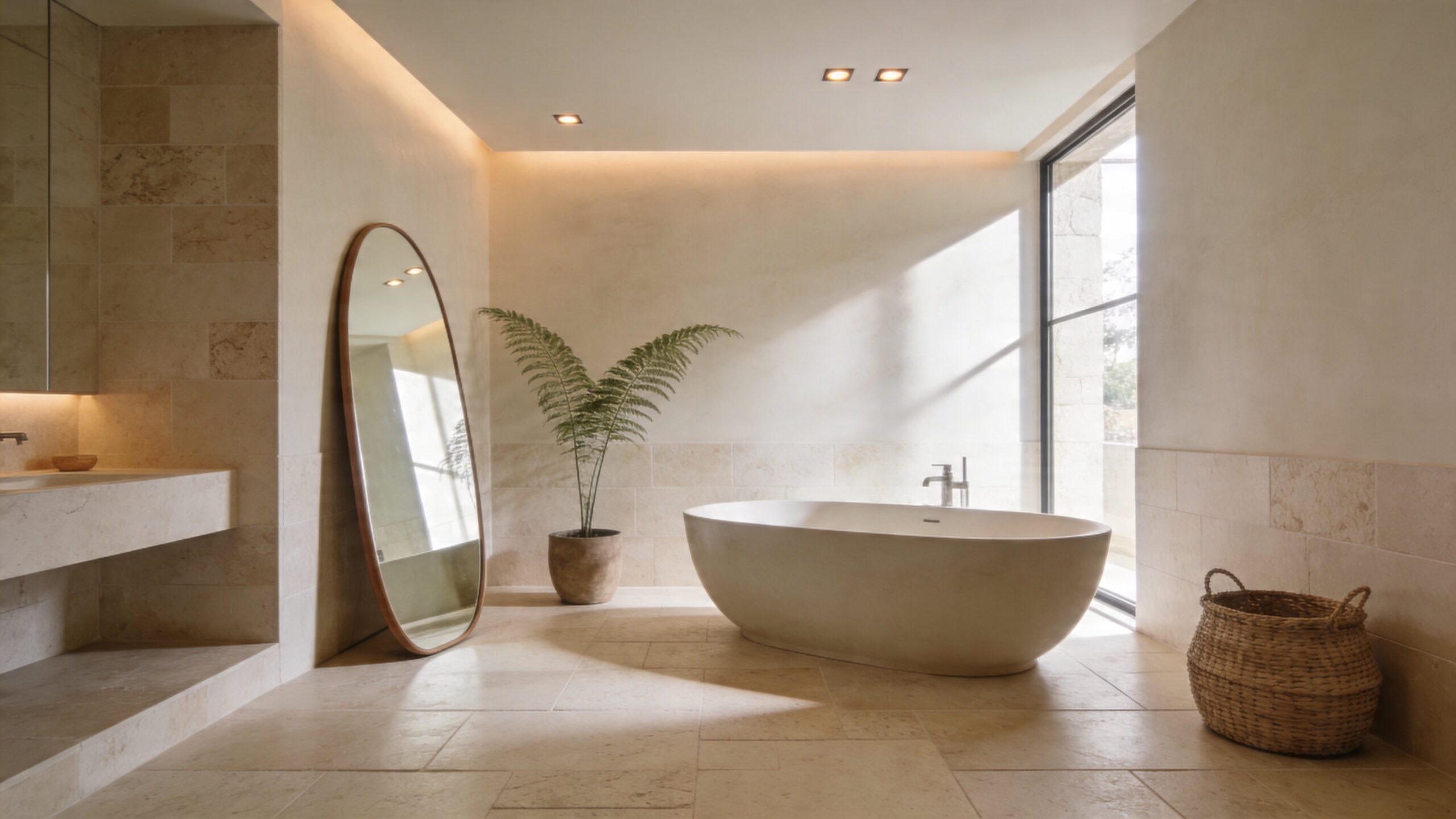
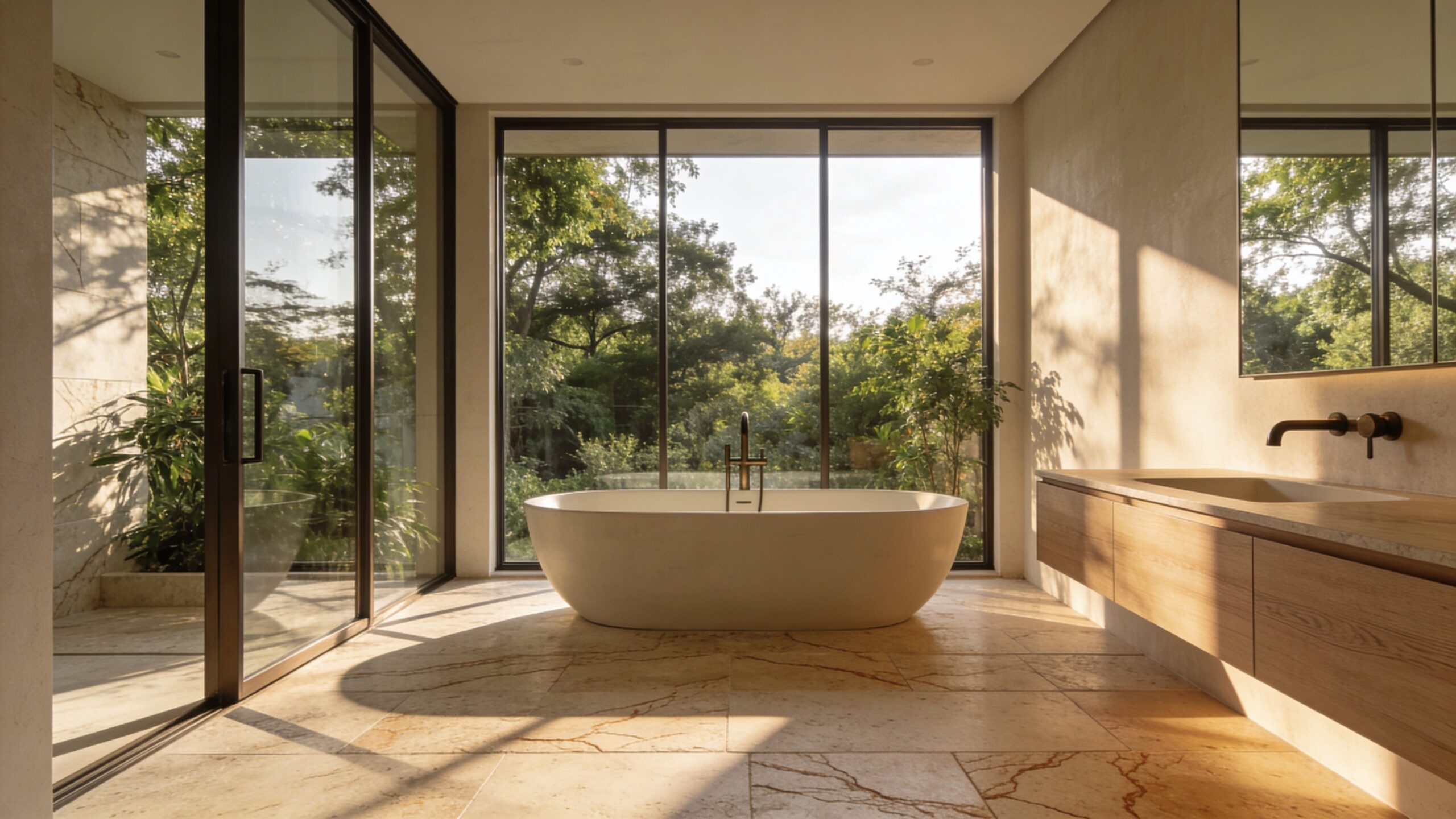
Japandi-inspired modern oasis bathrooms blend the calm minimalism of Japanese design with the warm functionality of Scandinavian style. The result is a spa-like retreat that feels both grounded and elevated. Clean lines meet natural textures. Soft light reflects off pale wood and matte stone. Every detail is intentional, yet nothing feels forced. If you are looking to transform your bathroom into a serene escape that balances beauty and practicality, Japandi design offers a timeless blueprint. This guide explores the core principles, materials, layouts, lighting strategies, and finishing touches that define Japandi bathrooms you will want to copy in your own home.
A: Yes, minimalism enhances openness and calm.
A: Light oak, ash, and walnut are popular.
A: Yes, but keep finishes matte and cohesive.
A: Use layered lighting and soft textiles.
A: Optional, but they enhance serenity.
A: Matte or honed for softness.
A: Ideally, for sculptural impact.
A: Add texture and natural materials.
A: Rarely; keep tones muted and earthy.
A: Calm, functional, and timeless design.
What Is Japandi Style and Why It Works So Well in Bathrooms
Japandi style merges two design philosophies rooted in simplicity and craftsmanship. Japanese interiors emphasize tranquility, organic materials, and harmony with nature. Scandinavian spaces focus on functionality, comfort, and understated warmth. When combined, they create a bathroom aesthetic that feels calm, uncluttered, and deeply intentional. Bathrooms are naturally suited to this style because they are places of ritual and renewal. A Japandi bathroom strips away visual noise and prioritizes clean surfaces, warm neutrals, and tactile materials. The atmosphere encourages slow mornings, relaxing soaks, and mindful routines. The style also aligns beautifully with modern homeowners who value both sustainability and long-lasting design.
The Power of a Neutral, Nature-Inspired Palette
Color is foundational in a Japandi-inspired modern oasis bathroom. Soft whites, warm beiges, clay tones, muted greys, and subtle taupes create a soothing base. Instead of stark contrast, Japandi leans into harmony. Walls might be finished in a warm off-white that pairs seamlessly with light oak vanities or soft walnut shelving. Matte black or brushed nickel hardware provides quiet definition without overpowering the room. The overall palette should feel grounded and cohesive. By limiting bold colors, the bathroom becomes a restful sanctuary rather than a visually busy space. Texture replaces color as the main design driver, which keeps the environment sophisticated and serene.
Natural Materials That Elevate the Space
Natural materials are at the heart of Japandi bathroom design. Wood, stone, ceramic, and linen bring warmth and depth to an otherwise minimalist setting. Light oak or ash vanities add Scandinavian softness, while darker woods introduce a Japanese-inspired richness. Stone sinks carved from travertine or limestone create organic focal points. Handmade tiles with subtle variation add character without disrupting the calm. Even smaller details, such as woven baskets or linen hand towels, reinforce the connection to nature. The beauty of these materials lies in their authenticity. Imperfections are embraced, and craftsmanship is celebrated, resulting in a bathroom that feels both refined and grounded.
Minimalism Without Feeling Cold
One of the biggest misconceptions about minimalist bathrooms is that they feel sterile or impersonal. Japandi avoids this by balancing simplicity with warmth. Clean-lined floating vanities, frameless mirrors, and open shelving maintain visual clarity. At the same time, soft lighting, warm wood tones, and textured textiles keep the space inviting. Storage is discreet yet accessible, allowing countertops to remain uncluttered. The goal is not emptiness but intentionality. Every object should serve a purpose or contribute to the overall mood. When thoughtfully executed, a Japandi bathroom feels comforting, not sparse.
Spa-Like Layouts That Promote Flow
A Japandi-inspired bathroom often prioritizes openness and flow. Walk-in showers with clear glass panels enhance the sense of space. Freestanding soaking tubs become sculptural centerpieces, especially when positioned near natural light. Double vanities are streamlined rather than bulky, emphasizing horizontal lines. The layout should allow easy movement and avoid unnecessary partitions. Even in smaller bathrooms, strategic placement of mirrors and floating elements can create the illusion of spaciousness. The focus is on seamless transitions and a sense of quiet continuity throughout the room.
Lighting That Sets a Serene Mood
Lighting plays a transformative role in Japandi bathroom design. Harsh overhead fixtures are replaced with layered illumination. Soft wall sconces, pendant lights with natural finishes, and recessed lighting provide a gentle glow. Warm white bulbs enhance wood tones and soften stone textures. If possible, natural light should be maximized through frosted windows or skylights. Lighting in a Japandi bathroom should feel subtle and intentional. The goal is to create a calming atmosphere that supports relaxation, especially in the evening when the space becomes a retreat from the day’s demands.
Statement Tubs and Sculptural Sinks
A modern oasis bathroom often includes a focal point, and in Japandi design, that focal point is usually understated yet powerful. A freestanding soaking tub in matte white or stone composite can anchor the space. Vessel sinks with organic shapes add artistic flair without overwhelming the room. The key is to choose forms that are simple yet expressive. Rounded edges soften the overall look, while clean geometry maintains structure. These elements elevate the bathroom from functional to spa-worthy without sacrificing minimalism.
Thoughtful Storage Solutions for a Clutter-Free Look
Storage in a Japandi bathroom must be practical yet visually seamless. Floating vanities with deep drawers hide everyday essentials. Open wood shelves display neatly folded towels or ceramic containers. Recessed niches in showers keep products organized without protruding shelves. The aim is to maintain clean surfaces while ensuring convenience. Clutter disrupts the calm energy of the space, so integrated storage is essential. By combining smart design with disciplined organization, you can preserve the tranquil atmosphere that defines Japandi style.
Textural Contrast That Adds Depth
Because Japandi design relies on neutral tones, texture becomes crucial for visual interest. Pair smooth stone countertops with subtly grained wood cabinetry. Combine matte tiles with soft woven rugs. Introduce ribbed glass shower panels or handmade ceramic accessories. The contrast between smooth and tactile surfaces creates dimension without introducing visual chaos. This layered approach prevents the bathroom from feeling flat or monotonous. Instead, it feels thoughtfully curated and richly detailed.
Bringing Nature Indoors
Biophilic elements enhance the modern oasis effect. A simple potted plant, such as a fern or bamboo, can add life and color without overpowering the minimalist aesthetic. Natural light reflecting off greenery reinforces the calming energy of the space. If live plants are not practical, dried branches in a ceramic vase offer a sculptural alternative. The connection to nature is subtle but meaningful. It reinforces the spa-like atmosphere and aligns with the core philosophies of both Japanese and Scandinavian design traditions.
Sustainable Choices for Long-Lasting Design
Sustainability is another reason Japandi bathrooms resonate with modern homeowners. High-quality materials, water-efficient fixtures, and energy-saving lighting support eco-conscious living. Durable finishes ensure the bathroom remains timeless rather than trend-driven. Investing in craftsmanship over mass-produced decor results in a space that ages gracefully. Japandi design encourages thoughtful purchasing decisions and long-term value, which aligns with both environmental responsibility and smart home improvement strategies.
Small Japandi Bathrooms That Feel Luxurious
Even compact bathrooms can embrace Japandi style. A wall-mounted vanity opens up floor space and enhances visual lightness. Large-format neutral tiles minimize grout lines and create a cohesive look. A frameless mirror expands perceived square footage. In small spaces, restraint becomes even more important. By limiting decorative elements and focusing on quality materials, a small bathroom can feel like a curated retreat rather than a cramped necessity.
Accessories That Complete the Oasis
The finishing touches in a Japandi-inspired bathroom are subtle yet impactful. Matte ceramic soap dispensers, wooden bath trays, and plush neutral towels add warmth. A simple round mirror with a thin frame reinforces clean lines. Even a wooden stool beside the tub can enhance the spa-like ambiance. Accessories should feel organic and purposeful. Avoid overly ornate decor or bright colors that break the cohesive palette. The final result should feel harmonious and serene.
Creating Your Own Japandi-Inspired Modern Oasis
Designing a Japandi-inspired modern oasis bathroom begins with intention. Start by decluttering and assessing your layout. Choose a restrained color palette rooted in natural tones. Invest in quality materials such as wood and stone. Layer soft lighting to create warmth. Integrate storage that maintains clean surfaces. Add minimal yet meaningful accessories. By focusing on harmony, simplicity, and functionality, you can create a bathroom that feels like a personal sanctuary. Japandi design is not about excess or extravagance. It is about calm confidence, balanced materials, and thoughtful craftsmanship. When executed well, it transforms everyday routines into moments of quiet luxury. If you are seeking a bathroom upgrade that blends modern elegance with timeless serenity, Japandi-inspired design is a style worth copying.