
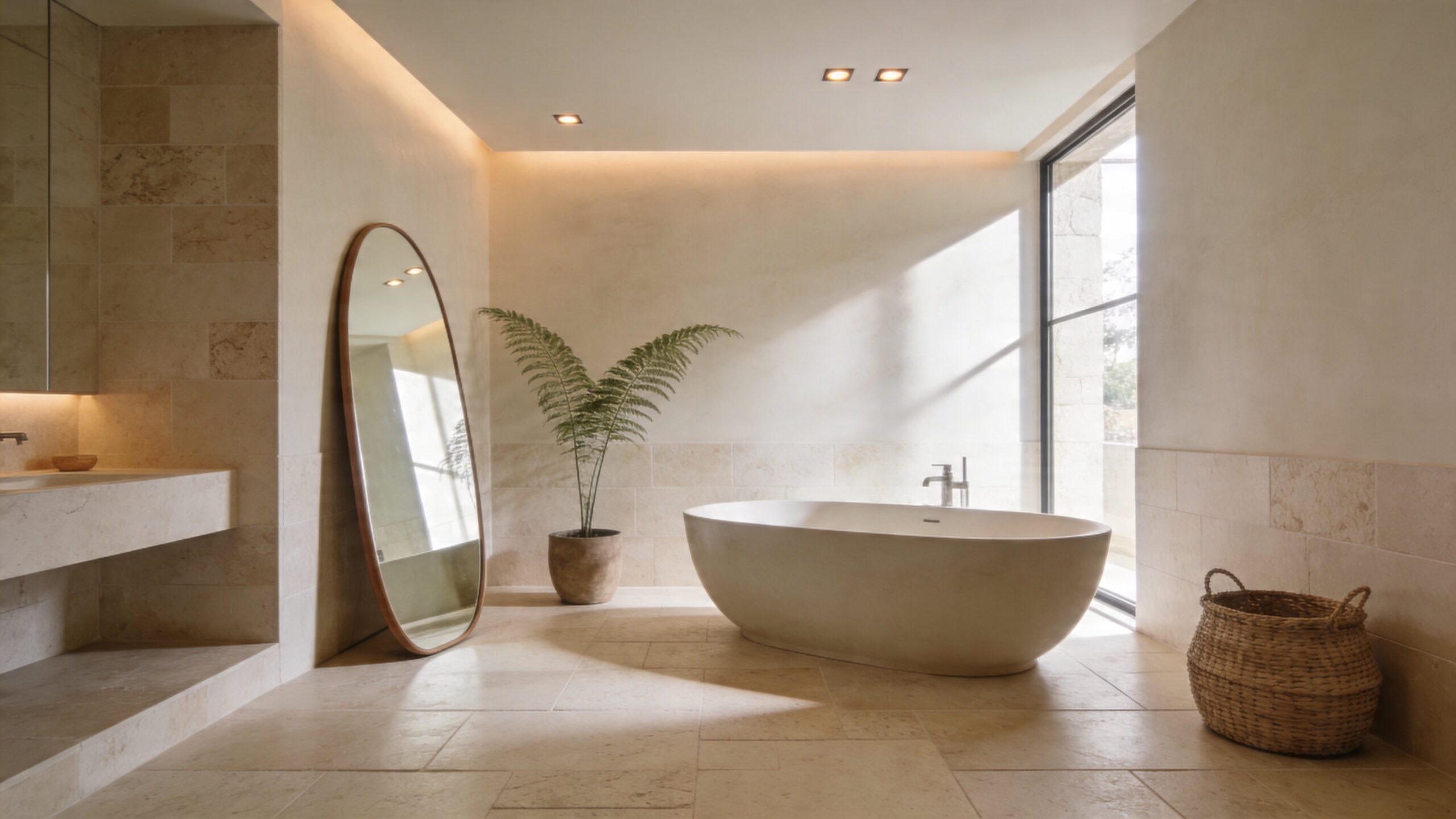
The Power of a Soft Neutral Bathroom
A neutral modern bathroom can do something dramatic without ever raising its voice. It can slow the mood of a home, create a sense of order, and make everyday routines feel far more elevated than they did before. The appeal is not only visual. It is emotional. A well-designed neutral bathroom feels like a retreat because it removes visual noise and replaces it with balance, texture, and warmth. That is why so many of the most memorable bathrooms today are not built around loud color or flashy statement pieces. They are built around restraint used with intelligence. The key to making that kind of space feel beautiful instead of bland is understanding that neutral does not mean empty. It means focused. A soft modern bathroom works when every surface, finish, and silhouette contributes to a quiet but layered atmosphere. Warm whites, creamy stone tones, pale taupes, soft grays, muted greiges, and natural wood notes all help build a room that feels restful. But what makes the design truly memorable is variation within that calm palette. When the room combines subtle contrast, touchable materials, gentle lighting, and carefully chosen shapes, it begins to feel rich and serene rather than flat.
A: Use texture, gentle contrast, warm undertones, and mixed shapes instead of relying on one flat finish.
A: Warm white, ivory, sand, mushroom, soft taupe, pale greige, and natural wood tones are strong starting points.
A: It can be, but it usually needs warmth and texture to avoid feeling sterile or overly sharp.
A: Floating or furniture-style vanities in wood or muted painted finishes work especially well.
A: Yes, if the room has enough warmth elsewhere; otherwise softer finishes may feel more balanced.
A: Large-format tile creates calm continuity, while smaller accent tile can add texture in focused areas.
A: Simplify the palette, use glass panels, add layered lighting, and reduce visible clutter.
A: Yes, when properly finished and paired with good ventilation and routine care.
A: Very little; choose a few tactile, elegant pieces rather than filling every surface.
A: Making everything the exact same tone and finish, which can cause the room to feel flat and lifeless.
Why Neutral Does Not Have to Mean Boring
People often assume neutral rooms fail because they lack color, but that is rarely the real issue. Neutral bathrooms feel boring only when they lack dimension. A room with one paint color, one finish, one tile scale, and one hard reflective surface will naturally feel thin, regardless of whether the palette is beige, white, or charcoal. The solution is not automatically adding a bold accent wall. The solution is building depth in smarter ways. That depth can come from veining in stone, a limewashed wall finish, ribbed wood cabinetry, brushed metal fixtures, oversized tile with delicate movement, or a shower niche lined in a slightly darker tone. It can come from soft textiles, a curved mirror, layered lighting, or a balance between matte and satin surfaces. In other words, a neutral bathroom succeeds when it feels composed instead of blank. The softness comes from tonal harmony, and the interest comes from contrast in texture, light, and form.
Start With a Color Story That Has Warmth
The most inviting neutral bathrooms usually begin with a palette that feels warm rather than clinical. Crisp white can still work beautifully, but if the goal is an oasis effect, the room often benefits from colors that carry a little softness within them. Ivory, bone, sand, oatmeal, mushroom, warm stone, putty, pale clay, and creamy greige tend to create a gentler atmosphere than cold bright white or sharp blue-gray.
A smart color story usually includes a dominant base tone, a supporting midtone, and one grounding shade for contrast. For example, a bathroom might feature soft warm white walls, pale limestone-look tile, and a deeper taupe vanity. Another may pair creamy plaster walls with natural oak, brushed nickel, and a muted gray-beige floor tile. The best results come when those tones relate to each other instead of fighting for attention. Even a space with almost no obvious color can feel luxurious if the undertones are consistent and the transitions feel smooth.
Texture Is the Secret Ingredient
Texture is what transforms a neutral bathroom from simple to unforgettable. Because the palette is restrained, the eye begins to notice finish, grain, movement, and softness more intensely. That is why texture should never feel like an afterthought. It is one of the main design tools in the room.
Stone is often the hero because it brings natural variation without visual chaos. Marble with subtle veining, travertine with quiet motion, quartz with cloudy depth, and porcelain that mimics natural stone can all create elegance while staying neutral. Wood adds another important layer by warming the space and softening the harder surfaces found in bathrooms. White oak, ash, walnut, or even a washed wood finish can help the room feel grounded and organic. Wall finishes also matter. Painted drywall can work, but a Venetian plaster effect, limewash-inspired finish, or tile with a tactile handmade quality adds far more character. Then there are the smaller texture moments that complete the room: woven baskets, plush towels, linen window treatments, ceramic vessels, and subtly textured bath mats. None of these elements need to dominate. Together, they create the softness that gives the room life.
Shape Helps a Bathroom Feel Gentle
One reason some modern bathrooms feel cold is that they lean too heavily on hard lines. Straight edges, sharp corners, and highly geometric fixtures can make a room feel efficient but emotionally distant. To create a softer neutral oasis, shape becomes important. Curves and rounded profiles introduce a more relaxed rhythm.
This can happen in obvious ways, such as an arched mirror, a rounded soaking tub, or globe pendants beside the vanity. It can also happen more quietly through the profile of cabinet hardware, the edge detail on a countertop, or a gently curved stool placed near a tub. Even a softly scalloped sconce or an oval sink can break up the rigidity of a boxy room. The goal is not to remove all structure. It is to balance structure with grace. When a bathroom mixes clean architectural lines with a few rounded forms, the result feels modern without becoming severe.
Lighting Changes Everything
Lighting is often the difference between a bathroom that looks beautiful in photos and one that actually feels soothing in real life. A neutral palette relies on light to reveal undertones, texture, and shadow. If the lighting is harsh, flat, or too cool, the room can instantly lose the softness it was meant to have. But when the lighting is layered and warm, the entire bathroom becomes more flattering and calming.
A strong bathroom design usually includes ambient light for overall illumination, task lighting around the mirror, and accent lighting that adds mood. Recessed ceiling lights may handle the basics, but they should not be the only light source. Wall sconces at mirror level create a more balanced glow for daily routines. A small pendant can add charm over a tub or in a corner with enough ceiling height. Under-vanity lighting can make the room feel almost spa-like in the evening, especially when paired with dimmers. Natural light deserves equal attention. Frosted windows, sheer window treatments, skylights, and thoughtfully placed mirrors can all help spread daylight through the space. In a neutral bathroom, daylight brings subtle tones to life. It reveals that the room is not plain at all. It is layered, shifting, and quietly luminous.
The Vanity Should Feel Like Furniture
One of the easiest ways to avoid a generic bathroom is to choose a vanity that feels more like a piece of furniture than a built-in box. A floating vanity in a warm wood finish can make the room feel lighter and more architectural. A freestanding vanity with legs can add softness and personality. Reeded detailing, slab fronts with rich wood grain, or painted cabinetry in a muted stone shade can all add interest while staying within a neutral palette.
The vanity often becomes the room’s anchor, so it should contribute more than storage. It should introduce character. If the rest of the room is quite minimal, the vanity can supply depth through texture or tone. If the bathroom already has expressive tile or stone, the vanity can take a simpler role and help balance the composition. Countertop material matters here too. A softly veined quartz or honed stone top helps maintain the relaxed feeling, especially when paired with understated hardware and refined plumbing fixtures.
Tile Choices That Add Calm and Character
Tile is where many neutral bathrooms either come alive or fall flat. The safest option is often a large-format neutral tile, and that can work beautifully, especially when the color and finish are chosen with care. But scale, layout, and variation are what keep tile from disappearing into the background.
Large-format tiles reduce grout lines and create a smoother visual field, which is excellent for a serene atmosphere. Yet smaller tiles can also be effective when they are used thoughtfully. Finger tiles, zellige-inspired surfaces, fluted ceramics, and mosaic stone can introduce movement and tactility without overwhelming the space. The trick is restraint. A shower wall with subtle handmade variation may be enough. A herringbone floor in a warm stone tone may be enough. A softly contrasting grout may provide just the right amount of definition. Vertical stacking can make a bathroom feel taller and more contemporary, while horizontal layouts can widen a narrow room. Tone-on-tone combinations are especially strong because they add detail without breaking the calm. Instead of aiming for drama, neutral oasis bathrooms aim for depth that rewards a second look.
Fixtures and Finishes Should Feel Refined, Not Busy
Hardware and plumbing finishes have a major impact on the mood of a bathroom. In a soft neutral setting, the best finishes usually feel elegant but not flashy. Brushed nickel, warm chrome, soft brass, aged bronze, and matte black can all work, but they need to be chosen in relation to the rest of the room. A warm brass finish paired with creamy walls and pale oak can feel luxurious and inviting. Brushed nickel can create a quieter, more timeless look. Matte black can add modern contrast, though it works best when the space has enough warmth elsewhere to keep it from feeling stark.
Consistency matters. Too many finishes in one room can make the design feel unsettled. A more cohesive approach allows the details to disappear into the overall composition, which is exactly what a soothing bathroom needs. Faucet shapes should also support the atmosphere. Sleek but softened silhouettes usually work better than overly industrial forms in a bathroom meant to feel like an oasis.
Storage Is Part of the Aesthetic
Clutter is one of the fastest ways to destroy softness in a bathroom. Neutral rooms especially rely on visual calm, so storage has to be integrated into the design from the beginning. Good storage is not just practical. It protects the mood of the space.
Drawers with organizers, recessed medicine cabinets, built-in niches, full-height storage towers, and hidden compartments in vanities can all help maintain a clean look. Open shelving should be handled carefully. Too much of it can quickly feel messy. But one or two open shelves with neatly arranged towels, a ceramic tray, or a few restrained objects can add warmth without chaos. The most successful oasis bathrooms make room for the things real people use every day while preventing those items from taking over visually. That balance is what makes the room feel easy, and ease is one of the most luxurious qualities a bathroom can have.
Soft Styling Brings the Room to Life
Once the major materials are set, styling helps the room feel complete. This is where softness becomes visible in a more personal way. The styling should never feel overdone. A bathroom oasis is not a showroom filled with decorative clutter. Instead, it should feel edited, breathable, and natural.
Thick white or oatmeal towels, a sculptural stool, a hand-thrown soap dish, a small branch in a stone vessel, or a simple bath tray can all add personality without breaking the mood. Greenery can help, especially if the plant shape is elegant and the lighting supports it. Even one organic element can make the room feel more alive. Scent also plays a subtle role. Candles, diffusers, or bath products in understated containers contribute to the atmosphere as much as they do to function. The most important rule is to choose items that feel tactile and intentional. Every piece should contribute to the sense of calm rather than compete for attention.
How to Make Small Bathrooms Feel Like an Oasis
A small bathroom can absolutely capture the same soft modern feeling as a larger one. In some cases, it can feel even more immersive because the design is concentrated. The strategy is to simplify without stripping the room of personality. Lighter neutral tones help reflect light and make the space feel more open. Large mirrors increase brightness. Floating vanities create the illusion of more floor area. Glass shower panels keep sightlines clear and prevent the room from feeling chopped up. Material continuity is especially powerful in small bathrooms. When the floor tile continues into the shower, or when walls share a unified finish, the room feels calmer and more expansive. A niche in the shower, a single slab backsplash, or a quietly dramatic vanity light can provide just enough focal interest. The goal is not to fill every wall with features. It is to make every choice count.
What to Avoid If You Want a Soft Modern Look
Designing a neutral bathroom is often as much about editing as it is about adding. Too much bright white can make the room feel sterile. Too much gray can make it feel cold and dated. Too many competing textures can turn softness into confusion. Overly ornate fixtures can fight with modern simplicity, while ultra-minimal rooms without warmth can feel impersonal.
Another common mistake is choosing every element in nearly the exact same tone and finish. That can make the room blur together in a way that feels lifeless. Contrast does not have to be dramatic, but it does have to exist. The room needs moments of grounding, moments of reflection, and moments of tactile variation. That is what keeps soft design from becoming sleepy.
A Bathroom That Feels Like a Daily Escape
The best neutral modern oasis bathrooms are not memorable because they shout. They are memorable because they hold your attention in a quieter way. They feel soft because they are layered with care. They feel modern because the shapes are clean and the materials are purposeful. And they avoid boredom because every neutral choice is supported by texture, warmth, proportion, and light. That is the real secret behind a bathroom that feels calm but never dull. It is not about playing it safe. It is about understanding how subtle design decisions create emotional impact. When warm tones, natural materials, soft shapes, and thoughtful details come together, the bathroom becomes more than a functional room. It becomes a place that restores you. In a fast and noisy world, that kind of design is not just beautiful. It is deeply valuable.


