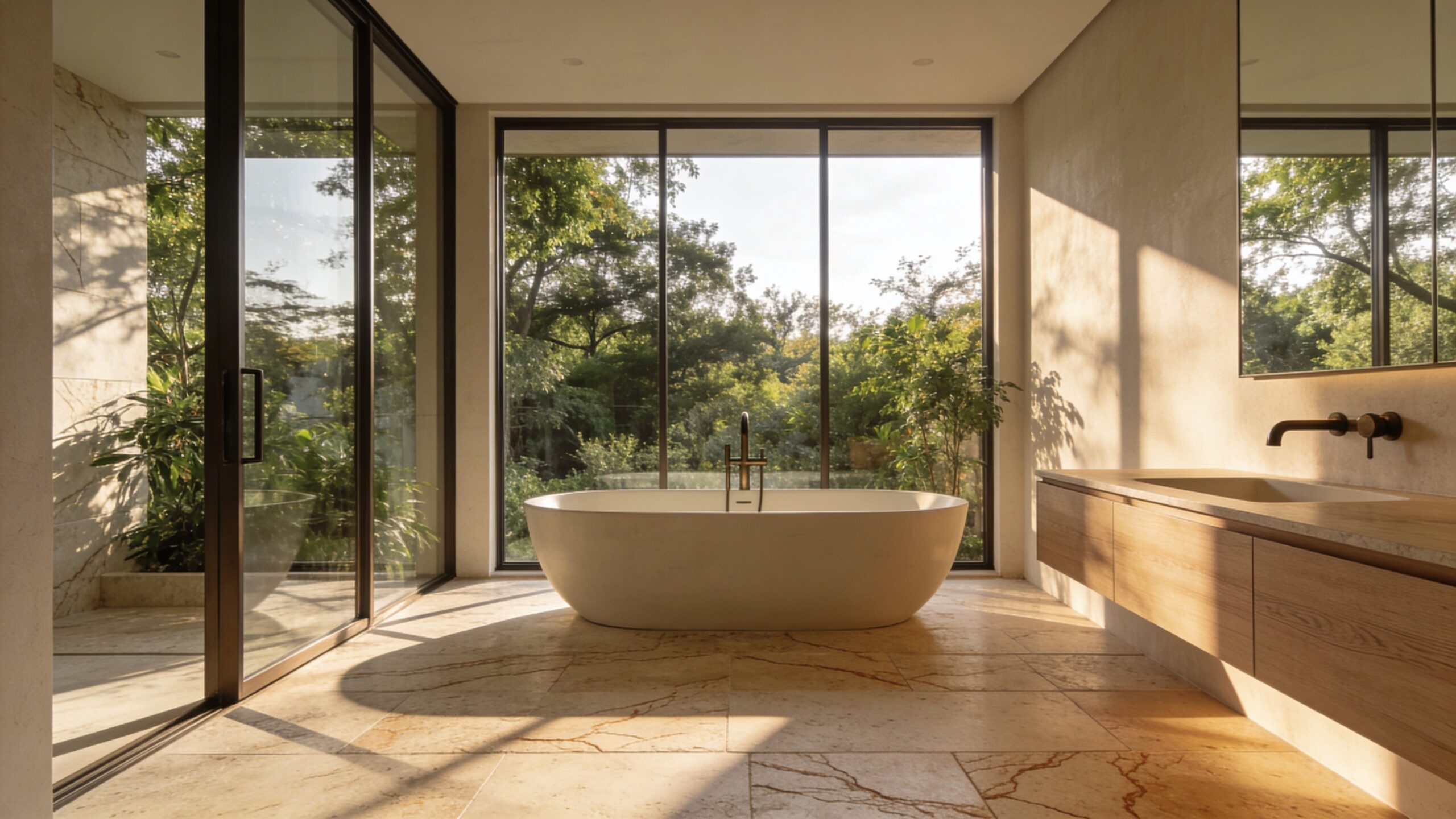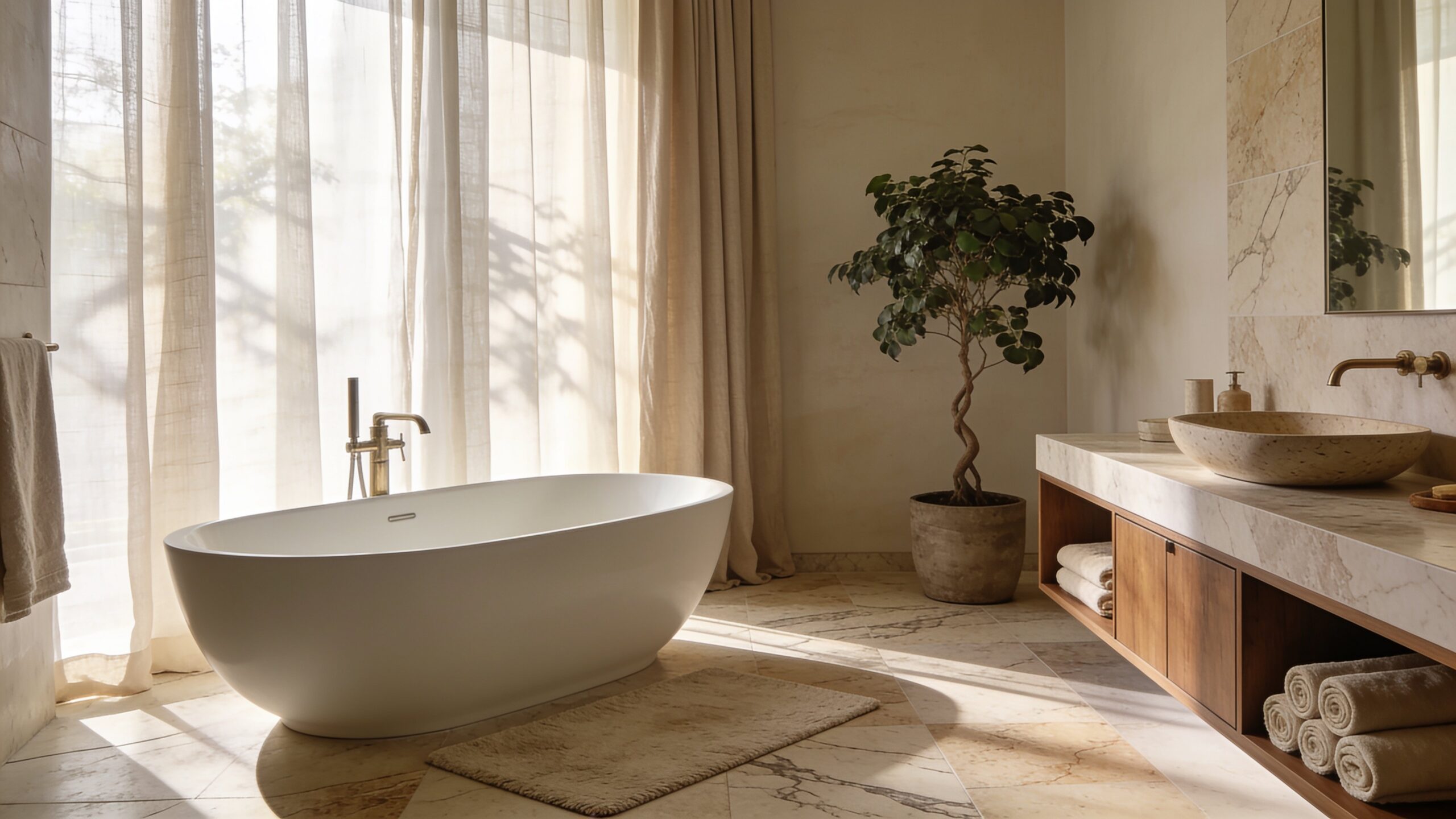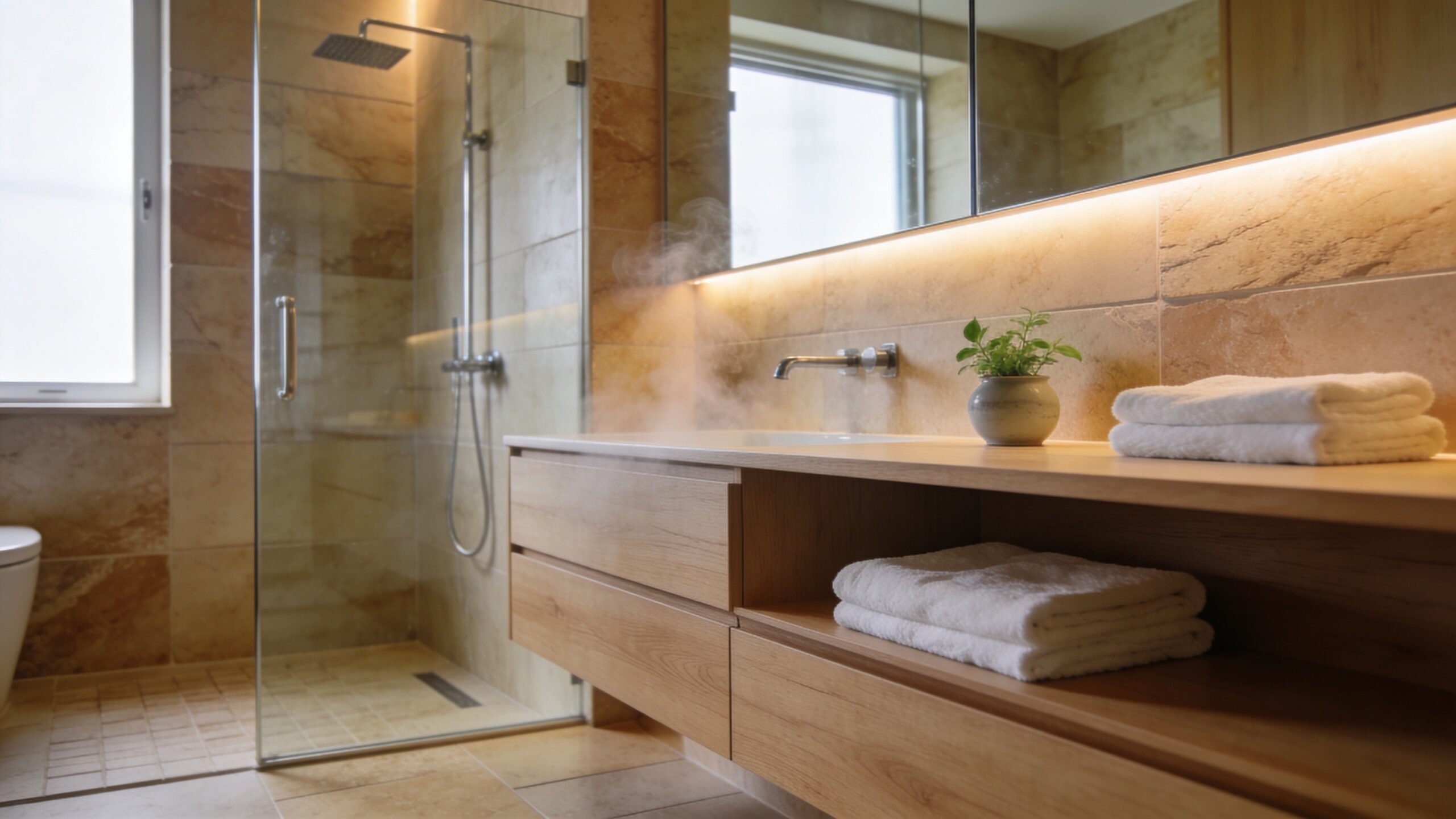
A modern oasis bathroom isn’t about copying a showroom—it’s about building a space that quietly takes care of you. The best ones feel calm the second you walk in: fewer visual distractions, softer transitions, and choices that make your mornings smoother and your evenings slower. This is where the “zero stress” part becomes real. It’s in the way lighting doesn’t glare, storage doesn’t shout, and surfaces are easy to live with. And when you pair that mindset with a walk-in shower—open, seamless, and designed for comfort—you get a bathroom that feels more like a retreat than a chore list. Walk-in showers are the anchor of the modern oasis because they blend function and mood. They’re accessible without feeling clinical, luxurious without being high-maintenance, and flexible enough to fit almost any footprint when the layout is smart. Whether your style leans spa-minimal, warm organic modern, or sleek stone-and-metal, the goal stays the same: fewer friction points, more flow. The magic is in the details—how the water lands, how steam moves, how you store towels, how you step out without a cold shock, and how the room looks when you’re not trying.
A: Add dimmers, simplify the palette, and hide countertop clutter with better storage.
A: Yes—use a clear glass panel, large tile, and a tight layout to keep it open.
A: Use a water-repellent coating, squeegee quickly, and keep lighting from highlighting every droplet.
A: Honed or matte—less glare, fewer visible spots, and a softer spa look.
A: Only if you have enough depth and correct shower-head placement; otherwise, consider a minimal glass door.
A: Install a recessed niche and keep only daily-use items inside; store backups elsewhere.
A: Thermostatic controls + a handheld sprayer—consistent temp and easier cleaning.
A: Use layered lighting: soft ambient + flattering mirror light + a gentle night glow.
A: A properly sized, quiet exhaust fan and letting it run 15–20 minutes after showers.
A: A towel warmer or heated floor—comfort you notice every single day.
The “Zero Stress” Blueprint: Calm by Design, Not by Accident
Stress in bathrooms usually comes from tiny annoyances that pile up: nowhere to set your phone, a towel that never dries, clutter on every ledge, harsh overhead light, grout that stains, a shower that sprays everywhere, or a fan that’s either too loud or too weak. A modern oasis bathroom designs those problems out of existence. It treats the bathroom like a daily-use environment—more like a well-planned kitchen than a decorative corner—while still keeping the mood soft. Start with sightlines. When you walk in, what do you see first? A serene wall of tile, a floating vanity, a warm mirror glow—those are relaxing. A stack of products, a tangled cord, a laundry pile—those are stress triggers. Even if your bathroom is small, you can build calm by hiding essentials behind clean fronts, using fewer materials, and keeping the most visible surfaces intentionally simple. Then comes the sensory layer. “Oasis” is as much about sound and temperature as it is about style. A quiet fan, a soft-close drawer, a shower that doesn’t whine or hammer, and a floor that isn’t icy in the morning all matter. The point isn’t perfection. It’s predictability—your bathroom should feel like it’s on your side.
Walk-In Shower Layouts That Feel Open, Not Exposed
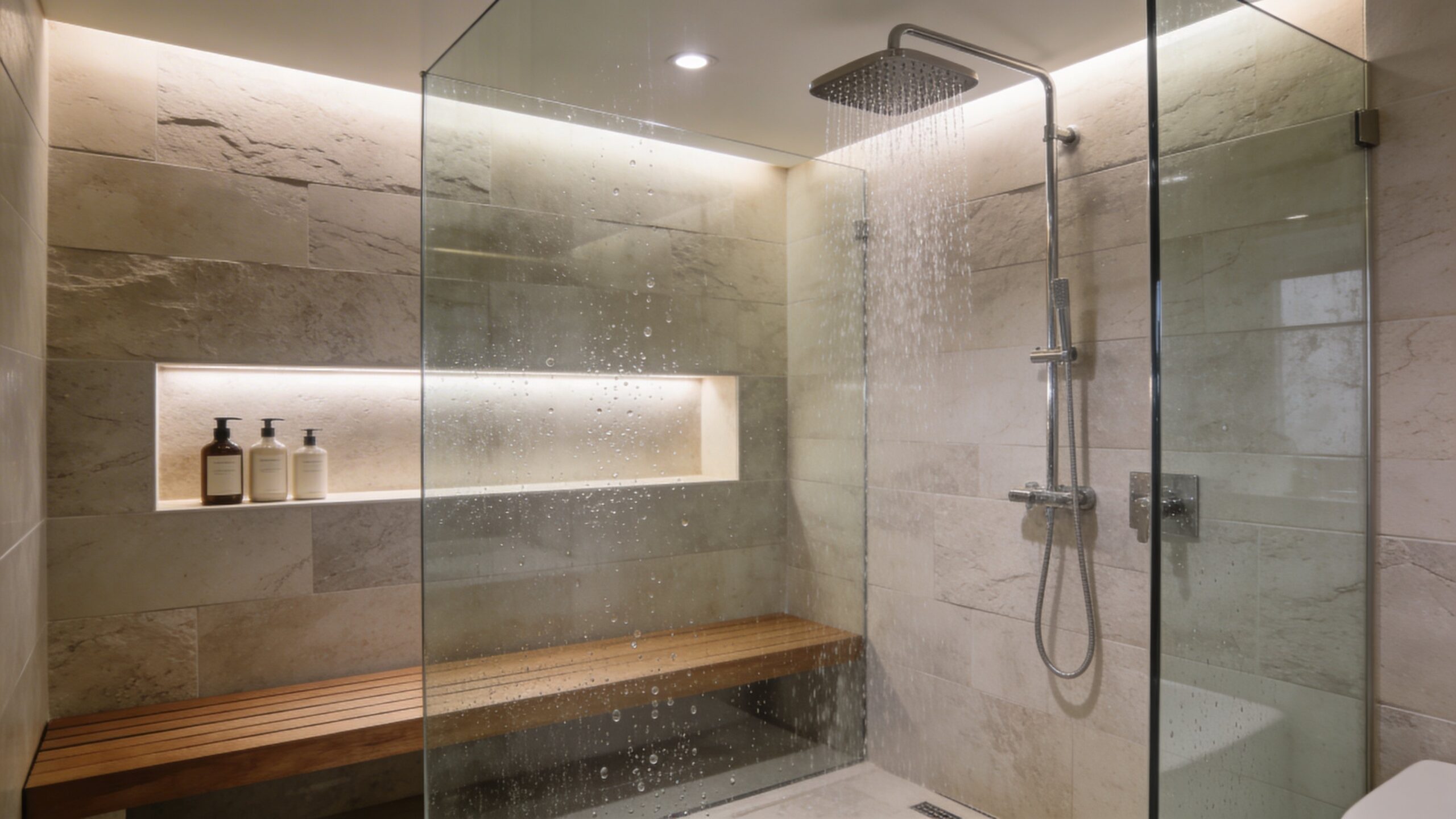
A great walk-in shower feels open without feeling like you’re showering in the middle of the room. The difference is placement and partial privacy. A single glass panel can block splashes while keeping sightlines clean. A half-wall can create a protected entry while doubling as a ledge or plumbing chase. A niche wall can hide bottles so the shower reads as architecture instead of storage chaos.
If you want a resort vibe, think in zones: a dry entry zone where the towel hook is reachable, a wet zone where the shower head does the work, and a “pause” zone like a bench or ledge where you can slow down. Even in compact bathrooms, you can create this feeling by using a slightly larger tile field, a continuous ceiling finish, and a linear drain that encourages a gentle slope rather than a cramped “shower pan” look. Doorless showers can work beautifully, but they need the right conditions: enough depth to prevent spray, a correctly placed shower head (often on a side wall rather than facing the opening), and smart drainage. When those are off, doorless becomes messy, and mess is stress. If your layout is tight, a hinged or sliding glass door can still feel modern—especially with minimal hardware and clear glass.
The Material Palette: Warm Minimalism Wins
The modern oasis look is often misunderstood as “all white everything.” In practice, the most calming bathrooms usually mix lightness with warmth: creamy whites, soft beiges, pale oak tones, muted stone, gentle greys, and matte finishes that don’t scream for attention. Contrast still matters, but it’s best used like punctuation, not a headline. A thin black frame on glass, a charcoal faucet, or a deep-toned vanity can add depth without making the room feel sharp.
Tile choices are where you can either reduce stress or create it. Large-format tile lowers grout lines and makes cleaning easier. Honed or matte finishes feel soft and hide water spots better than high-gloss. If you love marble looks, consider porcelain slabs or high-quality porcelain tile that gives you the vibe without the same level of maintenance anxiety. Natural stone can be stunning, but it’s a commitment—sealing schedules and gentle cleaners are part of the lifestyle. And don’t overlook texture. A modern oasis bathroom is often quiet in color but rich in tactile contrast: smooth plaster-like walls, soft wood grain, stone with subtle movement, and textiles that look inviting. That’s what makes the room feel lived-in, not sterile.
The Walk-In Shower Experience: Water That Feels Like a Reset Button
A walk-in shower can be functional, or it can be transformative. The difference is how the water meets your body and how the space supports the moment. A rainfall head can feel spa-like, but only if your water pressure is adequate and the head is sized appropriately. A handheld sprayer is the underrated hero for stress reduction—cleaning the shower, rinsing hair, washing kids, bathing pets, or simply controlling the flow when you’re tired. Many of the best showers use both: a main head for atmosphere and a handheld for real life.
Body sprays are optional, but comfort features like a bench or a discreet foot ledge are often more impactful. A bench gives you a place to breathe, shave, or sit when you’re not at 100%. Even a small corner bench or a floating slab-style seat can change the daily feel. Pair that with a properly placed niche—at chest height, not knee height—and your shower becomes calmer instantly because bottles stop taking over. Thermostatic controls are another “zero stress” upgrade. Instead of re-finding the perfect temperature every day, you set it once and live your life. The shower becomes consistent, which is a quiet luxury you feel every morning.
Lighting That Makes You Look and Feel Better
Oasis bathrooms don’t rely on one bright ceiling light. They build layers: ambient light for the room, task light for the mirror, and soft accent light that makes nighttime visits gentle instead of jarring. Think of it like a hotel suite—everything is adjustable, nothing is harsh.
Mirror lighting matters more than people realize. If the light is only overhead, shadows fall under your eyes and chin, and you look tired even when you’re fine. Sconces at face height or a backlit mirror creates more flattering, calmer light. Dimmers are the easiest way to make a bathroom feel expensive. Warm-white color temperature usually supports the oasis vibe; overly cool light can turn stone grey and skin lifeless. In the shower, a recessed wet-rated light placed thoughtfully can make tile glow rather than glare. If you want an extra level of calm, consider a subtle LED strip under the floating vanity or along a shelf—nighttime navigation without the shock.
Storage That Disappears, So Your Mind Can Too
Clutter is the enemy of an oasis. The goal isn’t minimalism for its own sake—it’s reducing visual noise so your brain can exhale. The best bathrooms have “staging zones” built in: a drawer for everyday items, a hidden outlet for chargers, a cabinet for backups, and a spot for laundry that doesn’t dominate the room. Floating vanities help because they open floor space and make the room feel lighter. Deep drawers are often more calming than cabinets because you can see everything at a glance without digging. Inside the shower, recessed niches keep bottles from crowding corners. Outside the shower, a tall linen cabinet or recessed medicine cabinet can hide the chaos without making the room feel bulky. Hooks matter too. A towel hook placed exactly where you reach when stepping out of the shower is a small design choice that removes daily irritation. Multiply those micro-frictions across months, and you’ll feel the difference.
Tile, Grout, and the “Easy-to-Clean” Reality
A true zero-stress bathroom doesn’t ask you to become a full-time cleaner. It uses finishes that age gracefully. That means fewer grout lines, smart grout choices, and surfaces that don’t punish you for living. Large tiles and slabs reduce grout, and epoxy grout can be a game-changer in wet zones because it resists staining better than traditional grout. If you prefer cement grout for ease of install or repair, choosing the right color—often a mid-tone that matches the tile—can hide everyday wear better than bright white lines. In showers, slope and waterproofing are non-negotiable for stress reduction. When drainage is right, everything feels cleaner and stays cleaner. Glass can also be stress-inducing if it’s constantly spotted. If you love glass but hate wiping it daily, consider a water-repellent coating, a squeegee that has a designated elegant home, and lighting that doesn’t highlight every droplet. Or use a mix: a glass panel plus a partial privacy wall that breaks up the surface area.
Comfort Upgrades That Actually Feel Like Luxury
Luxury isn’t always a chandelier or a rare stone. In a modern oasis bathroom, luxury often feels like comfort and control. Heated floors are a classic example—especially in colder climates. They remove that “shock” factor that makes mornings feel harder than they need to. A towel warmer gives you that spa feeling even on ordinary days. Quiet ventilation keeps the room fresh without sounding like an engine. Sound can be designed too. Soft surfaces—rugs, towels, even a fabric shade—absorb echoes and make the room feel calmer. If your bathroom is mostly tile and glass, it can get loud in a way you don’t notice until you’re trying to unwind.
Scent and steam also matter. A shower with stable temperature and good ventilation gives you that clean, breathable post-shower air. Add a simple eucalyptus bundle, a subtle essential oil diffuser used carefully, or a candle on a safe tray, and the room starts to feel like a ritual space instead of a utility room.
Small Bathrooms Can Still Be Modern Oases
You don’t need a giant footprint to build an oasis. Small bathrooms often benefit the most from stress-reducing design because every mistake is amplified. A walk-in shower with a clear glass panel can make a small room feel larger. A wall-mounted toilet can open floor area visually. A floating vanity can keep the room from feeling cramped. Even a single continuous material—one tile used on both floor and shower walls—can reduce visual breaks and make the space feel calmer.
Mirrors and lighting do heavy lifting in smaller rooms. A larger mirror bounces light and expands perception. A backlit mirror can add depth without taking up space. Minimal hardware and a tight palette keep the room feeling intentional, not busy. The key is to design for your routine. If your mornings are rushed, make the shower controls easy and the storage obvious. If your evenings are your unwind time, prioritize dimmable lighting, a comfortable shower setup, and textures that feel warm.
Pulling It Together: The Oasis Checklist in Your Head
When you’re planning a modern oasis bathroom with a walk-in shower, the real question is: what will make this space feel easier every day? Style is part of it, but function is the foundation of calm. Choose materials that don’t demand constant attention. Build storage that hides clutter by default. Design the shower so it contains water, holds essentials, and feels good on your body. Add lighting that flatters and relaxes. Then add one or two comfort touches that make you smile—a heated floor, a bench, a towel warmer, or that perfect soft glow at night. A bathroom can be beautiful and still stressful if it’s not designed for living. But when you prioritize flow—visual, physical, and emotional—you end up with a space that doesn’t just look like a modern oasis. It acts like one. Every rinse feels like a reset, every detail feels considered, and the room becomes the quietest, kindest place in your house.