A Softer Kind of Luxury
Modern oasis bathrooms are no longer defined by loud color palettes, flashy finishes, or dramatic accent walls. The newest luxury bathroom trend is quieter, calmer, and far more tactile. Instead of relying on bold paint or patterned tile, these spaces create depth through texture. Stone, plaster, ribbed glass, fluted wood, woven baskets, matte ceramics, brushed metal, linen towels, and softly veined tile all work together to create a bathroom that feels peaceful without feeling plain. A modern oasis bathroom that uses texture instead of color is built around touch, shadow, light, and material contrast. It may use a restrained palette of warm white, sand, clay, taupe, mushroom, ivory, greige, or soft stone gray, but the room still feels layered because every surface has a different personality. Smooth meets rough. Matte meets polished. Organic meets architectural. The result is a bathroom that feels like a spa retreat, a quiet morning ritual space, and a design statement all at once.
A: Mix textures like plaster, stone, wood, ribbed glass, matte tile, and woven textiles.
A: Warm white, ivory, sand, taupe, greige, clay, mushroom, and soft stone gray work beautifully.
A: Light texture is usually manageable, but deep grooves and rough stone may need more regular maintenance.
A: Yes, but choose properly sealed wood, water-resistant finishes, or wood-look materials in splash-heavy zones.
A: Add waffle towels, woven baskets, a stone tray, and a ribbed or wood-framed mirror.
A: Matte porcelain, ribbed tile, stone-look tile, and small slip-resistant floor tiles are strong choices.
A: Yes, but limit the palette and choose two or three textures to keep the room calm.
A: Brushed and matte finishes usually support the soft oasis look better than very shiny finishes.
A: Pick one hero texture, one supporting texture, and one soft finishing texture.
A: Use warm lighting, natural materials, soft towels, minimal clutter, and surfaces that invite touch.
Why Texture Matters More Than Color
Color can instantly change the mood of a bathroom, but texture changes how the room feels over time. A blue wall may catch attention, but a hand-troweled plaster wall invites a slower look. A glossy tile can brighten a space, but a matte stone floor can make the room feel grounded and serene. Texture adds emotion without noise, making it perfect for modern bathroom design where calm, comfort, and sophistication matter.
Texture also gives neutral bathrooms their staying power. Many homeowners love the idea of a clean white or beige bathroom, but without texture, those spaces can feel flat or unfinished. When you bring in ribbed cabinetry, pebble-style flooring, brushed limestone, slatted oak, soft cotton, sculpted tile, or natural stone, the palette can stay simple while the design becomes rich and memorable. This is the secret behind modern oasis bathrooms: they do not need more color because they already have visual depth.
The Modern Oasis Bathroom Look
The modern oasis bathroom look blends spa-inspired comfort with clean architectural design. It is not overly rustic, overly glossy, or overly decorated. Instead, it feels intentional. Every material has a purpose, and every surface contributes to the mood. The space may include a floating vanity, a walk-in shower, frameless glass, soft indirect lighting, a sculptural tub, natural materials, and minimal hardware. Yet the real beauty comes from the way those elements feel together.
A textured oasis bathroom might feature large-format stone-look tile on the floor, limewash walls around the vanity, a reeded wood cabinet, a honed marble countertop, and a handmade ceramic vessel sink. None of these elements need to be brightly colored. Their differences in surface, finish, grain, and reflection create the movement. The eye travels across the room because the materials are layered, not because the colors are loud.
Building a Neutral Palette With Depth
The best textured bathrooms often begin with a neutral palette. Warm whites, creamy beiges, stone grays, pale taupes, and muted earth tones are ideal because they allow texture to become the main design feature. A neutral palette also makes the bathroom feel larger, cleaner, and more peaceful, especially when paired with natural light.
The key is to avoid choosing one flat shade for every surface. Instead, work within a family of tones. A bathroom can feel beautifully cohesive with ivory walls, bone-colored tile, light oak cabinetry, beige stone flooring, and brushed nickel hardware. The colors are subtle, but the textures are different enough to create interest. This layered approach makes the bathroom feel curated rather than bland.
Walls That Feel Handcrafted
Bathroom walls are one of the best places to use texture instead of color. Smooth painted drywall can work, but modern oasis bathrooms often feel more luxurious when the walls have a handcrafted surface. Limewash, Venetian plaster, microcement, Roman clay, and waterproof plaster-style finishes create soft movement across the wall. They catch light differently throughout the day, giving the bathroom a living, breathing quality.
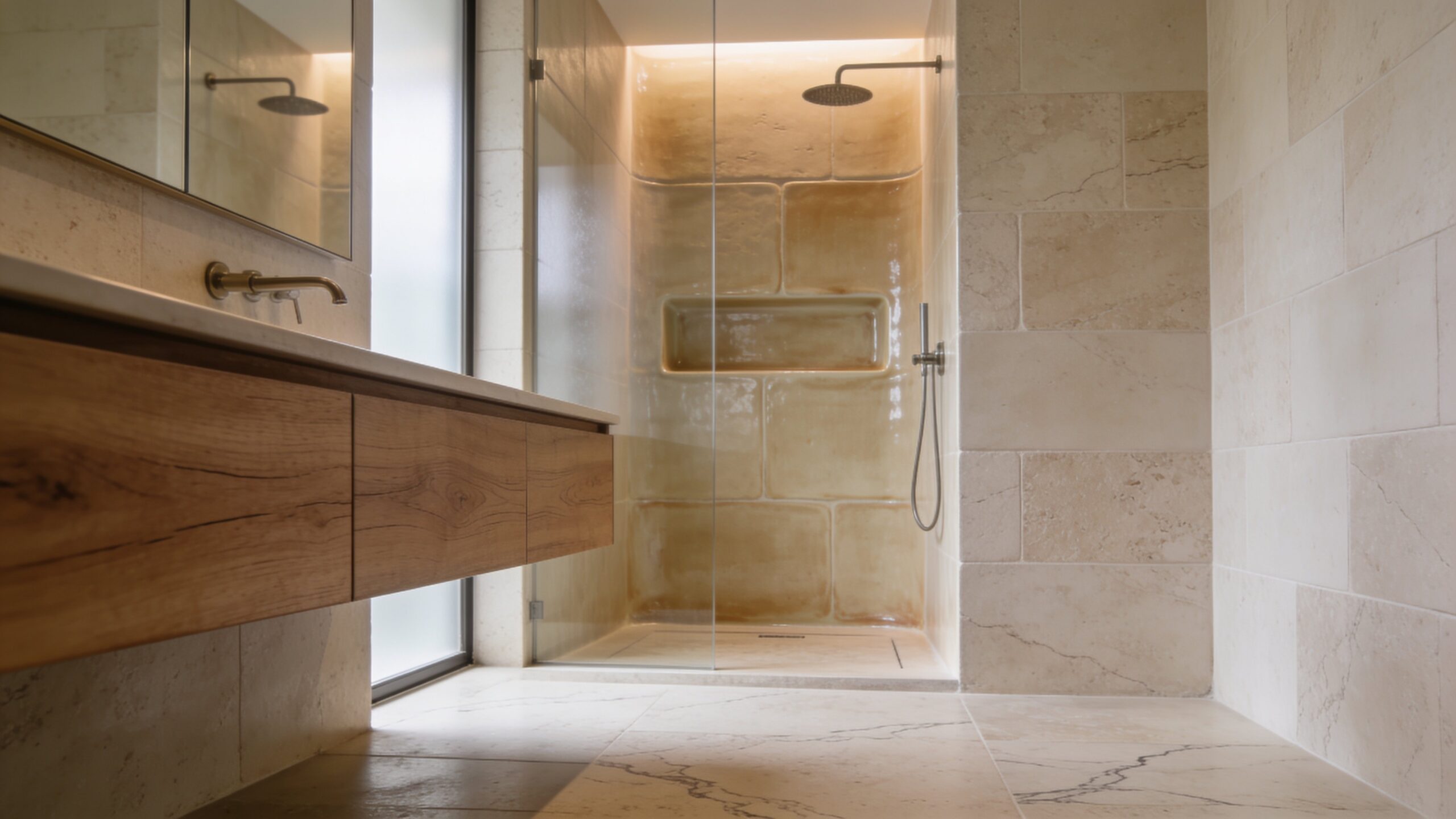
For wet areas, textured tile is often the better choice. Zellige-style tile, stacked ceramic tile, ribbed tile, stone-look porcelain, and fluted wall panels can bring character to a shower or vanity wall while still keeping the color palette calm. Even a simple white tile becomes more interesting when it has uneven edges, a handmade surface, or a satin finish that reflects light softly.
Floors That Ground the Space
The floor sets the tone for the entire bathroom. In a texture-driven oasis bathroom, flooring should feel grounded, calm, and comfortable underfoot. Large-format porcelain tile that mimics limestone, travertine, slate, or concrete is a popular choice because it creates a seamless spa-like foundation. Honed stone is another beautiful option when properly sealed and maintained.
For shower floors, smaller tiles can add both texture and function. Pebble tile, mosaic stone, small-format matte porcelain, or textured slip-resistant tile gives the shower a tactile quality while improving grip. The goal is not to make the floor visually busy. The goal is to make it feel natural, safe, and connected to the rest of the space.
Showers With Spa-Level Texture
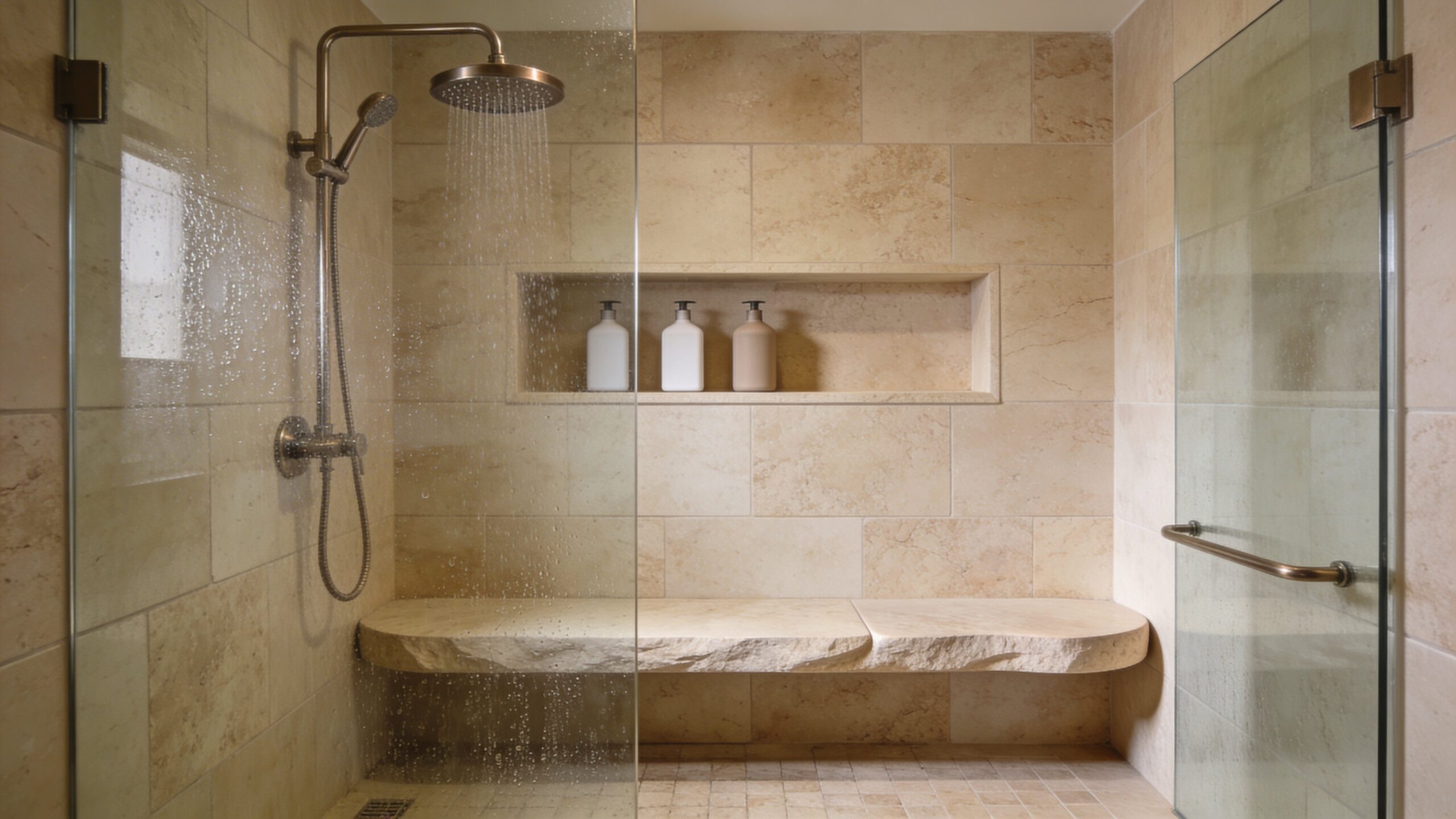
A walk-in shower is often the centerpiece of a modern oasis bathroom. Instead of using colorful tile patterns, the shower can become dramatic through surface changes. A shower wall with vertical stacked tile, fluted stone-look panels, handmade ceramic tile, or a subtle plaster-effect finish can create a spa-like focal point without overwhelming the room.
Texture also works beautifully when used in contrast. A smooth glass shower enclosure against a rough stone wall creates balance. A matte shower floor below satin wall tile adds depth. A brushed metal shower system against a softly textured wall feels refined and modern. These quiet contrasts make the shower feel immersive, especially when paired with warm lighting and a rainfall fixture.
Vanities With Natural Character
The vanity is another major opportunity to introduce texture. Wood is especially powerful in neutral bathrooms because it brings warmth and organic variation. A light oak floating vanity, a walnut cabinet, or a reeded wood drawer front can soften the clean lines of a modern bathroom. Even when the rest of the room is pale and minimal, wood grain adds movement and comfort.
Stone countertops, concrete-style counters, matte quartz, and honed marble also help build texture. A polished countertop can feel elegant, but a honed or leathered surface feels quieter and more natural. Pairing these surfaces with simple vessel sinks, wall-mounted faucets, or low-profile hardware keeps the vanity area clean while letting the materials do the talking.
The Power of Fluted and Ribbed Details
Fluted and ribbed details are perfect for modern oasis bathrooms because they add rhythm without adding clutter. A fluted vanity front, ribbed glass shower panel, grooved wall tile, or reeded cabinet door creates vertical movement and shadow. This type of texture feels architectural, modern, and refined.
Ribbed glass is especially useful because it provides privacy while still allowing light to pass through. It can be used for shower doors, cabinet fronts, or small partition walls. In a neutral bathroom, ribbed glass adds a soft distortion that feels elegant and spa-like. It makes the room more interesting without making it busier.
Natural Stone Without the Noise
Natural stone is one of the most timeless ways to create texture in a bathroom. Marble, travertine, limestone, slate, quartzite, and terrazzo can all bring depth through veining, grain, fossils, speckles, and surface variation. The trick is choosing stone that supports the oasis feeling rather than overpowering it.
Subtle veining often works best. A creamy marble, soft travertine, warm limestone, or pale terrazzo can add movement while keeping the space serene. If you want more drama, use a stronger stone in one focused area, such as the vanity backsplash, shower niche, or tub surround. This keeps the bathroom balanced and lets the material feel special.
Lighting That Reveals Texture
Texture only works when the lighting supports it. A flat overhead light can erase the beauty of a textured wall or stone surface. Modern oasis bathrooms benefit from layered lighting, including soft ceiling lights, vanity sconces, LED mirror lighting, under-vanity glow, shower niche lighting, and indirect cove lighting.
Side lighting is especially effective because it casts gentle shadows across textured surfaces. A plaster wall, ribbed tile, or fluted cabinet becomes more dimensional when light grazes across it. Warm white lighting helps keep the room relaxing, while dimmers allow the bathroom to shift from bright morning function to soft evening retreat.
Matte Finishes for a Calm Mood
Glossy surfaces can make a bathroom feel clean and bright, but too much shine can feel cold. Matte finishes are a major part of the texture-first oasis look. Matte tile, honed stone, brushed metal, soft plaster, and satin cabinetry all absorb light in a calming way. They make the bathroom feel relaxed rather than reflective.
This does not mean every surface must be matte. A beautiful bathroom often needs a mix. A matte floor can pair with a softly reflective wall tile. Brushed fixtures can sit beside a polished mirror. A satin vanity can contrast with a stone countertop. The balance of reflection and softness is what makes the space feel luxurious.
Textiles That Complete the Oasis
Textiles may seem like small details, but they have a major impact in a texture-driven bathroom. Plush towels, waffle-weave hand towels, linen shower curtains, cotton bath mats, woven storage baskets, and soft robes bring comfort into the room. They also prevent the space from feeling too hard or architectural.
For the most cohesive look, choose textiles in the same neutral family as the room. White, ivory, oatmeal, sand, stone, and soft gray textiles feel timeless. Instead of adding bold color, choose different weaves and weights. A waffle towel, a boucle stool, and a woven basket can add more richness than a bright accent color ever could.
Minimal Decor With Maximum Feeling
Modern oasis bathrooms do not need heavy decorating. In fact, the fewer decorative objects you use, the more the textures can shine. A small ceramic tray, a stone soap dish, a wooden stool, a simple vase, or a single branch can be enough. The goal is to make the space feel peaceful, not staged.
Plants can also work beautifully, especially when used with restraint. A small fern, eucalyptus bundle, olive branch, or humidity-loving plant adds organic softness. The green may technically introduce color, but it still feels natural and calm because it comes from a living material rather than a decorative accent.
Small Bathroom Texture Ideas
Texture is not only for large spa bathrooms. Small bathrooms can benefit from it even more because texture creates interest without taking up space. A powder room can feel stunning with limewash walls, a stone sink, ribbed mirror frame, and simple wall-mounted faucet. A compact guest bath can feel larger with large-format tile, a floating vanity, and one textured focal wall.
In smaller bathrooms, restraint is important. Choose two or three main textures rather than using every material at once. For example, combine smooth plaster walls, matte floor tile, and a wood vanity. Or pair stacked shower tile with a stone countertop and woven accessories. This keeps the room calm while still giving it depth.
Common Mistakes to Avoid
One of the biggest mistakes in a neutral textured bathroom is choosing materials that are too similar. If every surface is smooth, beige, and matte, the room can feel dull. Texture works best when there is contrast. Pair smooth with rough, light with shadow, large scale with small scale, and organic surfaces with clean lines.
Another mistake is using too many competing textures. A bathroom with fluted wood, busy marble, pebble tile, heavy plaster, patterned mosaic, and woven decor can quickly feel chaotic. The most beautiful modern oasis bathrooms are edited. They let a few strong textures lead the design while the rest of the room supports them.
How to Make It Feel Expensive
A texture-first bathroom feels expensive when the details are consistent. Matching grout color to tile, choosing large-format materials, using clean transitions, hiding clutter, upgrading hardware, and adding layered lighting can make a simple bathroom feel much more refined. Even affordable materials can look premium when they are installed thoughtfully.
Scale also matters. A full-height textured shower wall feels more luxurious than a small accent strip. A floating vanity with clean lines feels more custom than a bulky cabinet. A large mirror can reflect light and texture, making the room feel bigger and more polished. The goal is not to spend more everywhere, but to make a few design choices feel intentional.
The Emotional Side of Texture
The reason modern oasis bathrooms are so appealing is not just visual. Texture affects emotion. A smooth stone counter feels cool and grounding. A warm wood vanity feels natural and familiar. A soft towel adds comfort. A plaster wall feels handmade and human. Together, these details turn a bathroom from a purely functional room into a restorative space.
In a busy home, the bathroom can become one of the few places that encourages stillness. A texture-driven design supports that feeling because it does not shout for attention. It creates calm through subtlety. It makes the room feel finished, personal, and peaceful without depending on trends that may fade quickly.
Final Thoughts
Modern oasis bathrooms that use texture instead of color prove that neutral design does not have to be boring. When stone, wood, plaster, tile, glass, metal, and textiles are layered with care, a bathroom can feel rich, warm, and deeply relaxing. The beauty comes from material contrast, soft lighting, natural finishes, and details that invite touch.
This approach is ideal for anyone who wants a bathroom that feels timeless rather than trendy. Instead of chasing the latest color, focus on surfaces that age beautifully, finishes that feel good in daily use, and textures that create quiet luxury. A modern oasis bathroom does not need to be colorful to be unforgettable. It simply needs depth, balance, and a sense of calm that can be felt the moment you walk in.