A modern oasis bathroom doesn’t just look calm—it behaves calm. It greets you with soft light, clean lines, and surfaces that feel intentional instead of busy. At the heart of that atmosphere, a freestanding tub becomes more than a fixture. It’s the anchor that organizes the room, the sculptural element that turns “bathroom” into “retreat,” and the visual cue that says: slow down. The reason freestanding tubs work so well in modern oasis design is simple: they create negative space. Built-in tubs often disappear into tile and cabinetry; freestanding tubs do the opposite, giving the eye a clear focal point. That focal point makes everything around it easier to design. Once you choose the tub’s silhouette, finish, and placement, the rest of the room can echo those decisions—whether you’re leaning spa-minimal, warm modern, or a quietly luxurious hotel vibe.
A: Often yes—especially floor-mounted fillers and centered drains; plan rough-ins early.
A: Quick rinse + microfiber wipe; use a gentle, non-abrasive cleaner weekly.
A: For a centered “statement” tub, yes—just budget for extra planning and installation.
A: Simplify finishes, reduce clutter, use warm layered lighting, and keep the tub zone clean.
A: Acrylic is lighter and affordable; stone resin feels premium and often holds warmth well.
A: Large-format, low-contrast patterns with matching grout keep the visual field quiet.
A: Use a squeegee, consider a water softener in hard-water areas, and wipe fixtures dry.
A: Within arm’s reach—hook or bar nearby, plus a small stool or shelf for folded towels.
A: Yes—just consider privacy glass, moisture-resistant trim, and proper ventilation.
A: Add dimmers, warm lighting, and hidden storage—calm comes from editing, not adding.
Start With the Tub’s Silhouette, Not the Accessories
When a freestanding tub is the focal point, shape becomes your design language. A sleek, flat-rim modern tub communicates precision and restraint. A soft oval reads as gentle, airy, and restorative. A classic slipper tub tilts the mood toward romantic comfort. Even before you pick tile or paint, the tub’s profile tells you what “oasis” means in this particular space—cool and architectural, or warm and cocooning. Scale is the second part of the silhouette story. A tub that looks perfect in a showroom can feel oversized in a real bathroom, especially once you account for walking clearance, towel reach, and the visual “breathing room” that keeps the space serene. In an oasis-style bathroom, you want the tub to feel supported by the room, not jammed into it. That usually means leaving enough space around it so the tub reads like an object on display—like a piece of art—while still feeling practical and easy to live with.
Placement: The Difference Between “Nice” and “Wow”
A freestanding tub wants a moment. If you can place it where it naturally becomes the first thing you see—centered beneath a window, aligned with a statement wall, or framed by symmetrical lighting—you instantly elevate the room. This is where modern oasis design shines: it uses simple composition to create a sense of ritual.
Window placement is the dream scenario, but the real magic is alignment. Center the tub with a window mullion, a niche, or a pendant light. Line up the tub’s drain with a floor tile grid or a ceiling beam. These subtle alignments make the room feel intentional, and intention is what reads as luxury. Even in smaller bathrooms, you can create that “planned” feeling by placing the tub at the end of a sightline so it closes the room like a calm full stop.
Materials That Feel Like a Spa, Not a Showroom
Modern oasis bathrooms use materials that are soothing to the eye and pleasant to the touch. That doesn’t mean everything has to be beige or stone—just that finishes should feel cohesive and quiet. The tub becomes the primary sculptural piece; materials around it should support it, not compete.
Natural stone and stone-look porcelain are favorites for good reason: they bring depth without visual noise. Large-format tile reduces grout lines, which reduces patterning and helps the room feel expansive. Microcement, plaster-look walls, and limewash-style finishes add softness and a slightly imperfect texture that reads as calming rather than clinical. Wood tones—especially white oak, walnut, or teak—add warmth and keep modern lines from feeling cold. The trick is to pick one dominant material story and let it carry the room: stone + warm wood, or plaster + minimal tile, or marble-look porcelain + matte black accents.
The “Quiet Contrast” Rule for Color
Oasis design loves a restrained palette, but restrained doesn’t have to mean flat. The most successful modern oasis bathrooms use quiet contrast: a creamy tub against a greige wall, warm wood against cool stone, matte black fixtures punctuating soft neutrals. You’re aiming for contrast that feels intentional rather than loud.
If you’re working with a white tub, you can create a boutique-hotel effect by placing it against a slightly darker wall—soft charcoal, clay taupe, muted olive, or warm putty. That background makes the tub read like a focal sculpture. If your tub is a color—matte black, deep green, or even a warm off-white—then let the rest of the room step back with simpler tile and fewer competing finishes.
Lighting That Makes the Tub Glow
Lighting is where an “oasis” bathroom becomes believable. Good lighting doesn’t just brighten; it layers mood. A freestanding tub deserves a lighting plan that highlights its curves and creates a sense of calm at night. Start with ambient lighting that feels soft and even—recessed lights with warm temperature, a dimmer always, and gentle spill across the walls. Add task lighting at the vanity that’s flattering and shadow-free, ideally with side sconces or a wide, diffused fixture. Then bring in the oasis magic: a pendant above the tub (if ceiling height and code allow), wall washers that graze textured surfaces, or an LED strip tucked under a floating vanity or along a niche. Candlelight is the timeless spa move, but you can get the same mood with a pair of small accent lamps on a protected shelf or a dimmable toe-kick glow that makes the floor feel like it’s floating. When the tub is the focal point, lighting should create a subtle spotlight effect—never harsh, never glaring.
The Faucet Moment: Wall-Mount, Floor-Mount, or Deck?
The tub filler is one of the few “jewelry” decisions in a modern oasis bathroom. Each option sets a different tone. A wall-mounted tub filler feels architectural, clean, and space-saving—perfect if the tub sits near a wall or a half-height partition. A floor-mounted filler is dramatic and sculptural, especially in a centered tub layout, but it requires planning and precise rough-in work. A deck-mounted filler can look sleek on certain tub designs, but it can also introduce visual clutter if the surrounding surfaces get busy.
For oasis style, the goal is usually simplicity. A minimal spout, a clean handle shape, and a hand shower that feels integrated—not like an afterthought—go a long way. Finish matters too: brushed nickel and brushed brass feel softer and more spa-like than high-polish chrome, while matte black looks bold and modern (and can be stunning if the rest of the room stays calm).
Build a Tub “Zone” That Feels Like a Ritual
An oasis bathroom isn’t only about the tub; it’s about the experience around the tub. Think of the tub area as its own zone—like a little stage set for relaxation. What does your hand reach for? Where do you put your book? Where does the towel live? Where does the light come from?
A simple bath tray, a nearby niche for salts and oils, and a towel hook within arm’s reach create a feeling of ease. If you have the space, a small stool or bench in teak or stone becomes both functional and aesthetic—somewhere to set a robe, or sit while you moisturize, or place a folded towel. The point isn’t to add clutter; it’s to add purpose. Purpose reads as calm.
Tile and Surrounds: Framing Without Crowding
Freestanding tubs don’t need a “surround,” but they often benefit from a backdrop. The backdrop can be as simple as a subtly different wall finish behind the tub, or as structured as a tiled feature wall that frames the silhouette. The key is to frame the tub without turning the room into a collage of competing patterns.
If you want a tiled feature, consider vertical stacking for height, a large slab look for serenity, or a lightly textured tile that catches light without demanding attention. Niches can be a design feature too—especially when they align with the tub’s centerline and are lit softly. If your bathroom already has strong materials (like a dramatic stone), then the best oasis move is often restraint: let the tub sit in front of a calm surface so it can be the star.
Keep the Room Visually “Low Noise”
Modern oasis bathrooms feel expensive because they feel edited. Visual noise comes from too many lines, too many small objects, and too many changes in material. When a freestanding tub is the focal point, everything else should be quieter: fewer visible bottles, fewer countertop items, fewer jarring transitions.
This is where storage becomes design. Recessed medicine cabinets, drawers that hide backups, niches that contain shower products, and integrated hampers keep surfaces calm. Even your towel strategy matters: matching towels, neatly folded, stored in a consistent spot. You’re not creating a showroom; you’re creating a space that can stay serene even on a normal Tuesday.
The Shower Relationship: Separate, Paired, or Shared?
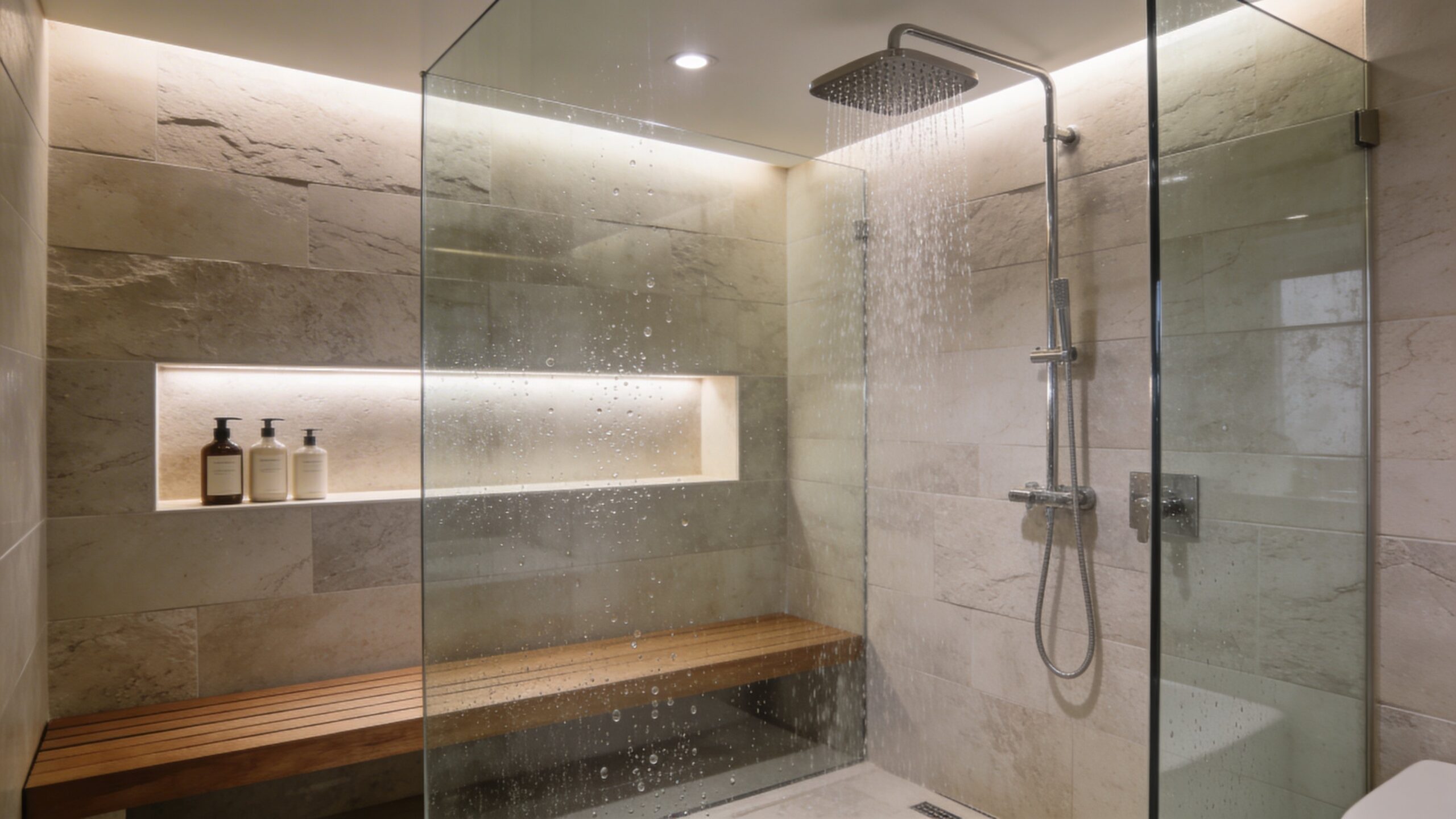
If your bathroom includes both a freestanding tub and a shower, the layout relationship matters. In a larger space, a separate shower enclosure keeps the tub area dry and tranquil. In a medium space, a glass shower can visually disappear, making the tub feel more prominent. In smaller spaces, the tub may sit closer to the shower zone, and that’s okay—just make the transition feel intentional with a shared material palette and consistent finishes.
Glass that’s minimal (and easy to clean) supports the oasis vibe. If you want more privacy or softness, consider fluted glass, a half wall, or a curtain in a heavy, spa-like fabric. The goal is to keep the bathroom feeling open and calm while still practical.
Comfort Details That Make It Feel Like a Retreat
The best modern oasis bathrooms aren’t only beautiful—they’re comfortable. Heated floors change everything. So does a towel warmer that turns post-bath into a small luxury. Quiet ventilation prevents the room from feeling damp or stale. Soft-close drawers, a mirror that doesn’t glare, and a faucet that feels solid in your hand—these are the hidden upgrades that make the space feel high-end. Sound is part of comfort too. If you can, choose a quieter fan, add a solid-core door, or bring in soft surfaces like a small washable rug to dampen echo. Oasis design is sensory design; it’s not just what you see, it’s what you feel and hear.
Styling the Space Without Turning It Into a Stage
Once the big pieces are in place, styling should be minimal, tactile, and intentional. A single vase with eucalyptus, a stone dish for jewelry, a small stack of neatly folded towels, a bath salt jar in a consistent container—these add life without clutter.
Plants can be perfect in a bathroom, but choose them for humidity and light conditions. Even if you go faux for practicality, keep it believable and clean. The tub should remain the focal point, so style around it should feel like punctuation, not a paragraph.
Bringing It All Together
A freestanding tub turns a modern bathroom into a destination—but only when the space around it supports the feeling. Start with the tub’s silhouette and placement. Build your palette on calm materials. Add lighting that layers warmth and mood. Then edit hard: reduce visual noise, hide clutter, and make comfort upgrades that improve daily life. When it’s done right, the tub doesn’t just sit in the room—it defines the room. It becomes the calm center of a space designed for restoration. That’s the modern oasis promise: not luxury for show, but luxury that gently changes the pace of your day.