Why a Calm Bathroom Is Harder to Design Than It Looks
A modern oasis bathroom sounds simple in theory. The phrase brings to mind warm stone, soft lighting, airy layouts, and a soothing palette that instantly lowers the noise of the day. But in practice, calm is one of the easiest feelings to accidentally destroy. Many bathrooms are filled with individually attractive choices that clash once they share the same space. A trendy mirror, dramatic tile, oversized hardware, cool-toned lighting, and a highly polished vanity may all look appealing on their own, yet together they can create tension instead of peace. That tension is what makes a room feel visually restless, even when the square footage is generous and the finishes are expensive. The modern oasis style depends less on showing off and more on controlling what the eye experiences from the moment someone enters the room. Calm comes from restraint, rhythm, softness, and thoughtful transitions. When those qualities are missing, the room stops feeling restorative and starts feeling busy, cold, or overdesigned. The biggest bathroom design mistakes are not always obvious construction failures. More often, they are subtle choices that interrupt flow, amplify glare, create clutter, or make the room feel emotionally sharp rather than settled. Understanding those mistakes is the key to designing a space that truly feels like an escape.
A: It may have too many competing finishes, harsh lighting, or cluttered surfaces.
A: Soft layered neutrals such as sand, cream, taupe, and warm stone tones usually work well.
A: It can be, but without warmth and texture it may feel cold instead of calming.
A: Only sparingly; too much pattern can create visual noise and weaken the serene mood.
A: Declutter the counters, soften the lighting, and simplify the color palette.
A: They can be, but only if kept sparse and intentional; otherwise they add visual clutter.
A: Add wood tones, matte finishes, soft textiles, and warmer light temperature.
A: No; calm comes more from lighting, materials, and layout than from one feature.
A: Small patterns, high contrast, and strong grout lines can make the room feel restless.
A: Consistent materials, gentle lighting, clean sightlines, and enough hidden storage for everyday life.
Modern Oasis Bathroom Design Mistakes That Ruin the Calm Begin With Visual Noise
One of the fastest ways to ruin a calm bathroom is to overload it with visual information. Modern oasis design is not empty, but it is edited. When too many textures, shapes, tones, and finish types compete in one room, the result feels stimulating rather than serene. A spa-like bathroom should guide the eye gently from one surface to the next. That becomes difficult when every element is trying to be the centerpiece. A statement tile wall, fluted vanity, sculptural pendant, patterned floor, bold faucet finish, and oversized decor might all be beautiful, but when layered without hierarchy, the room loses its quiet character. Visual noise also comes from inconsistent detail language. If the vanity is soft and minimal, but the mirror is industrial, the sconces are ornate, and the shower frame is ultra-modern black metal, the space can feel fragmented. Calm depends on repetition and cohesion. Shapes should speak the same language. Materials should relate to one another. Even contrast should feel intentional and measured. The most peaceful bathrooms usually do not have fewer ideas because of budget. They have fewer ideas because the design is disciplined. That restraint allows materials, light, and proportion to do the heavy lifting.
Overly Bright Lighting Destroys the Spa-Like Mood
Lighting is one of the most overlooked reasons a bathroom fails to feel like an oasis. Many people focus heavily on tile, fixtures, and paint, only to install lighting that makes the room feel clinical. Harsh overhead light can flatten textures, exaggerate shadows, and wash out the warmth that modern oasis bathrooms rely on. Instead of feeling soft and restorative, the room begins to resemble a dressing room or utility space. Calm requires light that supports comfort, not just visibility.
A common mistake is depending on one bright ceiling fixture to do everything. Bathrooms work best when lighting is layered. Ambient illumination should create an overall glow, task lighting should support mirrors and grooming, and accent lighting should bring out architectural details or textural surfaces. The color temperature matters just as much. Cool white bulbs can make stone and wood feel lifeless, while warmer temperatures tend to create a more relaxed atmosphere. Even a beautifully designed bathroom can feel wrong if the light bounces too aggressively off glossy tile, mirrors, and polished hardware. In a modern oasis bathroom, lighting should feel like part of the architecture, not an afterthought forced into the ceiling.
Choosing the Wrong Materials Makes the Space Feel Cold
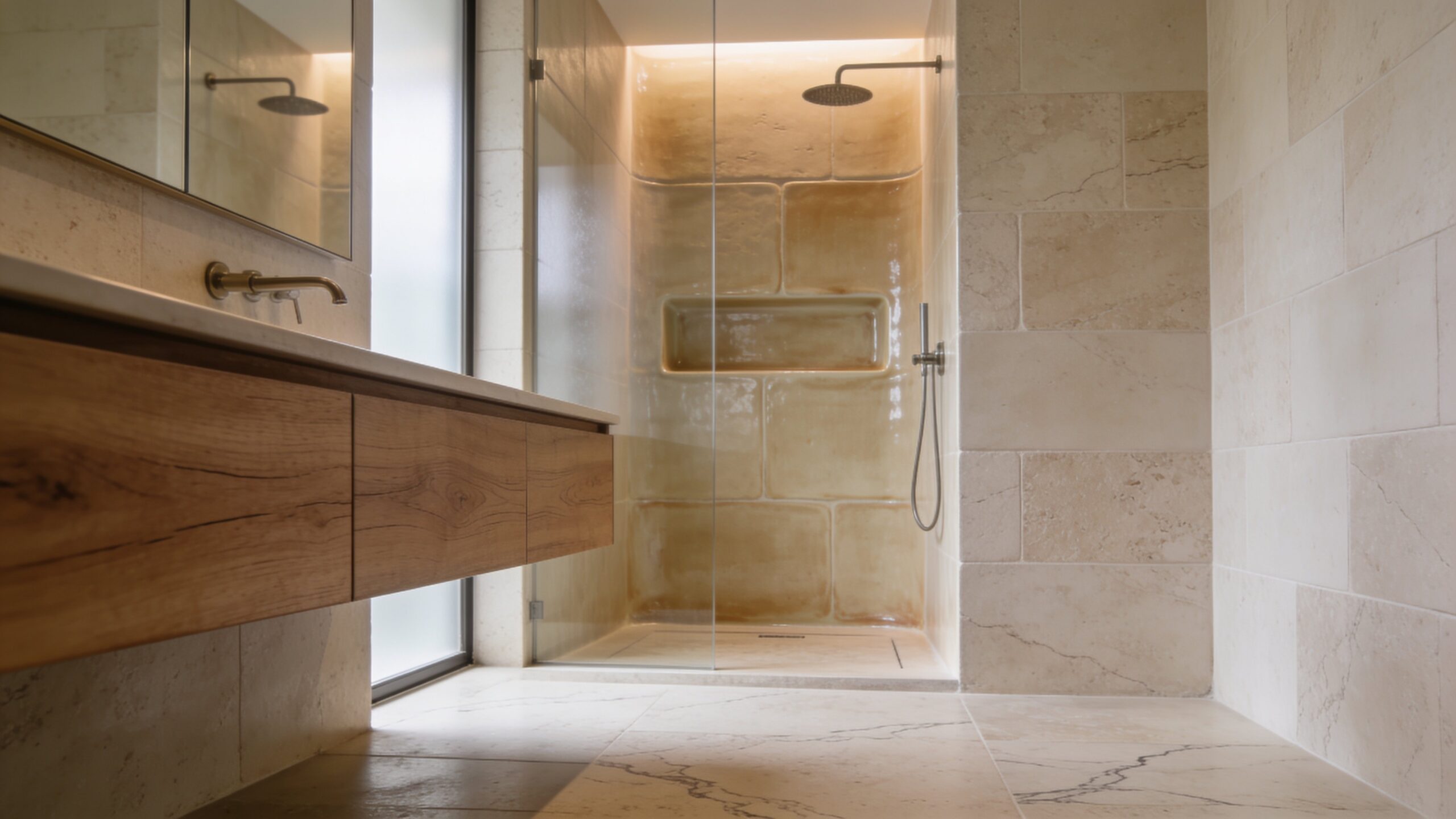
Many homeowners associate modern design with sleekness, and that sometimes leads them to choose materials that are technically clean but emotionally uninviting. A bathroom full of hard, reflective, icy surfaces may look expensive in photos, but feel uncomfortable in real life. Modern oasis bathrooms need balance. They should feel fresh and uncluttered without becoming sterile. When the room leans too far into glass, polished porcelain, chrome, and stark white paint, the result can feel more like a showroom than a sanctuary. Warmth in a bathroom does not have to come from heavy ornament or rustic styling. It can come from tone, finish, and texture. Matte surfaces often feel calmer than glossy ones. Natural-looking materials, even when engineered, tend to soften the room. Subtle stone movement, warm woods, plaster-like wall finishes, and gentle tonal variation all help a bathroom feel grounded. The mistake is assuming that minimal automatically means cold. The best oasis bathrooms are often minimal in layout but rich in tactile detail. That combination is what makes them feel calm instead of empty.
Poor Color Balance Breaks the Feeling of Relaxation
Color can either settle the nervous system or quietly agitate it. One of the most common bathroom design mistakes is choosing a palette that looks stylish in isolation but feels off inside the room’s actual lighting conditions. Stark white, flat gray, or trendy high-contrast combinations can easily disrupt the gentle mood that an oasis bathroom should create. A serene palette usually depends on soft transitions, layered neutrals, and tones that respond well to natural and artificial light throughout the day.
Another mistake is treating all neutrals as interchangeable. Beige, taupe, greige, cream, sand, mushroom, and stone tones each carry a different temperature and emotional quality. If undertones clash, the room feels subtly unsettled even when nothing appears obviously wrong. A warm vanity paired with cool tile and pink-beige walls can create tension that is hard to identify but impossible not to feel. Modern oasis bathrooms thrive on tonal harmony. The color story should be quiet, but it should not be flat. Variation matters, yet it needs to stay within a controlled range that supports calm rather than distracting from it.
Cluttered Surfaces Instantly Undermine a Peaceful Bathroom
A bathroom can have beautiful finishes and still fail if the surfaces are constantly crowded. Calm requires breathing room. When countertops are packed with skincare, toothbrushes, organizers, cords, trays, lotions, hair tools, and miscellaneous extras, the room starts to read as functional chaos instead of retreat. This is one of the biggest reasons many bathrooms never achieve that polished oasis look. The issue is not that people own too much. The issue is that the design did not create enough concealed, intuitive storage.
Open shelving is often part of the problem. It photographs beautifully when styled with rolled towels, ceramic vessels, and a small plant, but in daily life it can become a magnet for visual clutter. A modern oasis bathroom needs storage that works with real routines. Drawers should be deep enough for essentials. Vanities should support everyday access without requiring items to live on the counter. Niches, medicine cabinets, linen storage, and smart internal dividers all help the room stay quiet when life gets messy. The most calming bathrooms are not necessarily the least used. They are the ones designed to absorb daily activity without showing stress on every visible surface.
Oversized Statement Features Can Overwhelm the Room
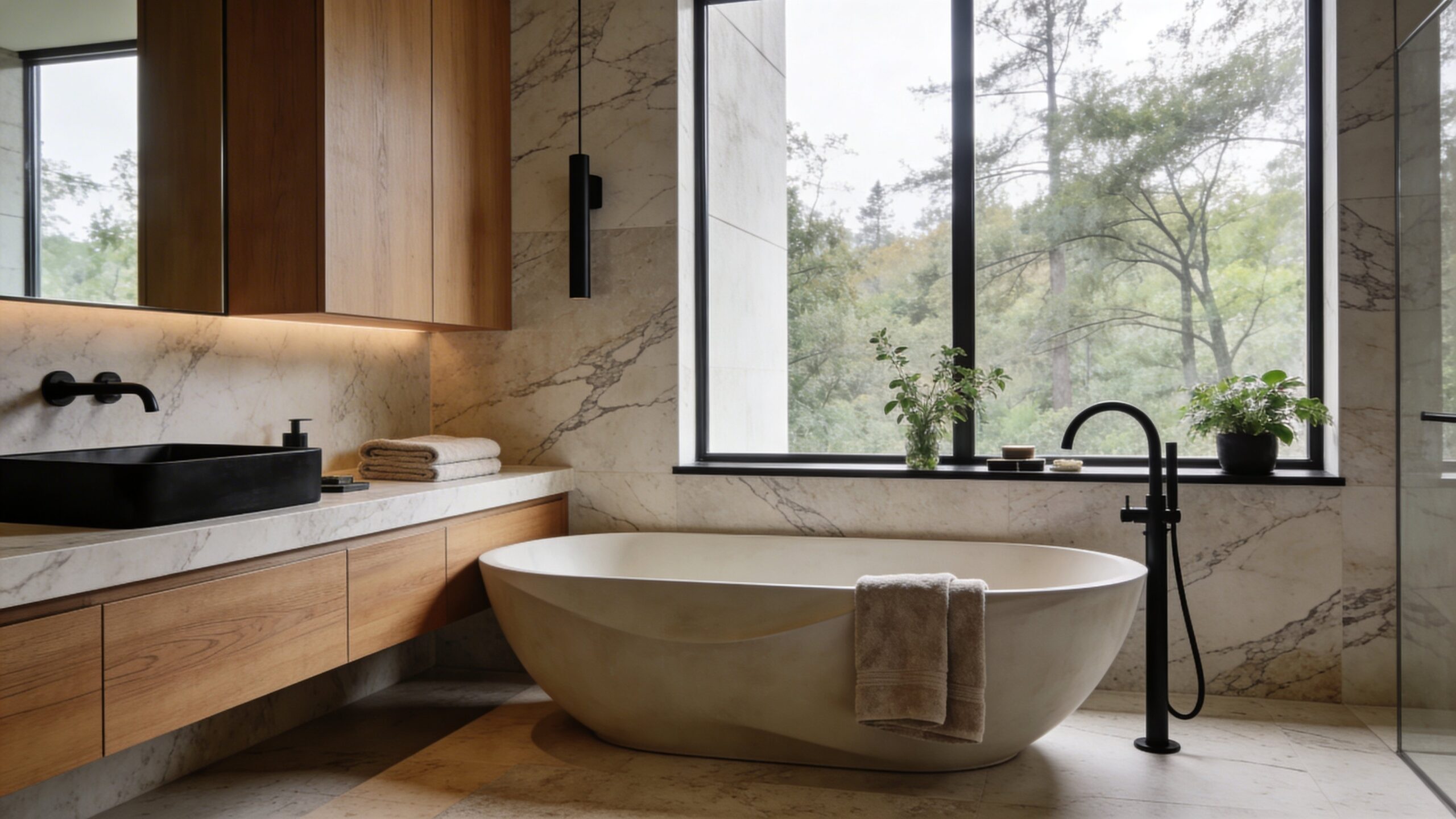
Bold design moments can be beautiful, but they can also ruin the gentle atmosphere that modern oasis bathrooms rely on. A massive chandelier, dramatic black tub, heavily veined feature wall, or extra-large patterned tile may create impact, but too much impact is not always the goal. Oasis design is usually more about atmosphere than spectacle. When one feature dominates the room too aggressively, everything else becomes background noise, and the sense of ease disappears.
Scale is especially important. A small bathroom with oversized design gestures can feel crowded and visually top-heavy. A large bathroom with too many focal points can feel staged rather than restful. The most successful calming bathrooms often use quiet luxury instead of obvious drama. The vanity profile might be slim and elegant. The tub may have sculptural presence without demanding attention. The tile might show subtle movement instead of loud contrast. In these spaces, beauty unfolds gradually. That pacing is part of what makes the room feel peaceful. Calm is usually not created by shouting visually. It is created by letting fewer elements speak more softly.
Ignoring Acoustics and Texture Makes the Bathroom Feel Hollow
People often think of bathroom design in visual terms, but calm is multisensory. A room can look serene and still feel unpleasant if every sound bounces sharply across hard surfaces. Echo, appliance hum, rattling hardware, and hollow resonance can strip away the sense of comfort almost instantly. Modern bathrooms are particularly vulnerable because they often include tile, glass, stone, and minimal textiles. Without balance, the room becomes acoustically hard. Texture helps fix that. Soft towels, bath mats, window treatments where appropriate, wood accents, and slightly matte finishes can all make the room feel more settled. Even the way cabinetry closes matters. A peaceful bathroom should not clang, echo, or feel brittle. Small sensory details influence whether a room feels restorative in daily use. This is one reason hotel bathrooms often look luxurious but feel emotionally flat at home when copied directly. The visual formula is borrowed, but the softer elements that create comfort are left out. Oasis design succeeds when it considers sound, touch, and atmosphere as carefully as appearance.
Trend Chasing Often Dates the Space and Interrupts Calm
A modern oasis bathroom should feel current, but it should not depend too heavily on fleeting trends. When a room is built around what is momentarily fashionable, the result can feel forced instead of timeless. Highly specific tile patterns, social-media-driven finishes, novelty fixtures, or aggressively styled decor can make the bathroom feel like it is trying too hard. Calm spaces usually have a quieter confidence. They do not need every current design cue to prove they are relevant.
Trend-heavy bathrooms also tend to age faster emotionally. What feels fresh today may feel tiring in a short time, especially in a room meant for daily restoration. The better approach is to use trend awareness sparingly. Let the architecture, materials, proportions, and lighting build the foundation. Then, if desired, bring in current flavor through smaller, more flexible details. A bathroom meant to feel like a retreat should not be visually exhausting after a year. It should feel stable, elegant, and easy to inhabit long after design trends move on.
Forgetting the Importance of Flow and Layout Creates Hidden Stress
Even a beautiful bathroom will not feel calm if movement through the room is awkward. Layout mistakes create low-level frustration that people feel immediately, even if they cannot name it. A vanity that crowds the entry, a toilet visible from the doorway, a shower door that interrupts circulation, or poor spacing between fixtures can make the room feel compressed and unsettled. Calm depends on flow. The room should feel intuitive and easy to move through, with each zone positioned to support privacy, comfort, and daily rhythm.
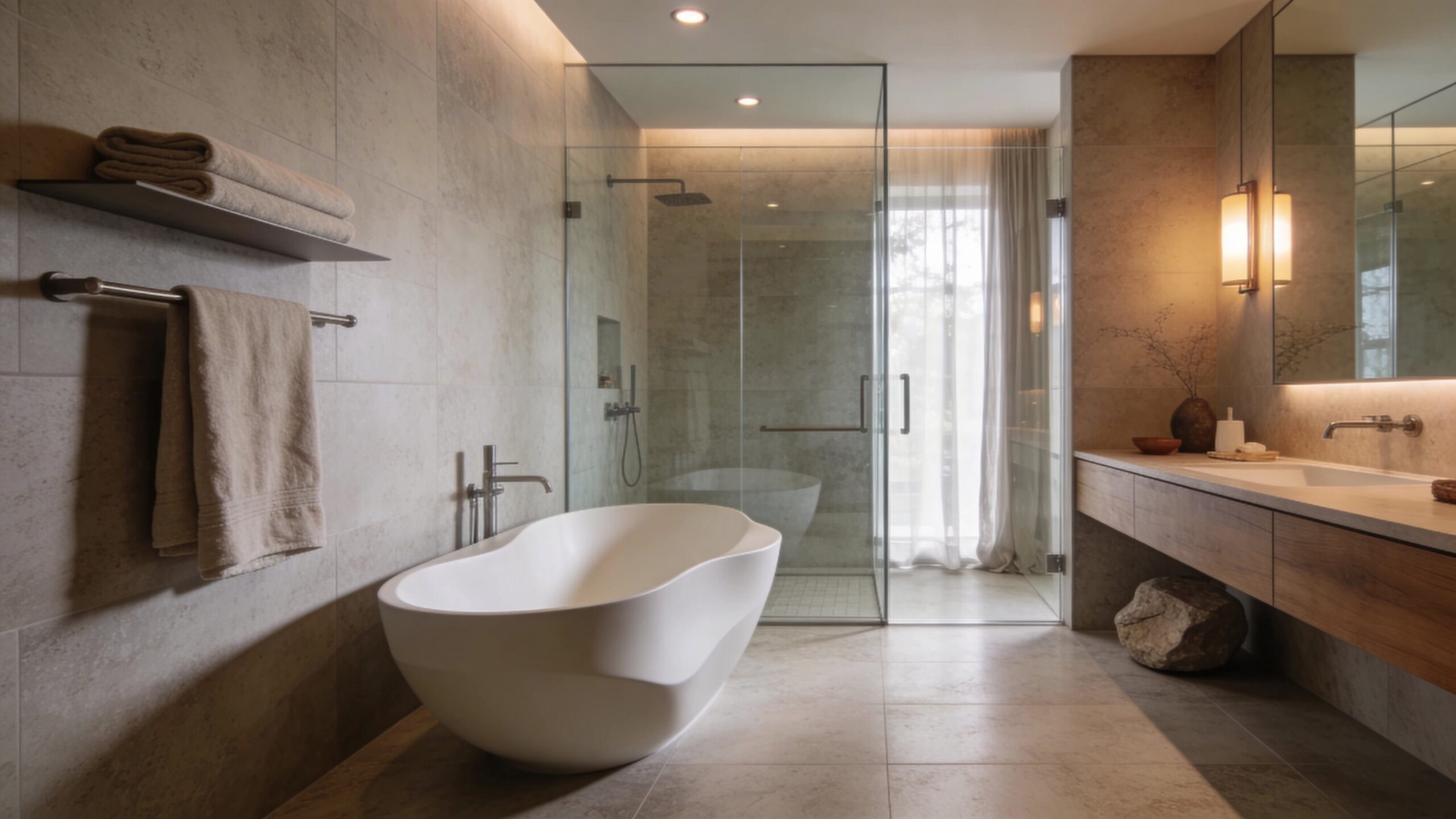
Sightlines matter too. What a person sees first influences how the whole room feels. If the first view is clutter, exposed plumbing, or a visually heavy element, the bathroom loses some of its restorative power before the experience even begins. A thoughtful oasis bathroom usually controls the reveal. The eye may land on a freestanding tub, a warm vanity, a softly lit wall, or a beautiful material transition. These choices create a sense of ease before a person interacts with anything physically. Good layout is not just functional planning. It is emotional design expressed through movement and sequence.
Neglecting Natural Elements Leaves the Bathroom Feeling Lifeless
A modern oasis bathroom often draws strength from natural references, even when the design is highly refined. When those references are absent, the room can feel detached and impersonal. This does not mean every calming bathroom needs plants, raw wood, or tropical styling. It means the space should include some connection to organic rhythm. That could be through stone textures, earthy tones, daylight, linen fabrics, gentle curves, or materials that feel less manufactured and more grounded.
One common mistake is creating a bathroom that is technically polished but completely disconnected from anything soft or alive. The surfaces are perfect, the lines are crisp, and everything is symmetrical, yet the room feels emotionally blank. Modern oasis design is not about perfection alone. It is about ease. Natural elements help soften precision and make the room feel humane. Even a small branch, a ceramic vessel, diffused daylight, or a wall finish with subtle depth can shift the room from styled to soothing. Those details matter because calm is often created by what feels quietly real.
The Best Modern Oasis Bathrooms Feel Edited, Warm, and Intentional
The bathrooms that truly feel calm rarely succeed by accident. They are shaped by decisions that support visual rest, emotional softness, and practical ease all at once. They avoid the trap of treating luxury as excess or modern design as starkness. Instead, they rely on restraint, tonal consistency, layered lighting, smart storage, and materials that feel as good as they look. Every successful element reinforces the same mood. Nothing is included just because it is trendy, dramatic, or impressive in isolation. Modern oasis bathroom design mistakes usually happen when attention shifts away from atmosphere and toward accumulation. Too many statements, too much glare, too little storage, and too little warmth can all chip away at the sense of calm the room is supposed to create. The goal is not to design a bathroom that merely photographs well. It is to design one that changes how the room feels the moment someone steps inside. When the details are quiet, the palette is balanced, the light is soft, and the layout flows naturally, the bathroom finally becomes what the phrase modern oasis promises: a place where the mind unclenches and the day briefly slows down.